Lyte Raises $165M at a $1.6B Valuation: Physical AI's Bottleneck Is Sensing, Not Models
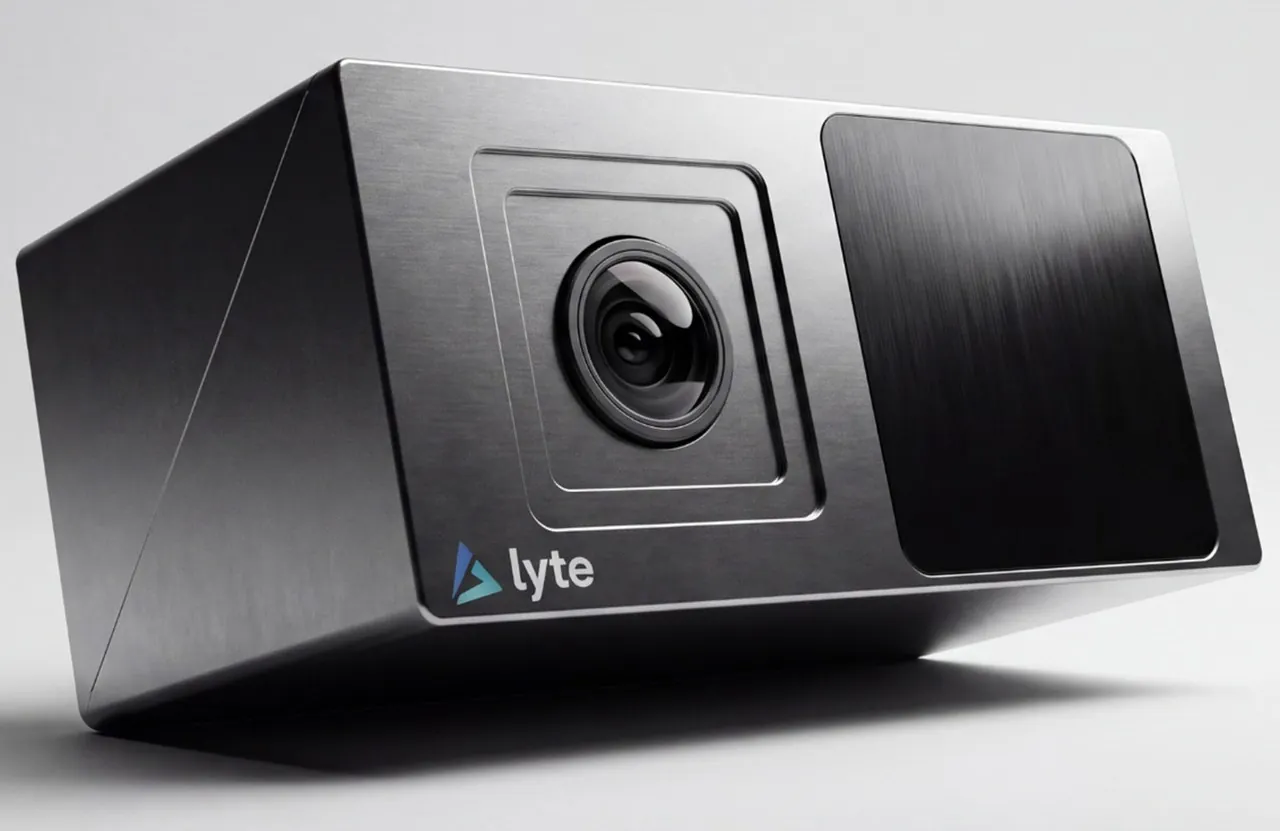
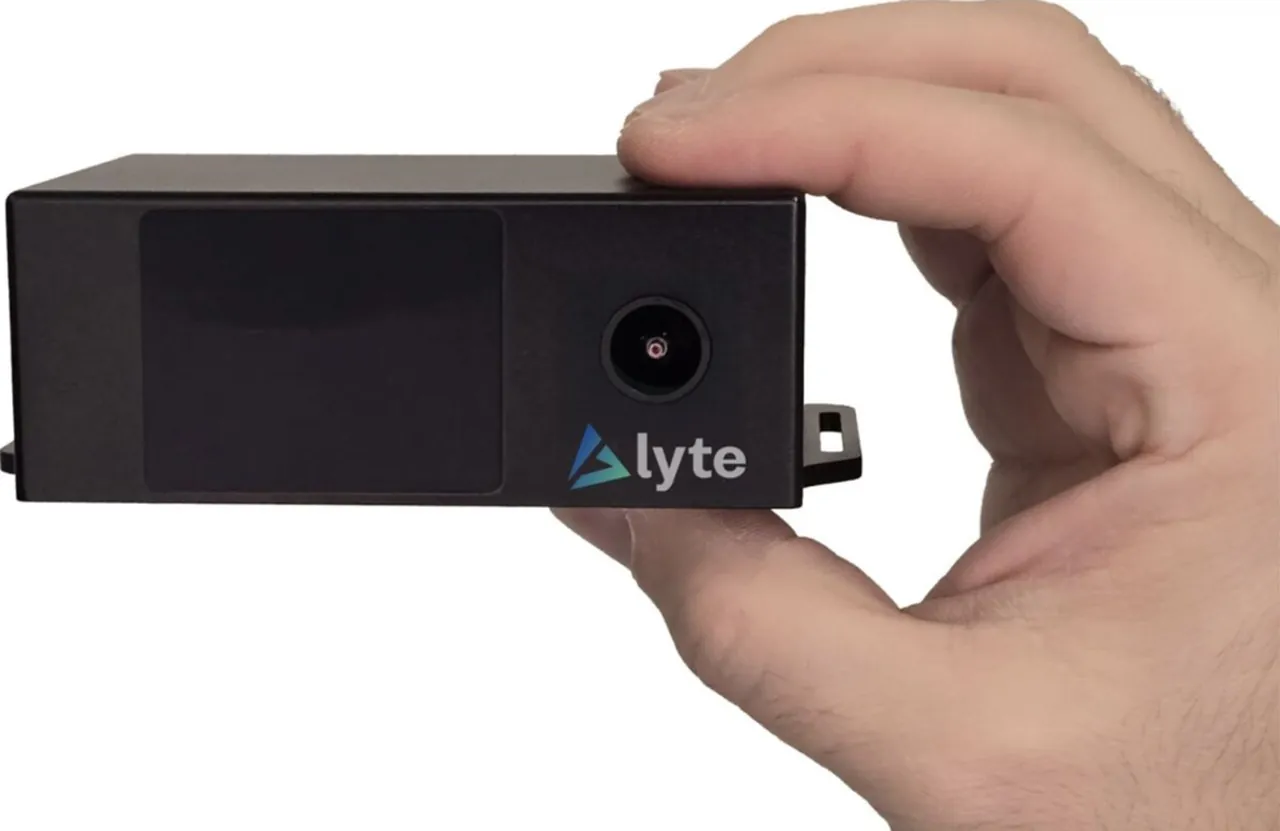
Perception silicon company Lyte has raised $165M in Series C at a $1.6B post-money valuation, led by Maverick Silicon with Fidelity participating. Lyte has now raised $272M since 2021, having exited stealth in January with $107M aggregate. Its LyteVision platform fuses 4D coherent vision, high-resolution RGB, and IMU onto a single synchronized timeline, measuring position and motion natively at the edge instead of reconstructing them in software. CEO Alexander Shpunt's framing: physical AI has a sensing problem before it has a model problem. LyteVision won CES 2026 Best of Innovation in Robotics and ships to inspection, logistics, and manufacturing customers; the new money goes to production scale, perception AI, and deployments.
Lyte Raises $165M to Help Robots Better Sense Their Surroundings
Source: The Robot Report, September 4, 2026
Lyte AI Inc. said this week that it has raised $165 million in Series C funding. The round valued the physical AI company at $1.6 billion post-money — a valuation that is, on its own, a statement about where investors think the bottleneck in robotics actually sits.
Founded in 2021, Lyte designs processors, multimodal sensors, and the software that turns their output into something a robot can act on: where it is, and what is moving around it. The Sunnyvale, Calif.-based company says it developed the entire stack itself and owns it "from the transistor up."
"Physical AI has a sensing problem before it has a model problem. A robot cannot act safely on data that does not faithfully describe the world," said Alexander Shpunt, co-founder and CEO of Lyte. "We build the entire perception foundation, from custom silicon to the spatial data our systems produce. This financing will put LyteVision into more robots, across more environments, faster."
That framing is the core of the pitch. The industry's attention is concentrated on foundation models, but Lyte is betting that the binding constraint for deployed autonomy is upstream of the policy: the fidelity, latency, and trustworthiness of the sensor data the policy consumes.
Lyte has entered production and is shipping to leading robotics customers across the inspection, logistics, and manufacturing industries. Its perception platform, LyteVision, was named CES 2026 "Best of Innovation in Robotics."
Lyte Plans to Scale Production With the Funding
Maverick Silicon led the round. Participation came from Fidelity Management & Research Company, which led Lyte's Series B, along with Atreides Management, Key1 Capital, Ora Global (formerly Exor Ventures), and additional existing and new investors.
| Round | Amount | Notes |
|---|---|---|
| Series C (September 2026) | $165M | Led by Maverick Silicon; $1.6B post-money valuation |
| Series B | Part of the $107M aggregate | Led by Fidelity Management & Research Company |
| Stealth exit (January 2026) | $107M aggregate | Second round announced in 2026 |
| Total since founding (2021) | $272M | Cumulative capital raised |
"Lyte is building a foundational sensing platform that enables a wide range of robots to perceive and understand the world around them. The breadth and diversity of early customer demand strengthen our conviction that Lyte is poised to become one of the defining technology companies of the robotics era," said Andrew Homan, managing partner at Maverick Silicon, who has joined Lyte's board of directors.
Lyte said it will use the financing to:
- Scale production of its sensing silicon and the LyteVision platform
- Advance its AI and perception capabilities
- Expand deployments with robotics companies and industrial customers
The company expects to grow its team substantially over the coming year and is hiring across silicon, software, optics, manufacturing, operations, and go-to-market, including senior leadership roles. That hiring profile — optics and manufacturing alongside silicon and software — is consistent with a company trying to move a vertically integrated sensing product into volume, not just iterate a model.
Since it was founded in 2021, Lyte has raised $272 million. This is also the second round it has announced this year: in January it emerged from stealth with $107 million in aggregate funding.
LyteVision Creates One Timeline for Perception
Video: Lyte's Galaxy demonstration of the LyteVision sensing stack in operation. Source: Lyte
Most robotics platforms assemble perception from off-the-shelf components that were never designed to work as a single system. A depth sensor here, an RGB camera there, an IMU from a third vendor — each with its own clock, its own calibration, and its own idea of when "now" happened. Integrators pay for that in latency, calibration drift, and data that is hard to trust when the parts disagree.
LyteVision's argument is that this is a systems problem, not a component problem. It fuses 4D coherent vision, high-resolution imaging, and inertial sensing onto a single synchronized timeline.
| Conventional stack | LyteVision |
|---|---|
| Separate depth, RGB, and IMU parts from different vendors | 4D vision + RGB + IMU fused in one block |
| Each sensor on its own clock; software re-synchronizes after the fact | One synchronized timeline natively |
| Pose and motion reconstructed in software from mismatched frames | Position and motion measured natively at the edge |
| Calibration drift accumulates across components | Single vertically integrated sensing unit |
Built on Lyte's own silicon, LyteVision measures position and motion natively rather than reconstructing them in software downstream, producing data a robot can act on with confidence. The temporal alignment is the point: a fused measurement taken on one clock is a different kind of input than three measurements stitched together by a filter that has to guess at relative timing.
"Owning the silicon separates companies that define a category from those that participate in one," stated Avigdor Willenz, Lyte's chairman. "Lyte controls every layer of how a robot understands the world and is now taking that breakthrough engineering into production."
Why This Round Matters for Physical AI
Three signals stand out in this raise.
Capital is moving upstream of the model. A $1.6B post-money valuation for a sensing company says investors believe perception fidelity, not policy scale alone, is a gating factor for deployment. The dominant narrative in embodied AI has been data and model scale; Lyte's round is a counterweight.
Vertical integration is back as a strategy. Owning silicon, optics, and software in one company is expensive and slow, and most startups avoid it. Lyte's claim — that native measurement on one timeline beats software fusion of mismatched parts — is exactly the kind of argument that only holds if you control every layer.
The company is in production, not in research. Shipping to inspection, logistics, and manufacturing customers means the product is being judged on reliability and integration cost in real deployments, which is a harder test than a benchmark. The CES 2026 robotics innovation award and a second round inside one year suggest that test is going well enough to keep raising against.
Source: The Robot Report — "Lyte raises $165M to help robots better sense their surroundings" by The Robot Report Staff, September 4, 2026.
Source:The Robot Reporthttps://www.therobotreport.com/lyte-raises-165m-help-robots-better-sense-their-surroundings/