 0:39
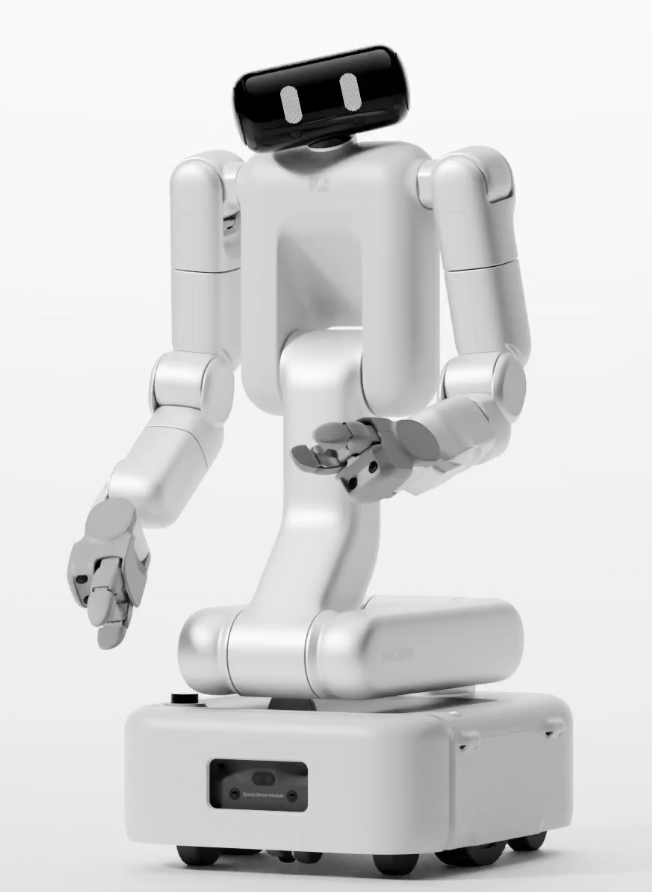
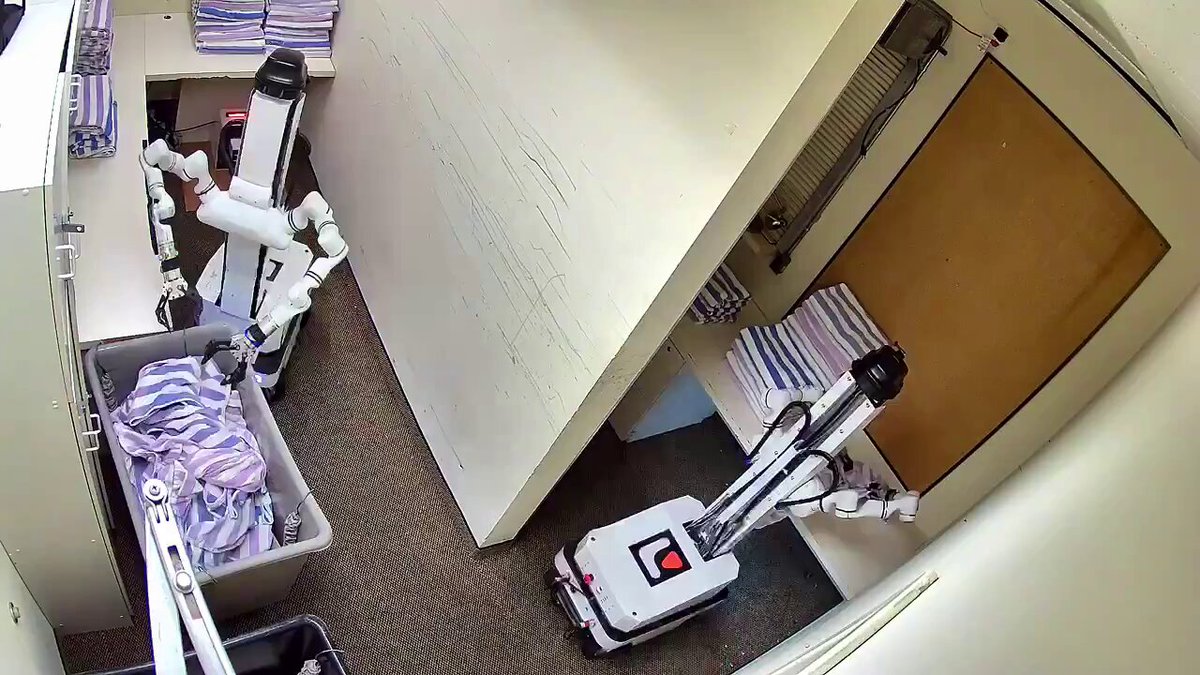
0:39Watney robot folds laundry around the clock
@ctorobotics · 8 views · 2026-08-31
Watney RoboticsWatney叠衣
 0:39
0:39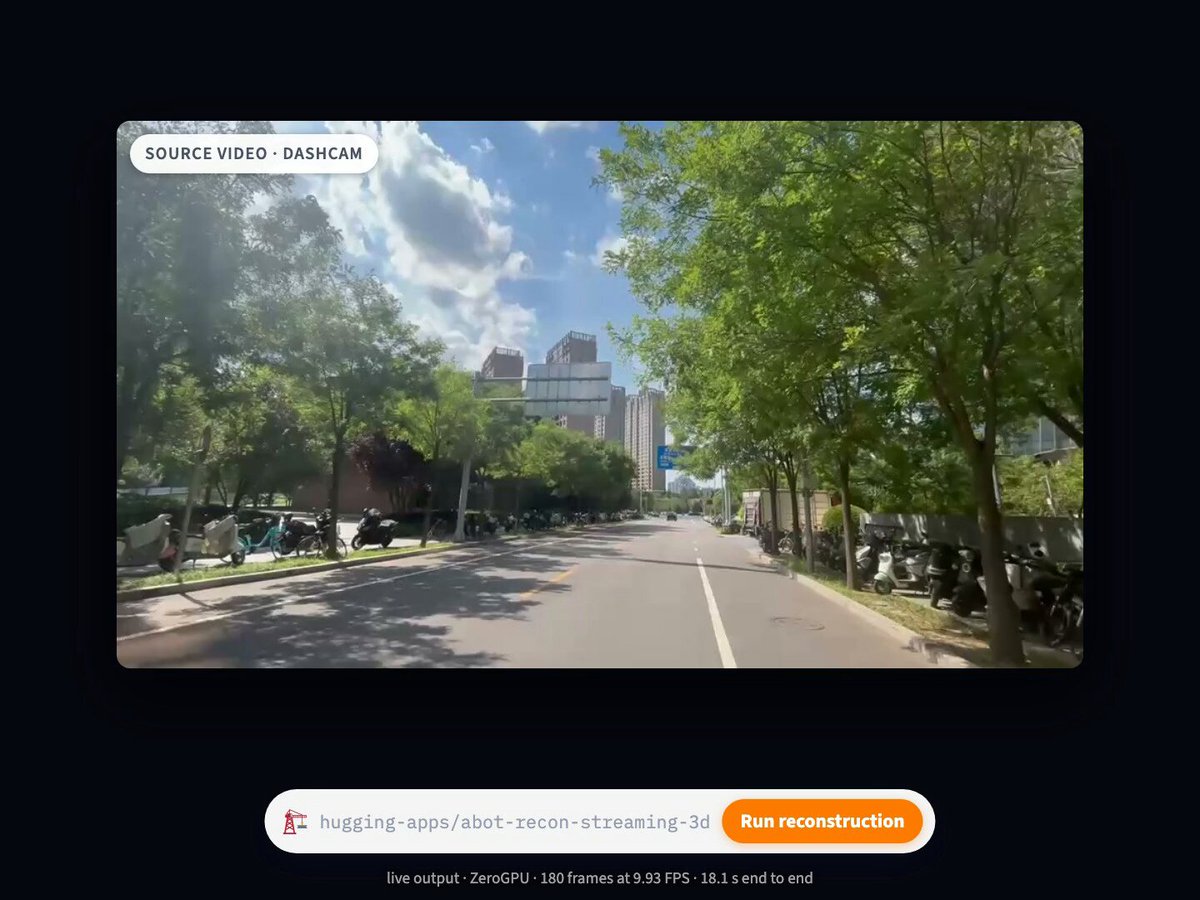 0:16
0:16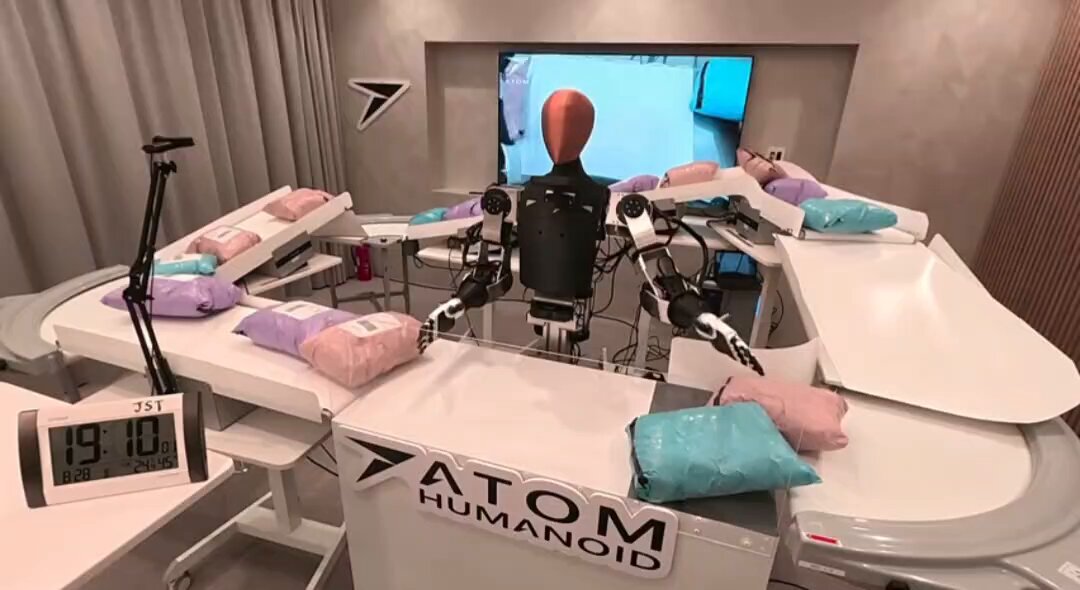 0:18
0:18 1:04
1:04 47:24
47:24 1:54
1:54 7:52
7:52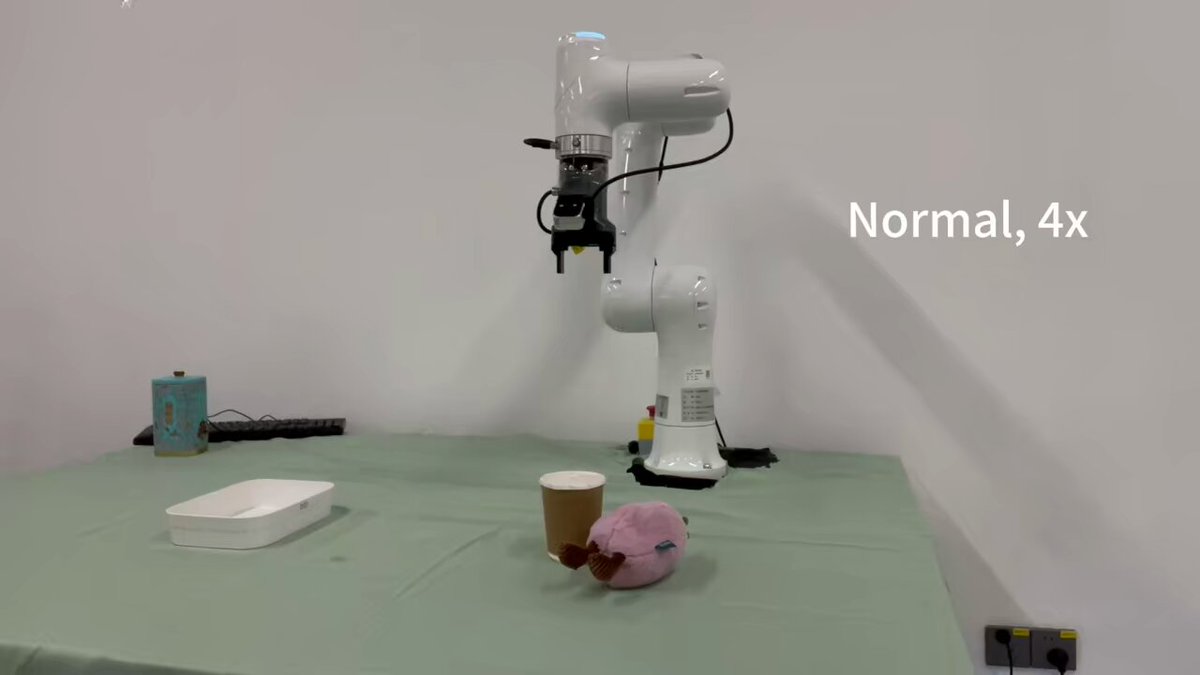 0:33
0:33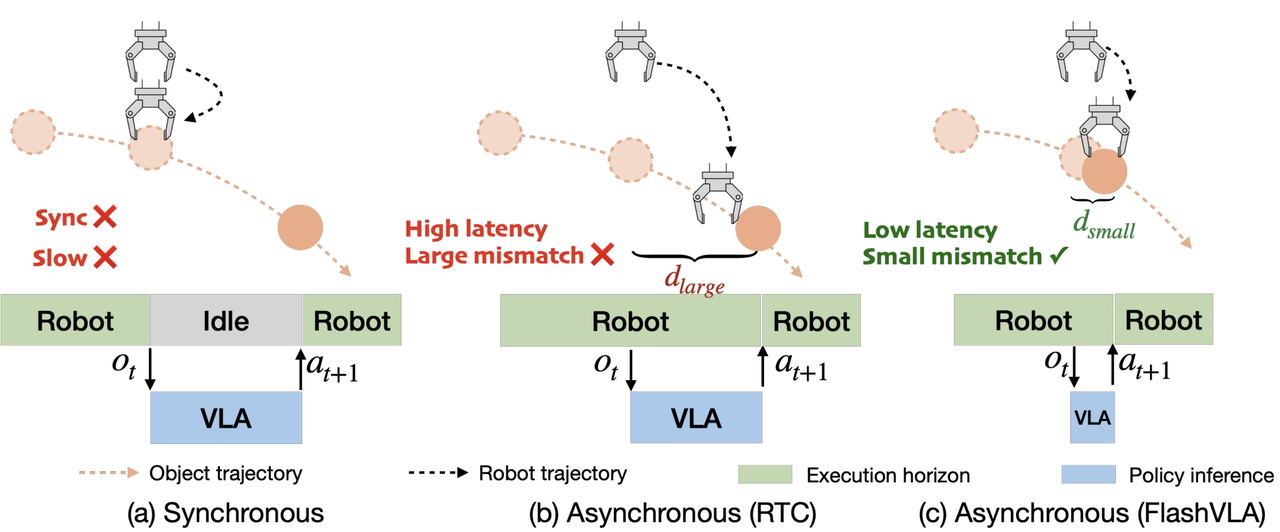
Vision-Language-Action (VLA) models are increasingly promising for robotic manipulation, yet their real-world deployment remains bottlenecked by high inference latency and unstable asynchronous execution. This challenge is particularly pronounced in flow-matching-based VLA models, where action decoding requires multiple iterative steps conditioned on the VLM context. While efficient inference methods improve control frequency and asynchronous methods reduce execution idle time, existing approaches often fail to jointly achieve low-latency inference and accurate, temporally consistent asynchronous execution. We introduce \textbf{FlashVLA}, a streaming action decoding framework that addresses both challenges in a unified formulation. FlashVLA maintains a streaming action buffer with multiple chunks at different noise levels and decodes them using chunk-wise causal attention. This design allows FlashVLA to produce one executable action chunk per inference step. Moreover, its chunk-wise autoregressive formulation implicitly preserves action continuity, enabling smooth asynchronous execution without extra future-state conditioning. Across extensive simulated and real-world experiments, FlashVLA substantially improves inference speed while maintaining strong task performance. It can achieve $\geq$30\,Hz control frequency on a single GPU with smooth asynchronous inference in real-world deployment.
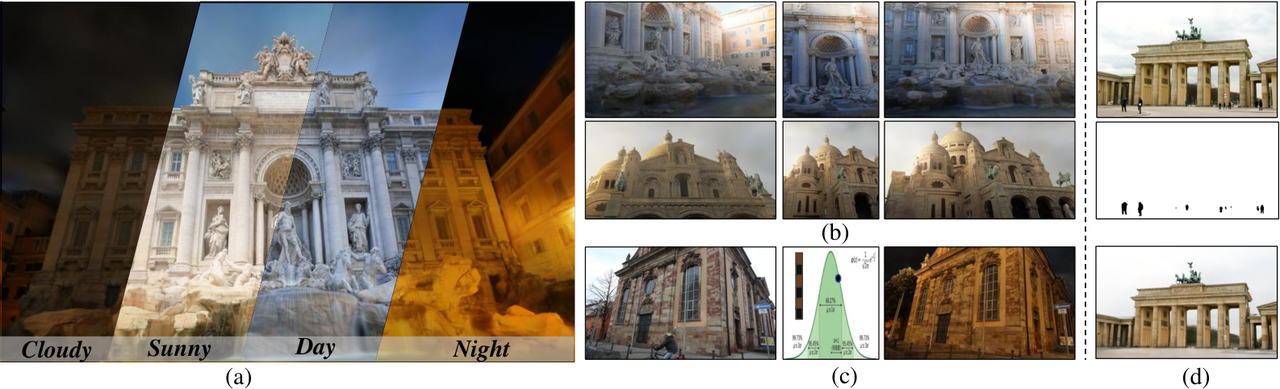
3D Gaussian Splatting (3DGS) delivers real-time and high-fidelity rendering but remains challenged by unconstrained in-the-wild scenes, where drastic appearance variations and transient objects violate multi-view consistency. Existing methods are fundamentally limited by independent and discrete embeddings that struggle to capture continuous environmental changes or model spatially-varying local illumination. To address these limitations, we propose \textbf{WilLaGS}, a unified framework for robust 3D scene reconstruction and generative appearance synthesis under unconstrained settings. Specifically, we introduce a generative appearance model where a $β$-VAE learns a structured and continuous manifold of global appearance. Conditioned on the latent code, we construct a 3D neural appearance field that generates dynamic Tri-Plane features to encode spatially-varying local illumination effects. Furthermore, to suppress transient artifacts, we present a self-supervised perceptual masking mechanism that leverages a Teacher-Student (EMA) architecture to derive a stable scene consensus, robustly identifying inconsistent regions via perceptual discrepancies. Extensive experiments on multiple datasets demonstrate that \textbf{WilLaGS} achieves state-of-the-art performance in reconstruction quality and novel view appearance synthesis, while maintaining real-time rendering efficiency.
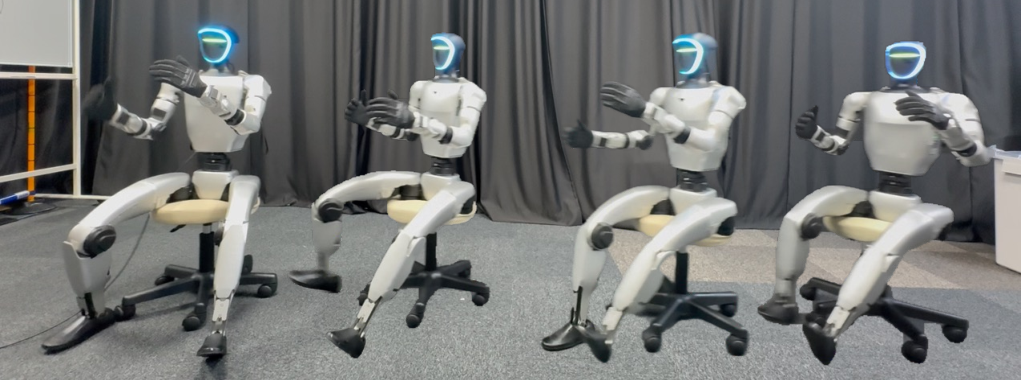
Research on omnidirectional seated locomotion for humanoids on passive chairs. Policies use proprioception only, outperforming standing in tracking. Analyzes regularization effects on convergence.
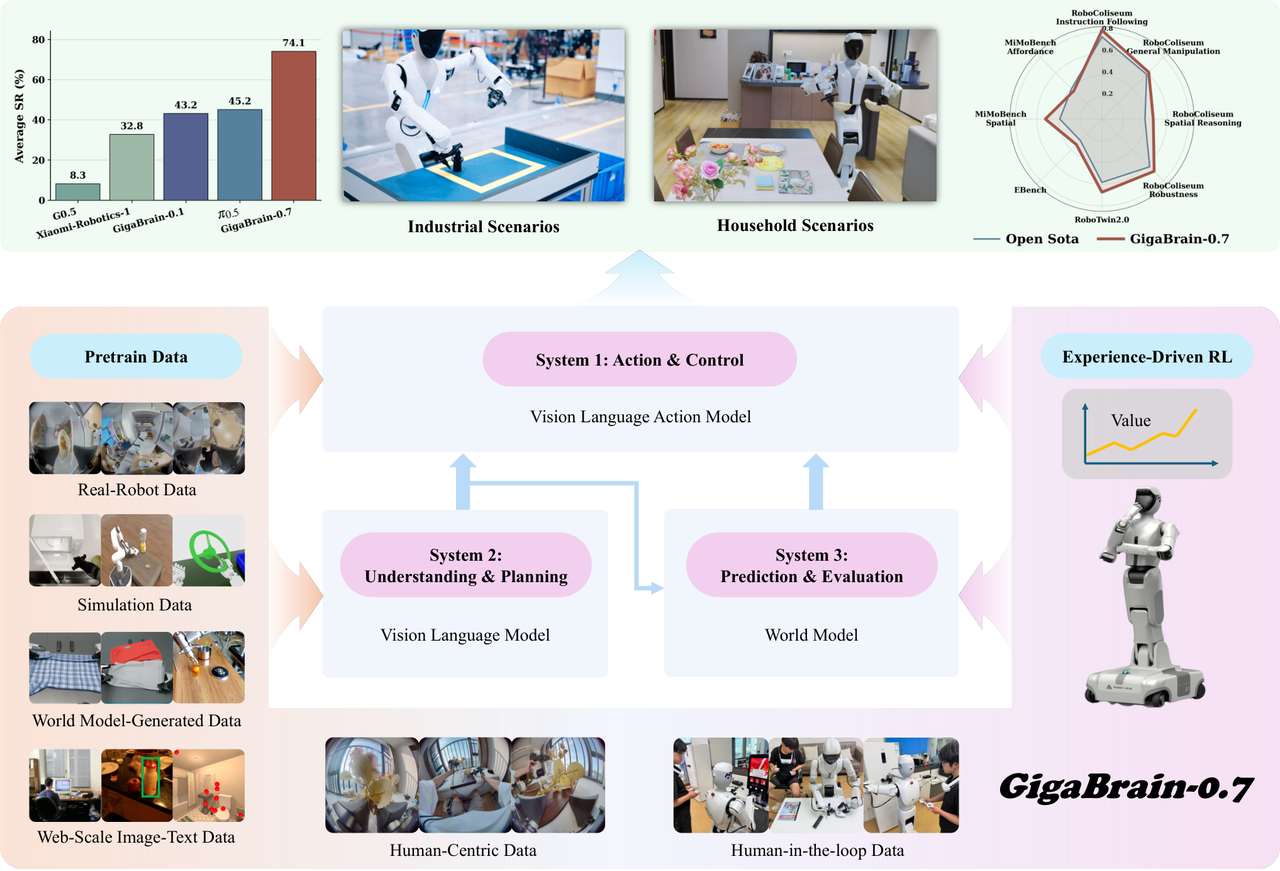
Vision-language-action (VLA) models have become a dominant paradigm for generalist embodied agents, demonstrating strong complex and long-horizon task completion in structured settings. Yet it remains an open question whether current VLA systems can benefit from more effective architectural design, scale to substantially larger and more heterogeneous data regimes, and achieve broader generalization across tasks and embodiments. To this end, we present GigaBrain-0.7, an embodied foundation model with substantially improved generalization across diverse robot embodiments. Specifically, GigaBrain-0.7 unifies understanding, prediction, and action through a three-system architecture, scales pretraining to over 37,000 hours of heterogeneous embodied data, and introduces one-stage alignment training that jointly optimizes vision-language understanding and multi-embodiment action generation. Compared with the preceding GigaBrain-0 series and prior state-of-the-art models including $π_{0.5}$, GigaBrain-0.7 achieves substantial improvements in foundation zero-shot capabilities, language-conditioned instruction following, and post-training task success rates. In particular, on our in-house Maker H01 platform and mainstream robot embodiments, GigaBrain-0.7 demonstrates strong task adaptability and completion ability across both home and industrial scenarios. All training code and pretrained model weights will be released.
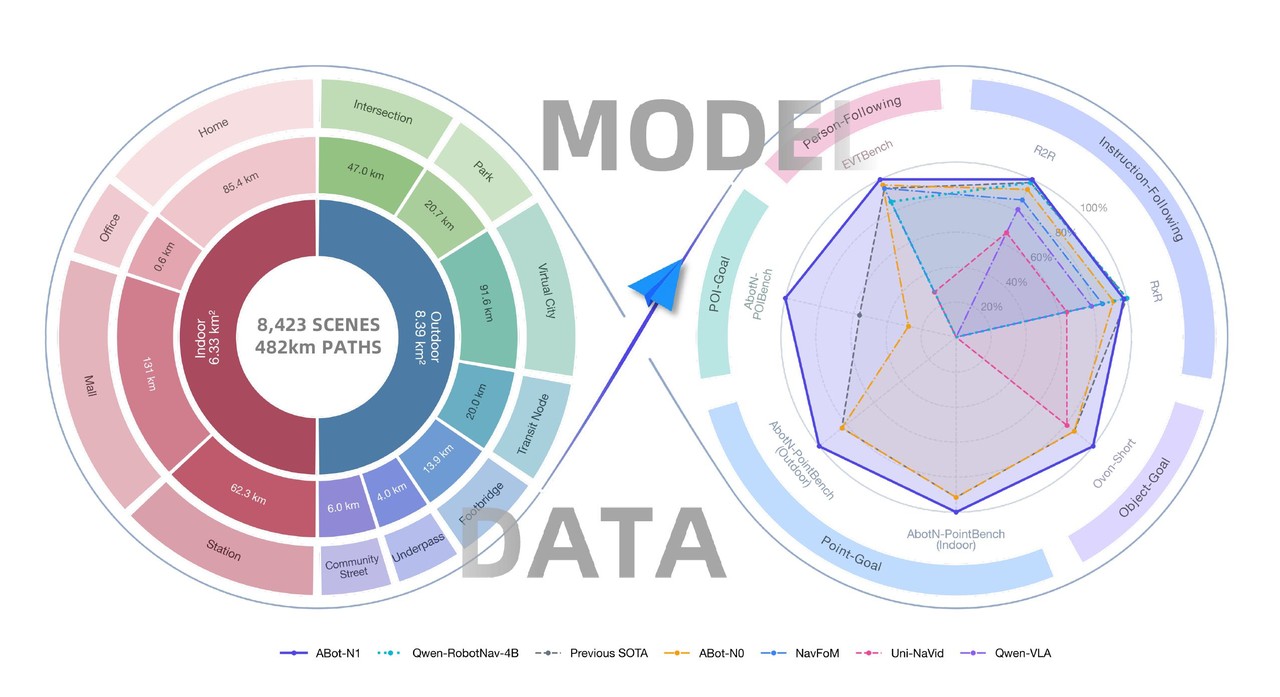
ABot-N1 is a general visual-language navigation foundation model built on a slow-fast dual-system architecture: a 4B slow VLM reasoner emits explicit chain-of-thought plus dual pixel goals (Target Pixel + Affordance Pixel), while a 2B fast action expert decodes continuous SE(2) waypoints via QFormer action queries. The unified pixel-goal interface covers five tasks — point-goal, object-goal, POI-goal, instruction-following and person-following — in a single 30M-sample multi-task checkpoint, further aligned by GRPO post-training with format/target/safety rewards. Two closed-loop benchmarks are released (ABotN-PointBench and ABotN-POIBench). ABot-N1 sets new SOTA on all five benchmarks, boosting POI entrance arrival to 77.3% (+35.0 pp) and reaching 92.9%/95.4% outdoor/indoor point-goal SR, with full deployment on the TuTu quadruped running on a Jetson AGX Orin.
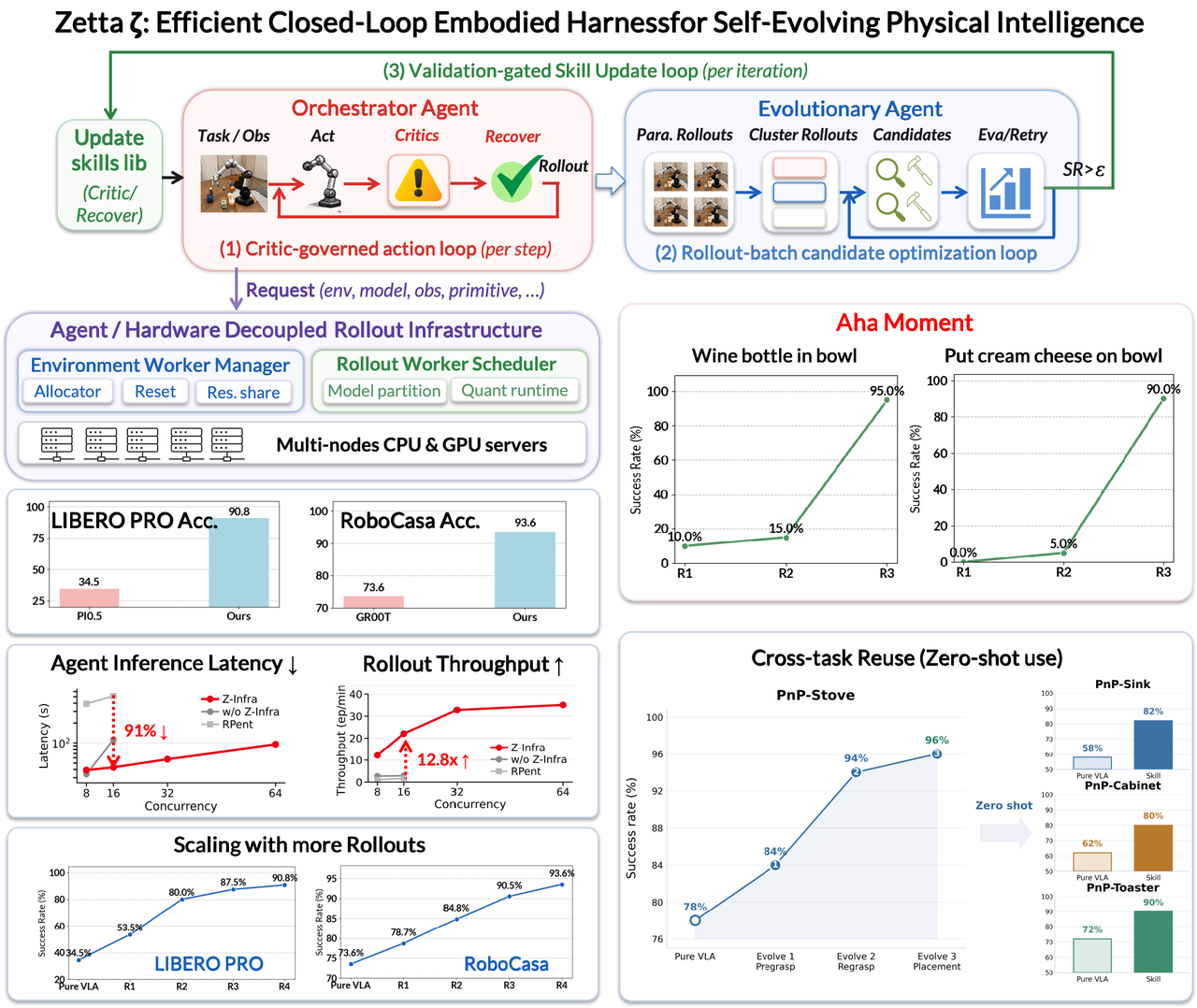
Zetta is a closed-loop embodied harness that keeps the base VLA frozen and evolves code-based runtime critics and recovery skills through three timescale-separated loops: action-frequency governance, rollout-batch failure diagnosis, and validation-gated skill updates. With the Z-Infra rollout infrastructure (20.6x throughput), it reaches 90.8% on LIBERO-Pro and 93.6% on RoboCasa, with zero-shot skill transfer and robotic Aha moments.
Tsinghua AIR and Z-Trans AI present Zetta ζ, a closed-loop embodied harness that improves a frozen VLA policy without a single gradient update. Instead of fine-tuning, it evolves the execution harness around the policy: code-based runtime critics watch every action, recovery skills take over on deviation, and a validation gate admits only skills that generalize. The frozen baseline scores 31.0% on LIBERO-Pro; the same policy under Zetta ζ reaches 92.5% (+56.3 absolute points), with a +20-point gain to 93.6% across 18 RoboCasa tasks. Z-Infra scales valid rollout throughput 20.6× and speeds inference 11.1×. Skills transfer zero-shot, and clear robotic "aha moments" emerge.
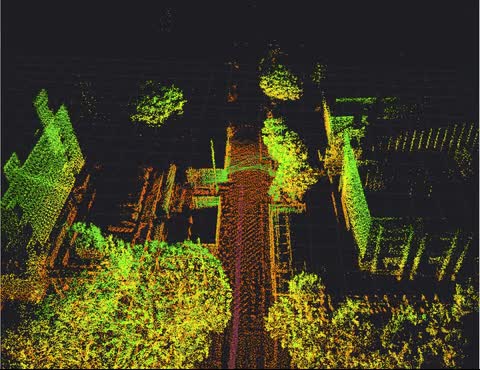
glass-LIO is an open-source scan-to-map LiDAR-inertial odometry for the Livox MID-360, described by its author as “written to be read”: each of its six pipeline stages has a deep-dive write-up, the manifold Gauss-Newton solver is under 200 lines of Eigen with no Ceres/GTSAM, and every bug that produces plausible output is documented — including the full failure post-mortem of tight coupling diverging on real data. It runs real time at 10 Hz on the test bag with zero dropped scans and steady RMSE around 0.13 m.
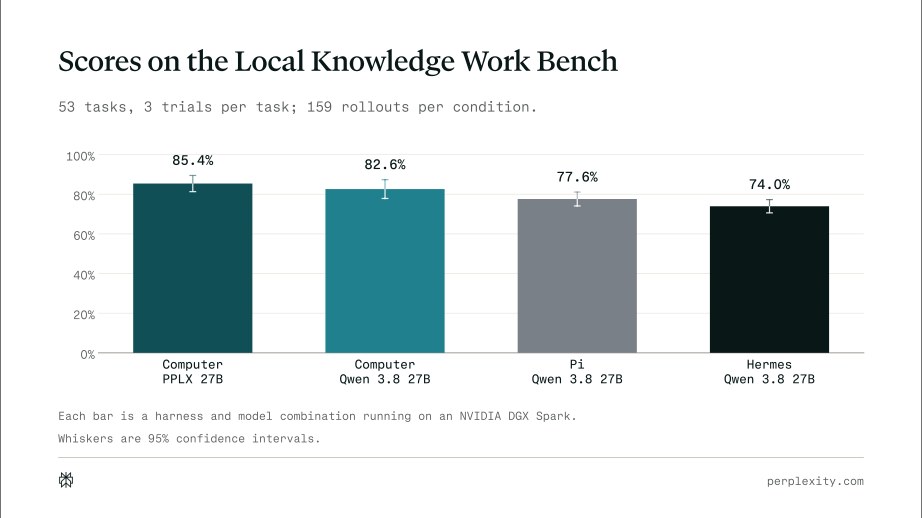
Perplexity details Portable Computer, a local-first agent whose model, harness, conversation and trajectory live on-device by default, with web search, connectors and cloud advisor escalation only on user-approved demand. A lean local harness (on-demand skills, CLI connectors, self-verification, sandboxed execution) is co-designed around Qwen 3.8 27B, then post-trained into PPLX 27B. On the 53-task Local Knowledge Work Bench, Computer scores 82.6% vs Hermes 74.0% and Pi 77.6%, rising to 85.4% with PPLX 27B; it also leads BrowseComp (66.7%) and ParseBench-100 (65.1%) with the least time and tokens, while advisor escalation recovers ~3/5 of the Terminal Bench 2.1 frontier gap at ~2/3 of frontier cost.
Video crawling, blog collection, paper deep-dives, industry chain, investment analysis & web development — fully automated by agents.