BLOG
Meta Reality Labs Research open-sourced Project SuperDex, a unified dexterous-manipulation simulation platform built on a custom contact-first physics engine with soft-body/rod/non-convex contact support, VR teleoperation for synthetic data, and a Gymnasium-style RL stack that achieved zero-shot sim2real shape sorting.
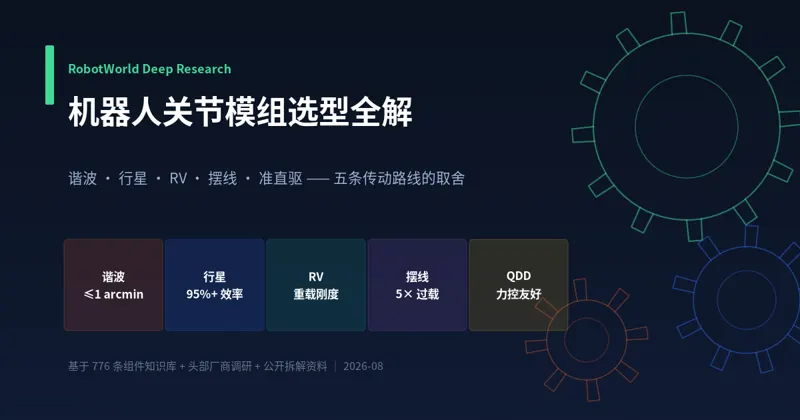
How should robot joint modules actually be selected? Drawing on 200+ joint-module/reducer entries in the RobotWorld knowledge base, product research on leading vendors (Harmonic Drive, Nabtesco, Leaderdrive, Laifual, Leadshine, EYOBOT, ZeroErr, JIECANG, CubeMars, ENCOS), and item-by-item verification of the supply chains behind Tesla, Unitree, UBTECH, AgiBot and Fourier, this guide systematically compares harmonic, planetary, RV, cycloidal and quasi-direct-drive (QDD) transmission routes on performance and cost, provides a torque-tier product cheat-sheet (0.5-200 N·m) and full configuration recipes by robot weight class (small <=25kg / mid 30-55kg / large 60-100kg), plus a practical pitfall-avoidance playbook.
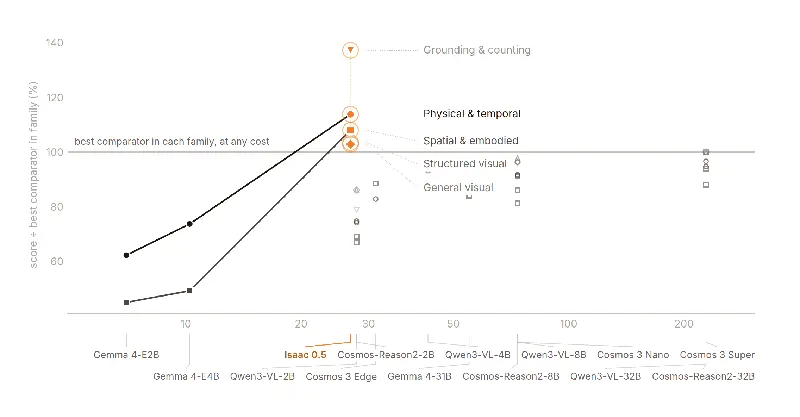
Isaac 0.5 is Perceptron's open-source embodied foundation model with 36B sparse parameters: it reads images, video, language, robot state and previous actions to answer video questions, point and track objects, report task progress, and generate robot actions. The team establishes a scaling law trading video for teleop: scaling general video from 1,000 to 1M hours cuts the teleoperation needed for action loss 2.50 from ~5,900 hours to 28 (210x). Trained on 35+ robot systems, 100K hours of robot experience, 1M hours of video and 3T multimodal tokens, it introduces semantic world modeling (predicting future percepts), the mHarmony typed multimodal interface, and Null Experts for dynamic compute — leading all five perception task families at 8.5x lower inference cost. Weights, training code and LeRobot inference code are fully released.
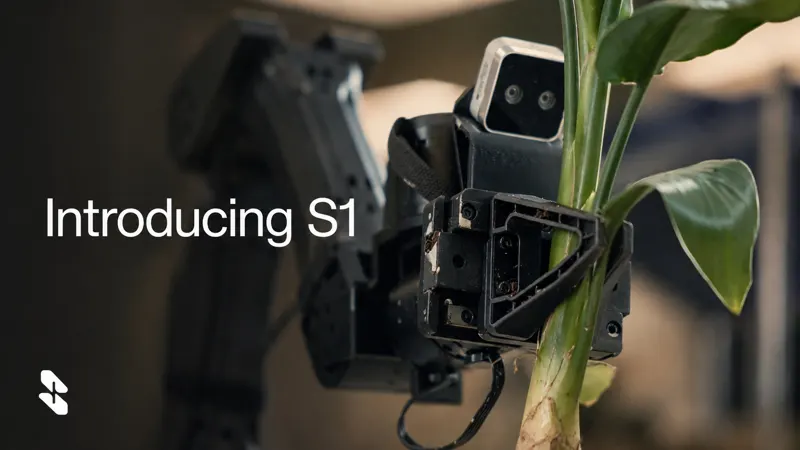
Skild AI's flagship robotic foundation model S1 is built from the ground up as an in-context learner: show it a video demonstration of a task — even an unseen 10-minute long-horizon one — and it executes with no fine-tuning. On unseen tasks, one demonstration ≈ 380 post-training examples; at 100k pre-training hours S1 reaches 66% success vs 9% for language-prompted VLAs.
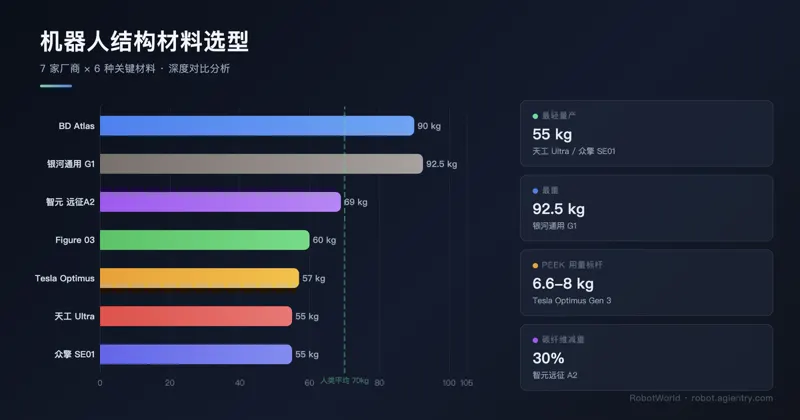
? 7075 + CF + + PEEK 。
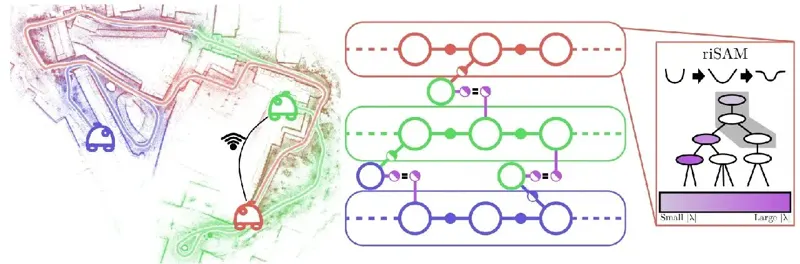
CMU's riMESA combines Consensus ADMM with the incremental robust solver riSAM to unite distribution, incrementality, robustness and weak communication: sharing variables instead of full graphs, dual decay, RWBP that lets stale consensus be overruled by fresh evidence, and non-blocking communication threads. Across 2430 synthetic and 28 real datasets, its gap to Centralized GNC is 7x smaller than DLGBP and 17x smaller than DDF-SAM2, at only ~55 KB/s average bandwidth.
Frozen GEAR-SONIC whole-body controller (Unitree G1) transfers to AgiBot X2 Ultra via closed-form codec + LoRA adapters (0.25% params, 2% compute), beating native training on OOD (69.0% vs 59.0%).
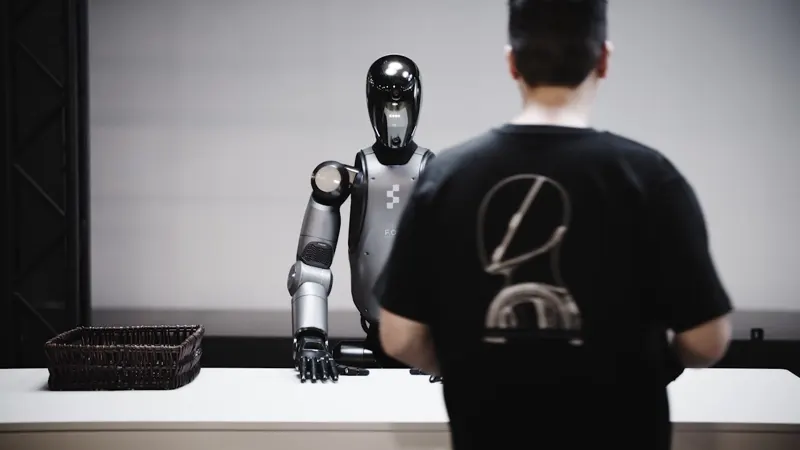
Figure AI's Helix VLA model achieves first humanoid multi-fingered autonomous laundry folding. Same architecture seamlessly transitions from logistics to household chores with data-only change.
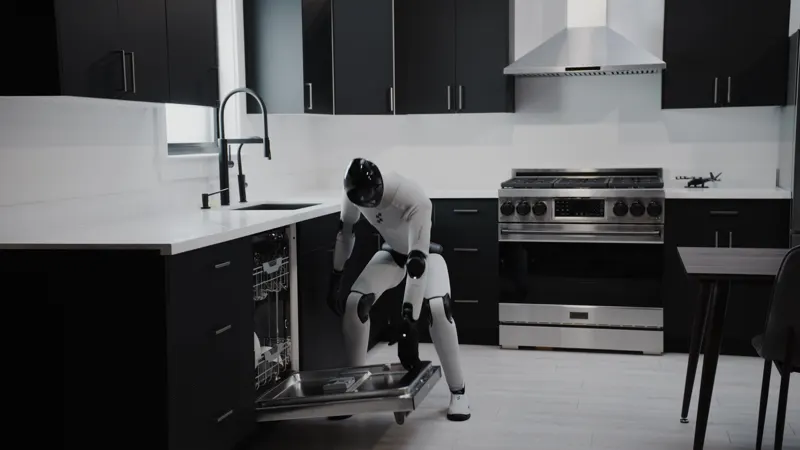
Figure AI releases Helix 02, extending single-network control from upper body to whole robot. System 0 trained on 1000+ hours of human motion data replaces 100K lines of hand-engineered C++, enabling 4-minute continuous autonomous loco-manipulation.
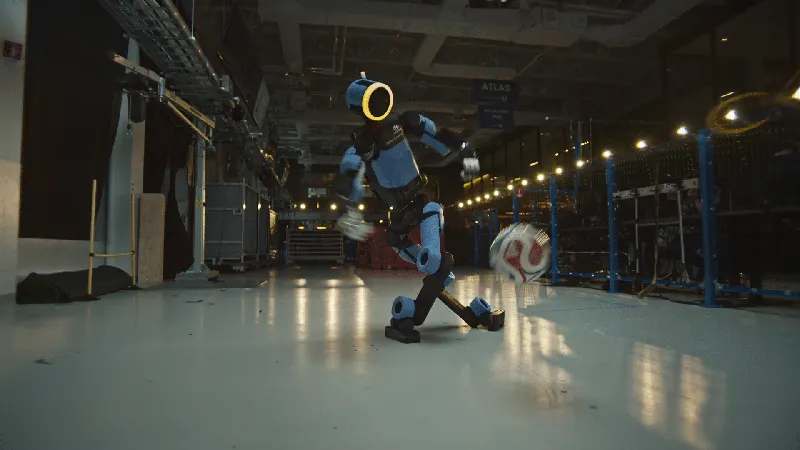
Boston Dynamics teaches Atlas to play football using motion capture + RL for the Ghost Rabona kick. The whole-body coordination required transfers directly to industrial manipulation tasks.
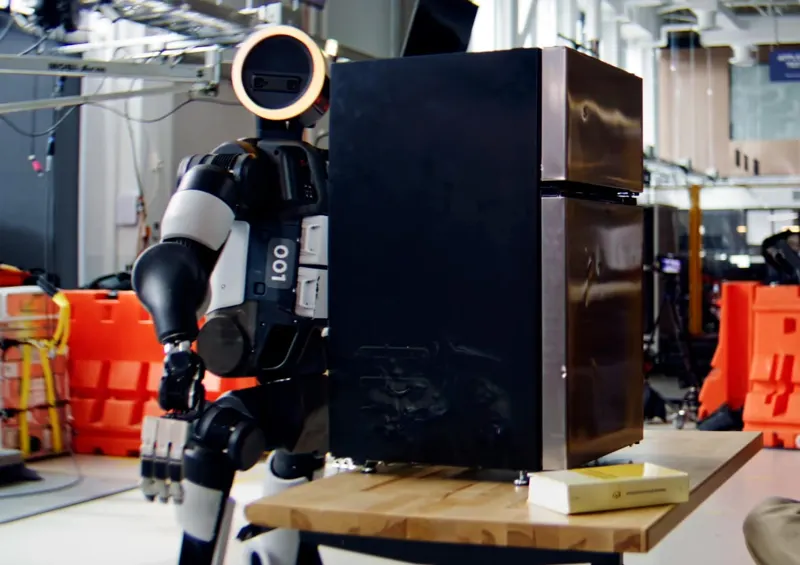
Boston Dynamics shares how Atlas learns whole-body lifting via RL: from reference trajectories and reward design to GPU-scale simulation and real-hardware iteration, demonstrating fundamental building blocks of physical intelligence.
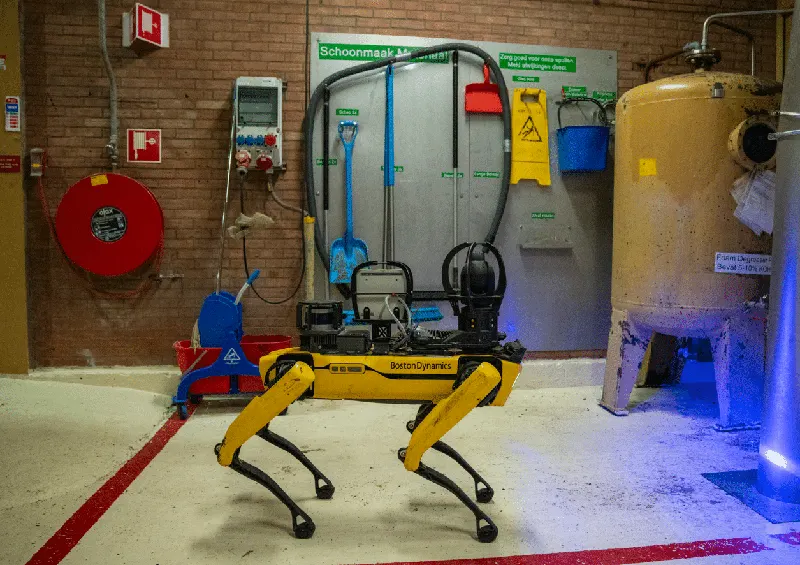
Boston Dynamics integrates Google Gemini into Orbit AIVI-Learning, giving Spot robots advanced reasoning and complex visual analysis for industrial inspections including gauge readings, 5S audits, and pallet counting.