BLOG
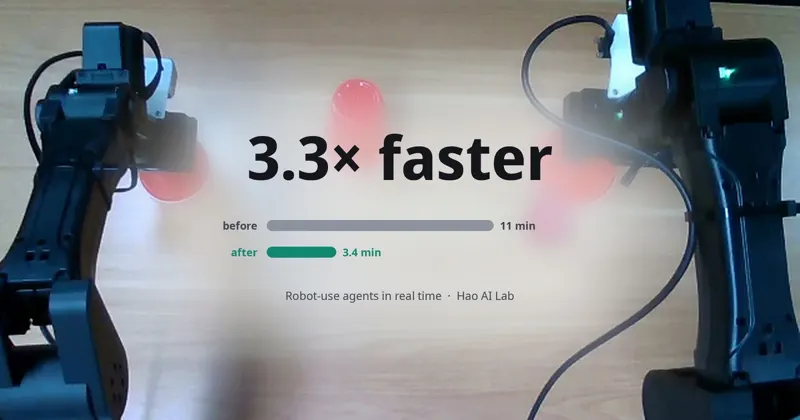
FastRUA keeps the same robot agent model and redesigns its harness: fewer round trips, short context, faster tools, and motion-aware pipelining cut a cup task from 667s to 204s.
Six hundred Push-T experiments show how 25-step subgoals, jump-cost latent memory, symmetry augmentation, and multi-goal scoring improve JEPA world-model planning without retraining.
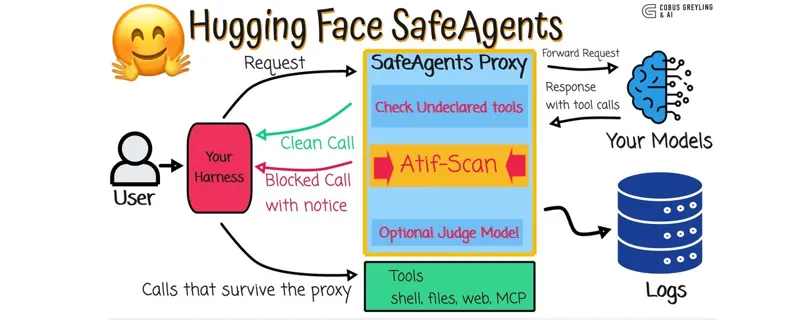
A technical guide to SafeAgents' declared-tool policy, ATIF scanning, and optional judge, and the runtime, sandbox, and robot safety layers it does not replace.
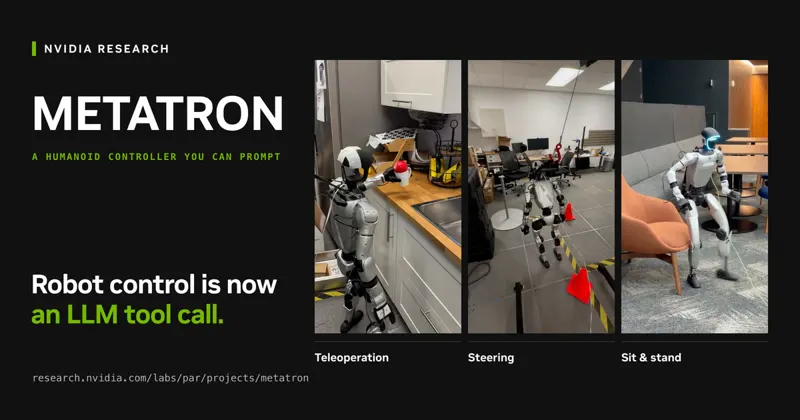
NVIDIA's MetaTron freezes a promptable whole-body policy and lets code or coding agents compose skills, from whole-body reaching and push recovery to sitting and simulated sports.
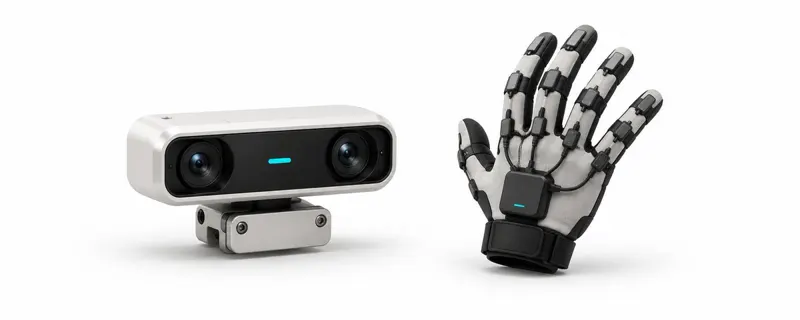
A supply-side snapshot from 180 conversations and 47 vetted producers, covering robotics-data pricing, the stereo shortage, tactile bottlenecks, and the hours needed to earn $1 million.
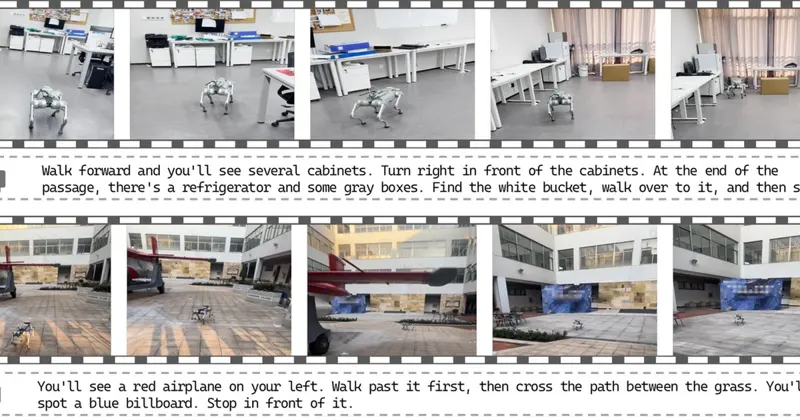
AgentVLN turns a 3B VLM into a navigation brain that calls spatial skills, grounds 3D routes in the camera image, and asks for missing depth before localizing a target.
OpenRUA's five-layer harness lets Qwen reach 31.39 without depth on RoboDojo and 53.50 zero-shot on physical tasks, while exposing grounding, geometry, and hardware-support limits.
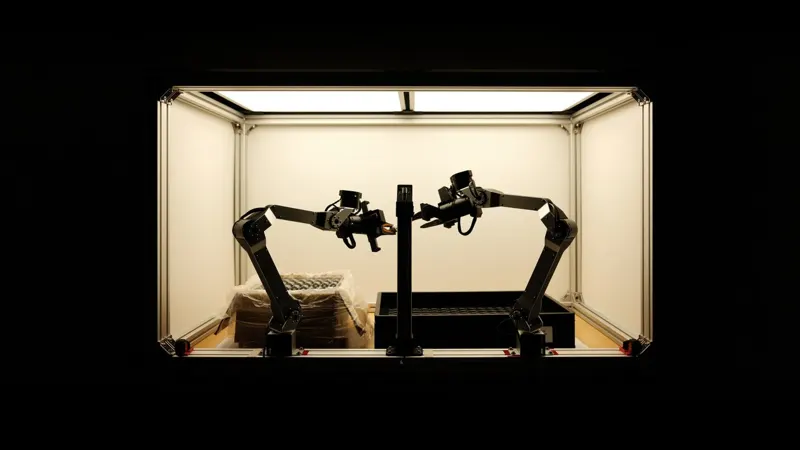
Dream Machines fine-tunes pi0.5 on a bimanual actuator unboxing task: 76% with 21h of data, 90% after one clean hour, 93% from RTC serving settings alone, while LoRA and training from scratch fall far short.
System One models skip token-by-token answers and return a choice, score, or probability in one forward pass. A guide to 15 studies on dynamic candidates, multimodality, retrieval, and selective reasoning.
AW-0 jointly denoises a generated skill program, future video and action chunk. Code guides control without being executed by default, while a gated hybrid mode can run verified programs.
A hands-on route from empty Unreal project to playable slice with Claude Opus 5.5, including MCP setup, staged prompts, live-editor limits, costs, and recovery.
Dream Labs emerges from stealth with $90M in seed funding and Dream-1, a World Action Model that drives 27 robots it was never trained on over a public API at $3 an hour, about $0.0013 per action.
As an Amazon Associate, we earn from qualifying purchases.