PAPER DEEP DIVE
HyWorldVLA: A Vision-Language-Action Model with Hybrid World Modeling for Autonomous Driving
Vision-Language-Action (VLA) models augmented with world modeling represent a promising paradigm for end-to-end autonomous driving. While pixel-level future prediction enables fine-grained spatiotemporal reasoning, it compromises robustness in noisy driving scenarios. Conversely, latent-based world models alleviate this sensitivity but often incur limited interpretability and representational degradation due to absent pixel-level grounding. To reconcile this trade-off, we propose HyWorldVLA, a hybrid world-VLA framework that unifies pixel-level supervision and latent representation learning. In the pre-training stage, HyWorldVLA predicts video latents encoded by a pre-trained video VAE, while simultaneously reconstructing video frames to provide precise pixel-level grounding. During the subsequent co-fine-tuning phase, the model exclusively predicts latent features, which are fed into an action expert to generate trajectories. Extensive experiments on NAVSIM v1 and v2 benchmarks demonstrate that HyWorldVLA significantly outperforms both pixel-based and latent-based world model baselines. Notably, we present the first comprehensive qualitative and quantitative analysis of world model noise robustness in autonomous driving, establishing a new benchmark for evaluating future architectures.
HyWorldVLA: A Vision-Language-Action Model with Hybrid World Modeling for Autonomous Driving
Institution: BYD Automotive New Technology Research Institute | arXiv: 2607.20988v1
One-Sentence Summary
HyWorldVLA proposes a hybrid world-VLA framework unifying pixel-level supervision and latent representation learning: pre-training simultaneously predicts video latents and reconstructs video frames, co-fine-tuning exclusively predicts latent features fed to an action expert, achieving SOTA on NAVSIM v1/v2 with superior robustness under rain/fog noise.
Background and Motivation
VLA models integrate visual perception, language understanding, and low-level action prediction for end-to-end autonomous driving. To enhance spatiotemporal reasoning, world modeling augments VLA with future state prediction. Existing paradigms have inherent trade-offs: pixel-based world models provide dense geometric/physical constraints but are sensitive to noise; latent-based models are robust but lack pixel-level grounding, causing representational degradation.
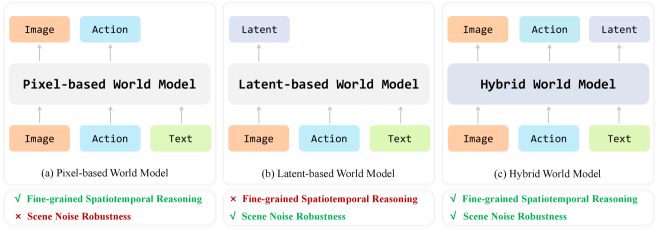
Figure 1: Pixel-based WM provides fine-grained reasoning but is noise-sensitive; latent WM is robust but lacks grounding.
Problem Definition
At each time step $t$, the model receives front-view images $\mathbf{V}_{t-H:t} = \{v_{t-H}, \dots, v_t\}$, historical waypoints $\mathbf{W}_{t-H:t} = \{w_{t-H}, \dots, w_t\}$ where $w_t = (x_t, y_t, \theta_t)$, and navigation commands $\mathbf{L}_{t-H:t}$. It outputs future waypoints:
$$\mathbf{W}_{t+1:t+T} = f(\mathbf{V}_{t-H:t}, \mathbf{W}_{t-H:t}, \mathbf{L}_{t-H:t})$$Method
Text-Guided Latent Feature Learning
A video VAE compresses future frames. Video $\mathbf{v} \in \mathbb{R}^{C \times T \times H \times W}$ undergoes spatial encoding (Stable Diffusion VAE + 3D conv, 8× spatial) to $\mathbf{z}_1$, then temporal compression (3D ResNet, 4× temporal) to $\mathbf{z}_2 \in \mathbb{R}^{c' \times \frac{T}{4} \times \frac{H}{8} \times \frac{W}{8}}$.
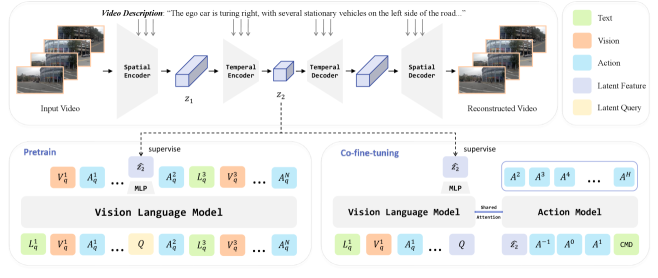
Figure 2: HyWorldVLA three-stage training — video VAE, world model pre-training, co-fine-tuning.
VAE loss balances reconstruction, adversarial, and KL:
$$\mathcal{L}_{\text{vae}} = \mathcal{L}_{\text{rec}} + \lambda_{\text{GAN}} \mathcal{L}_{\text{GAN}} + \lambda_{\text{KL}} \mathcal{L}_{\text{KL}}$$Multi-layer text cross-attention with Flan-T5 embeddings suppresses motion ghosting, edge blurring, and temporal flickering.
Pre-training
Simultaneous pixel-level and latent-level world modeling with learnable query $Q$. Pre-training loss combines visual token prediction ($\lambda_1$) and latent motion prediction ($\lambda_2$):
$$\mathcal{L}_{\text{pre}} = \lambda_1 \mathcal{L}_{\text{pixel}} + \lambda_2 \mathcal{L}_{\text{latent}}$$Optimal: $\lambda_1 = 0.5$, $\lambda_2 = 0.1$. Excessive $\lambda_1 = 1.0$ drops score from 90.59 to 89.83.
Co-Fine-Tuning
Model exclusively predicts latent features fed to action expert via joint attention. Latent supervision ($\lambda_3$) prevents semantic collapse:
$$\mathcal{L}_{\text{co-ft}} = \mathcal{L}_{\text{action}} + \lambda_3 \mathcal{L}_{\text{latent-sup}}$$$\lambda_3 = 0.1$ optimal — appropriate supervision prevents degradation, but excessive supervision (1.0) hinders autonomous latent semantic learning.
graph TD
    A["Video VAE Training
Text-guided spatio-temporal compression"] --> B["Pre-training
Pixel + Latent World Modeling"]
    B --> C["Learnable Query Q predicts future latents"]
    B --> D["Simultaneous frame reconstruction
Pixel-level grounding"]
    C --> E["Co-Fine-Tuning
Latent-only prediction"]
    D --> E
    E --> F["Action Expert
VLM hidden states + future latents + history"]
    F --> G["Output waypoints W_{t+1:t+T}"]
Experiments
NAVSIM Benchmark
| Type | Method | PDMS (v1) ↑ | EPDMS (v2) ↑ |
|---|---|---|---|
| End-to-end | DiffusionDrive | 88.1 | 84.5 |
| VLA | ReCogDrive-8B | 90.5 | 83.6 |
| Pixel WM | DriveVLA-W0 | 90.2 | 86.1 |
| Latent WM | Latent-WAM | — | 87.7 |
| HyWorldVLA | Ours | 90.59 | 89.71 |
SOTA on both v1 and v2, significantly outperforming pixel-based and latent-based WM baselines.
Ablation Study
| Config | PDMS ↑ | Notes |
|---|---|---|
| Pure LWM (no pixel regression) | 87.50 | Lowest — spatiotemporal modeling critical |
| Pure WAM (no latent) | 89.91 | High-level semantics limited |
| w/o language guidance | 90.35 | Language guides planning semantics |
| w/o latent in action expert | 90.29 | Future info benefits action |
| w/o latent supervision in co-ft | 90.17 | Prevents semantic collapse |
| Full model | 90.59 | All components synergistic |
Scene Noise Robustness
On 655 rain/fog noise cases, HyWorldVLA achieves 86.87 PDMS vs WoTE 60.65, DriveLaW 67.49, DriveVLA-W0 61.18. Pure WAM (69.95) and w/o latent supervision (73.18) confirm latent representation is the key robustness source.
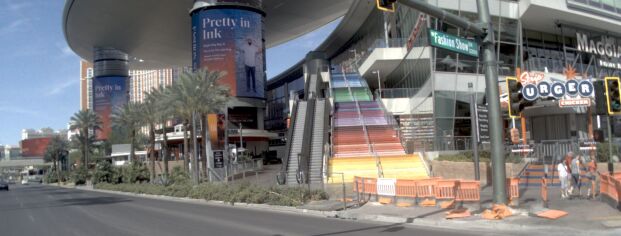
Figure 3: Hybrid world modeling improves noise robustness — DriveVLA-W0 is unstable under illumination changes; our method remains consistent.
From an information-theoretic perspective, the hybrid approach provides complementary information:
$$I_{\text{hybrid}} = I_{\text{pixel}} + I_{\text{latent}} - I_{\text{overlap}}$$Pre-training maximizes $I_{\text{hybrid}}$ using both supervisions; co-fine-tuning retains only latent supervision to reduce noise-sensitive pixel redundancy. VAE compression to $\frac{1}{256}$ of original size acts as a low-pass filter, reducing noise variance by approximately 256×:
$$\sigma^2_{\text{latent}} \approx \frac{\sigma^2_{\text{pixel}}}{K}, \quad K = 8 \times 8 \times 4 = 256$$This explains why HyWorldVLA's PDMS drops only ~3.7 points (90.59→86.87) under noise, while pixel-based DriveVLA-W0 drops ~29 points (90.2→61.18).
Limitations
- Monocular-based framework not yet extended to multi-modal sensors (LiDAR, surround cameras)
- Latent dynamics coupling with critical traffic elements needs strengthening
- Noise robustness test set only covers rain/fog; other noise types (snow, night) insufficiently validated
- Video VAE text cross-attention increases training complexity
Conclusion and Outlook
HyWorldVLA combines pixel-level fine-grained spatiotemporal modeling with latent noise robustness. Pixel reconstruction preserves detailed spatial/dynamic information; latent prediction in VAE space inherently improves noise resilience. NAVSIM v1/v2 experiments achieve SOTA, with rain/fog validation confirming robustness. Future work includes multi-modal sensor extension and stronger latent-traffic element coupling.
Key Insight: Pixel-based world modeling provides fine-grained spatiotemporal reasoning but fears noise; latent world modeling is robust but lacks grounding — hybridizing both is the optimal solution for autonomous driving VLAs.
SOURCE LINKS