Skip to content
STeP: Signal Temporal Logic for Precise Specifications for Action Generation with Vision Language Models

STeP: Signal Temporal Logic for Precise Specifications for Action Generation with Vision Language Models

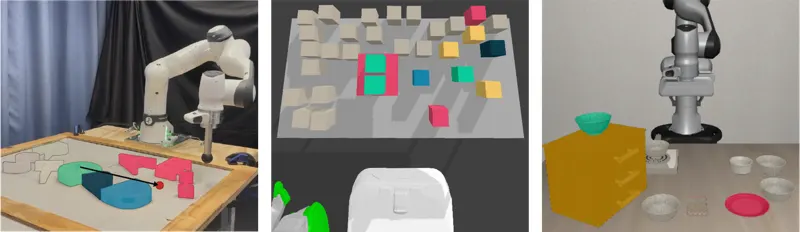
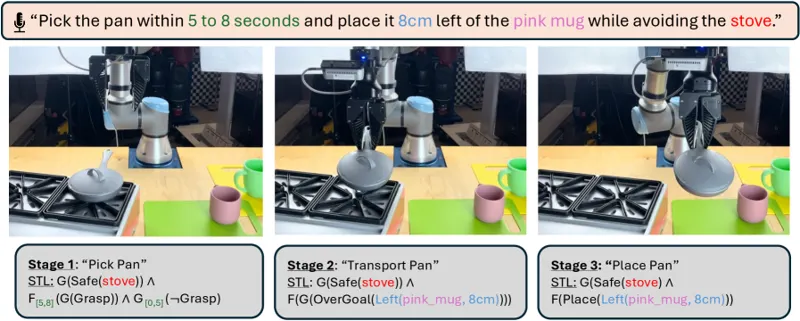
Vision-language-action (VLA) models have shown impressive generalization, but often lack interpretability and can struggle to follow precise natural language instructions that encode spatial, temporal, and logical requirements. We propose a hierarchical framework that uses Signal Temporal Logic (STL) as a shared representation connecting high-level language understanding with low-level robot execution. A high-level policy leverages a VLM to decompose language instructions into high-level subtasks, generate STL specifications for each subtask, and choose a low-level policy for executing each subtask. The STL specifications translate language-derived intent into precise constraints, and the low-level policy selection determines whether those constraints are enforced directly through STL-guided model-predictive control or monitored during execution of a learned policy for perceptually complex, or contact-rich behaviors. By integrating STL into plan validation, low-level policy, subtask monitoring, and replanning, our framework enables language-derived plans to be checked, optimized, and revised at runtime using a common formal structure. We evaluate the approach on a real-world tabletop domain, demonstrating how formal specifications can improve the precision, reliability, and interpretability of language-conditioned robot planning.

Vision-language modelsTemporal LogicMotion GenerationKasra Torshizi, Anukriti Singh, Sidharth Mathur·Jul 20, 2026
RoboInter1.5: A Holistic Intermediate Representation Suite for Embodied World Modeling and Robotic Manipulation

RoboInter1.5: A Holistic Intermediate Representation Suite for Embodied World Modeling and Robotic Manipulation

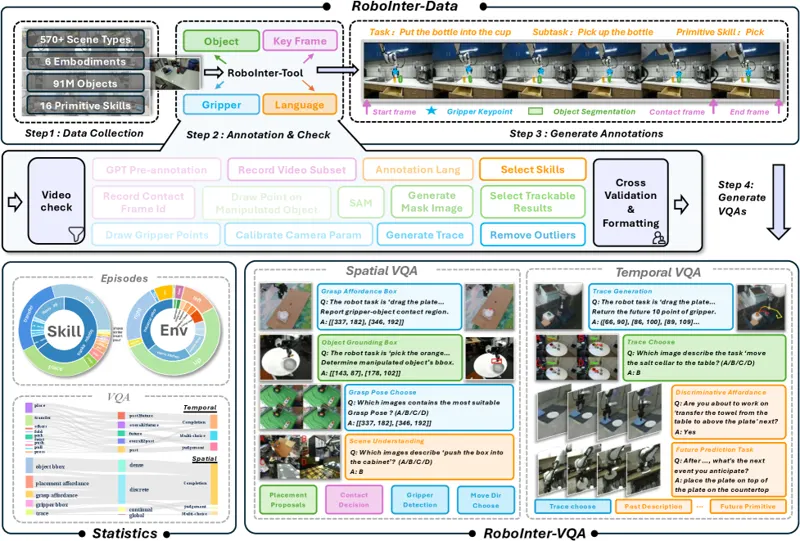
Existing robot datasets remain expensive to curate, embodiment-specific, and insufficiently annotated with the fine-grained structure required for generalizable reasoning, execution, or long-horizon environment dynamics simulation. Building on our prior work, RoboInter1.0, we present RoboInter1.5, an extended and holistic suite of intermediate representations for both robotic manipulation and embodied world modeling. RoboInter1.5 provides a unified resource of data, benchmarks, and models centered on dense manipulation-oriented intermediate representations. Specifically, RoboInter-Data contains over 230k manipulation episodes across 571 scenes with dense per-frame annotations covering more than ten types of intermediate representations, including subtasks, primitive skills, object and gripper grounding, segmentation, affordance, grasp poses, contact points, motion traces, etc. Built upon these annotations, RoboInter-VQA introduces spatial and temporal embodied VQA tasks to benchmark and improve the intermediate-representation reasoning capabilities of our RoboInter-VLM. RoboInter-VLA further studies how such representations benefit action execution through implicit, explicit, and modular plan-then-execute paradigms. To better model the physical world, we further introduce RoboInter-World, which leverages intermediate representations as structured conditioning signals for controllable prediction of future world states. Extensive evaluations demonstrate that RoboInter1.5 provides a unified spatiotemporal scaffolding for intermediate representations. Rather than treating intermediate representations merely as interpretable signals, RoboInter1.5 conceptualizes them as a bidirectional interface that both regularizes low-level action spaces and constrains the latent rollouts of open-world physical simulators.
Robot InteractionRepresentation LearningIntermediate RepresentationZiqin Wang, Hao Li, Weijun Wang·Jul 21, 2026
ReferTrack: Referring Then Tracking for Embodied Visual Tracking

ReferTrack: Referring Then Tracking for Embodied Visual Tracking

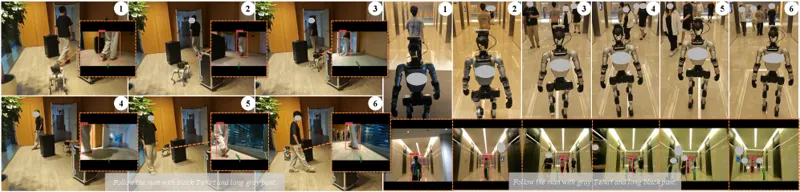
Embodied visual tracking (EVT) requires a mobile agent to continuously follow a specific target described in natural language using only onboard vision. While recent vision-language-action (VLA) policies unify target identification and trajectory planning, their chain-of-thought (CoT) reasoning often operates in abstract spatial latents that are difficult to supervise and weakly aligned with explicit image-space detections. To address this, we introduce ReferTrack, a referring-then-tracking paradigm that grounds EVT using a single forward-facing camera. Our model first selects the target from an indexed set of bounding boxes, then decodes tracking waypoints conditioned on this image-grounded decision. To preserve target motion cues over time, ReferTrack maintains a sliding-window queue of previously selected bounding boxes, injecting their geometric features into the visual history via temporal-viewpoint-bbox indicator (TVBI) tokens. We further enhance target identification by co-training on a custom Refer-QA dataset. On EVT-Bench, ReferTrack achieves state-of-the-art single-view performance with success rates of 89.4%, 73.3%, and 74.1% on the single-target, distracted, and ambiguity tracking splits, respectively – matching or even surpassing several multi-camera baselines on identification-heavy tasks. Finally, real-world deployments on legged and humanoid robots validate its robust sim-to-real transfer capabilities. Code is available at https://github.com/MedlarTea/referTrack.

VLAObject trackingReferenceHanjing Ye, Tianle Zeng, Jiazhao Zhang·Jul 22, 2026
Koopman Dreamer: Spectrally Constrained Latent Dynamics for Stable World-Model Imagination

Koopman Dreamer: Spectrally Constrained Latent Dynamics for Stable World-Model Imagination

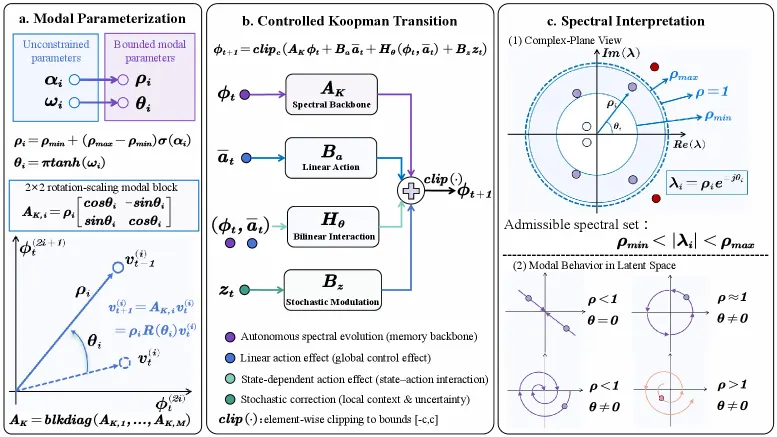
Latent world models improve sample efficiency in continuous control by optimizing policies over imagined latent trajectories, but common neural transitions offer limited direct control over modal persistence and error accumulation in long rollouts. We propose Koopman Dreamer, a Dreamer-style world model with a spectrally constrained deterministic latent dynamics core. Its Koopman-inspired backbone uses two-dimensional rotation–scaling blocks with bounded radii to represent damping, rotation, and near-periodic modes. Linear and low-rank bilinear action terms capture global and state-dependent control effects, while stochastic-state modulation supplies local correction information. To reduce the mismatch between posterior-conditioned training and prior-only imagination, the model combines posterior-conditioned EMA teacher targets with one-step consistency, multi-step rollout, and open-loop observation-prediction objectives. We further derive a multi-step rollout-error bound that separates amplification by the spectral backbone and bilinear interaction from the additive effects of stochastic-state mismatch and modeling residuals, clarifying the trade-off between error attenuation and long-term information retention. Experimental results on proprioceptive continuous-control tasks from the DeepMind Control Suite and UAV-LiDAR autonomous navigation demonstrate that Koopman Dreamer improves the stability of long-horizon latent rollouts and achieves stronger closed-loop control performance on tasks that rely on high-quality multi-step imagination.

DreamerKoopmanWorld ModelsJiaqi Li, Xinglong Zhang, Haibin Xie·Jul 22, 2026
The World Model Remembers, the Actor Forgets: Dream Rehearsal for Continual Model-Based RL

The World Model Remembers, the Actor Forgets: Dream Rehearsal for Continual Model-Based RL

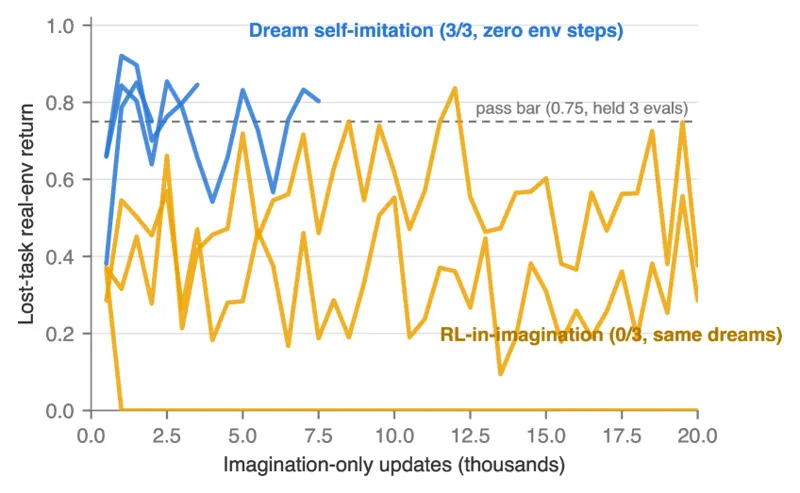
Model-based reinforcement-learning agents of the DreamerV3 family forget catastrophically when trained on task sequences, even when an unbounded replay buffer preserves every earlier experience. We ask a question the continual-RL literature has assumed an answer to but never measured: which component forgets? Under never-clear replay, pre-registered component-level probes (n=3 seeds throughout) show that the world model retains essentially everything measurable about old tasks – reward discrimination (retention ratio ~1.0), value estimates, and termination structure – while the actor's behavior collapses. Forgetting in this regime is a channel problem, not a memory problem. We demonstrate this by intervention: with the world model frozen and identical imagined rollouts, reinforcement learning in imagination fails to recover a lost skill (0/3 seeds), while supervised self-imitation on the world model's own graded dreams recovers it on 3/3 seeds with zero environment interaction. Interleaved during training, this graded dream rehearsal yields a task-label-free, parameter-constant continual learner: 3/3 four-task chains retained where plain replay passes 0/3, 3/3 eight-task chains, and consistent gains over matched real-episode cloning (paired difference +0.13, bootstrap 95% CI [0.07, 0.24], complete seed separation). The dream-grading step is load-bearing: we characterize two scoring failure modes, provide an offline selection gauge that caught both before they contaminated results, and give a realized-first grading rule that closes them. All experiments were pre-registered with committed protocols; every refuted hypothesis is reported.

DreamerWorld ModelsContinual learningGurp Nijjer·Jul 22, 2026
Dreamer-CPC: Message Learning with World Models for Decentralized Multi-agent Reinforcement Learning

Dreamer-CPC: Message Learning with World Models for Decentralized Multi-agent Reinforcement Learning

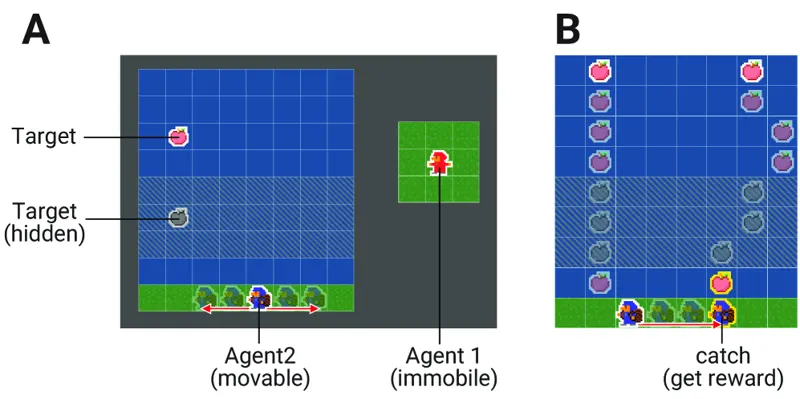
In multi-agent reinforcement learning (MARL), inter-agent communication is effective for improving performance under partial observability. Representation learning-based approaches enable decentralized agents to learn messages grounded in their own observations, but they rely only on current observations and cannot convey information accumulated over time. We propose Dreamer-CPC, a decentralized model-based MARL method that integrates message learning based on Collective Predictive Coding (CPC) into the world model of DreamerV3. Each agent independently maintains a world model and a message module, and infers and exchanges messages from the latent states of the world model that reflect the history of past observations and actions. We evaluated Dreamer-CPC in two environments: Observer, a non-cooperative information-sharing task, and CatchApple, a newly introduced task in which task-relevant observations are temporarily missing. In both environments, Dreamer-CPC outperformed IPPO-CPC, an existing CPC-based method that generates messages from current observations, as well as no-communication baselines. In particular, in CatchApple, Dreamer-CPC achieved 4 to 5 times the episode return of IPPO-CPC, demonstrating effective coordination where other methods fail due to missing observations. These results suggest that communication grounded in the latent dynamics of world models can support decentralized decision-making when current observations alone are insufficient.

DreamerWorld ModelsMulti-agentTaisuke Takayama, Naoto Yoshida, Tadahiro Taniguchi·Jul 22, 2026
Odin: Primitive-Level Synchronization for Distributed Point-Based Neural Rendering

Odin: Primitive-Level Synchronization for Distributed Point-Based Neural Rendering

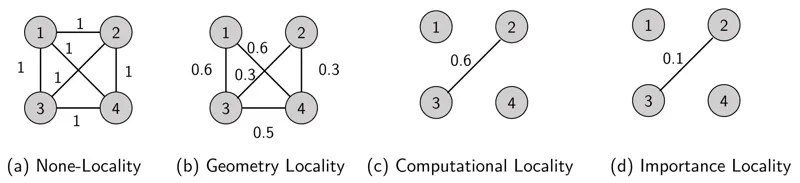
Point-based neural rendering (PBNR) represents 3D scenes as explicit, trainable primitives and underpins high-quality reconstruction and emerging embodied AI and world-model pipelines. Unlike layer-structured neural networks, PBNR has primitive-indexed dependencies: each view reads and updates only a sparse, view-dependent subset of mutable scene state. As large scenes require distributed training and optimized renderers reduce per-view computation, global task- or iteration-level barriers increasingly place synchronization, rather than rendering, on the critical path. We present Odin, a distributed PBNR training system that replaces global barriers with primitive-level synchronization. Its ahead-of-time scheduler uses stable locality and phase order to identify low-conflict overlap windows, while the runtime validates primitive publication before later work observes mutable state. Odin provides a quality-first path that preserves synchronized-training visibility and a throughput-first path that uses overlap and gradient evidence to admit only small, low-impact delayed reads; structural changes and high-impact cases remain synchronized. Across four existing PBNR pipelines and 13 non-city scenes on 8 GPUs, Odin improves throughput by 1.22 times on average and hides 82% of critical-path wait while preserving reconstruction quality. In a MatrixCity mixed-parallel case study scaling to 64 GPUs, Odin improves throughput over Grendel by up to 1.89 times without changing renderer kernels, optimizers, training budgets, or model capacity.

3D Gaussian SplattingNeural renderingPoint cloudsZhenxiang Ma, Zeyu He, Yuanzhen Zhou·Jul 22, 2026
PhysCoRe: Physics-Corrected Residual World Models for Material-Aware Deformable Dynamics

PhysCoRe: Physics-Corrected Residual World Models for Material-Aware Deformable Dynamics

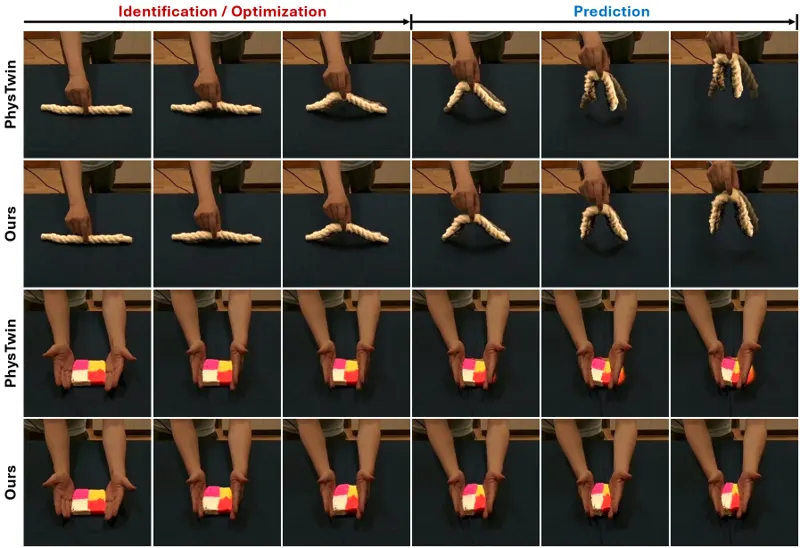
Predicting how deformable objects evolve under robotic manipulation is a longstanding challenge. Existing approaches typically rely on per-object optimization to fit material parameters, which can be slow and cannot generalize, while end-to-end learned alternatives extrapolate poorly and often violate basic physical structure. We present PhysCoRe, a physics-corrected residual world model that couples a differentiable Material Point Method (MPM) simulator with two feed-forward neural networks. A material refinement module, Material from Motion (MfM), infers per-particle elasticity from visual observations, grounding the simulator in object-specific physics. A residual correction module, Residual from Dynamics (RfD), learns the discrepancy and predicts corrections to the simulator's internal dynamics, absorbing systematic biases that the analytical model cannot capture. This design also supports online material identification on novel objects. MfM adapts from limited interactions, and its predictive uncertainty steers further exploration toward the regions where its estimate is least confident. Experiments on real deformable-object manipulation sequences show that PhysCoRe outperforms state-of-the-art baselines in prediction accuracy, and that its predicted confidence forms a reliable distribution across the object's geometry, providing a natural signal for future confidence-guided exploration.

World ModelsPhysics simulationDeformable ObjectsHaocheng Yin, Shuohan Tao, Yongsheng Chen·Jul 22, 2026