NEO's Hands: An API to the Physical World
1X announces 25-DOF tendon-driven hands for NEO. Low gear ratios enable force transparency and backdrivability, combined with high-resolution tactile skin, turning every grasp into an experiment — a perception stack, not just an actuator.
NEO's Hands: An API to the Physical World
1X announces their breakthrough 25 Degree of Freedom (DOF), tendon-driven hands for the NEO humanoid platform — achieving near human-level dexterity, strength, safety, and reliability. These hands are designed to do something fundamental: remove the hardware ceiling on what humanoid robots can actually do, and make data the only barrier to capabilities.
By matching or surpassing human hands across the dimensions that matter, NEO's new hands ensure that AI models are no longer limited by dexterity. NEO can now perform virtually any task a human can do with their hands — with the precision, adaptability, and gentleness required for real-world environments.
Not an End Effector, But an Instrument
A hand is how a robot acts on the world. The new NEO hands are the most capable ever built across nearly every metric. Everything else — the model, the perception stack, the legs — determines how well the machine reaches the world. The hands determine what it can do there, what it can know about what it's doing, and therefore what anyone building on it can achieve.
A humanoid with a two-finger gripper exposes three verbs to developers: pick, place, push. Every application anyone writes on that platform is a composition of those three verbs, forever — executed blind. The ceiling isn't in the software. It's at the end of the arm. These are the hands that will ship on every NEO. With them, the hardware ceiling on what humanoid robots — and the developers building for them — can do is finally gone.
Touch Is an Experiment, Not a Passive Channel
Watch a person meet an unfamiliar object and notice how little they look at it. They press it to find hardness. They slide a fingertip to read texture. They heft it for weight, trace the contour for shape, squeeze and release to feel it give. Touch is not a passive channel the way a camera is — it's an experiment. The hand asks a question with force and reads the answer back through the same joints that asked it.
That is how humans come to understand objects, and it is how we learned manipulation in the first place: by probing, millions of times, from the crib onward. A hand is not an actuator bolted to the end of a perception stack. It is a perception stack. An instrument. And its quality as an instrument is set by the whole machine at once.
The Perception Stack of a Hand
Writing the question takes precise force control. Reading the answer takes backdrivability and force transparency, so the world's reaction flows back through the transmission instead of dying in a gearbox. Posing the question takes degrees of freedom and precision. Feeling the fine print takes skin. Catching a fast answer takes bandwidth. And asking millions of times takes robustness, because probing is contact and contact is wear.
Most robot hands are write-only devices. You command a position; the hand goes there; nothing meaningful comes back. The transmission is the reason: at the 100:1 and 200:1 gear ratios common in the field, friction swallows the contact forces before they ever reach the motor. The hand is numb through its own joints, so builders wrap it in external sensors and infer what's happening at the fingertips.
1X Tendon Drive: Read-Write Hands
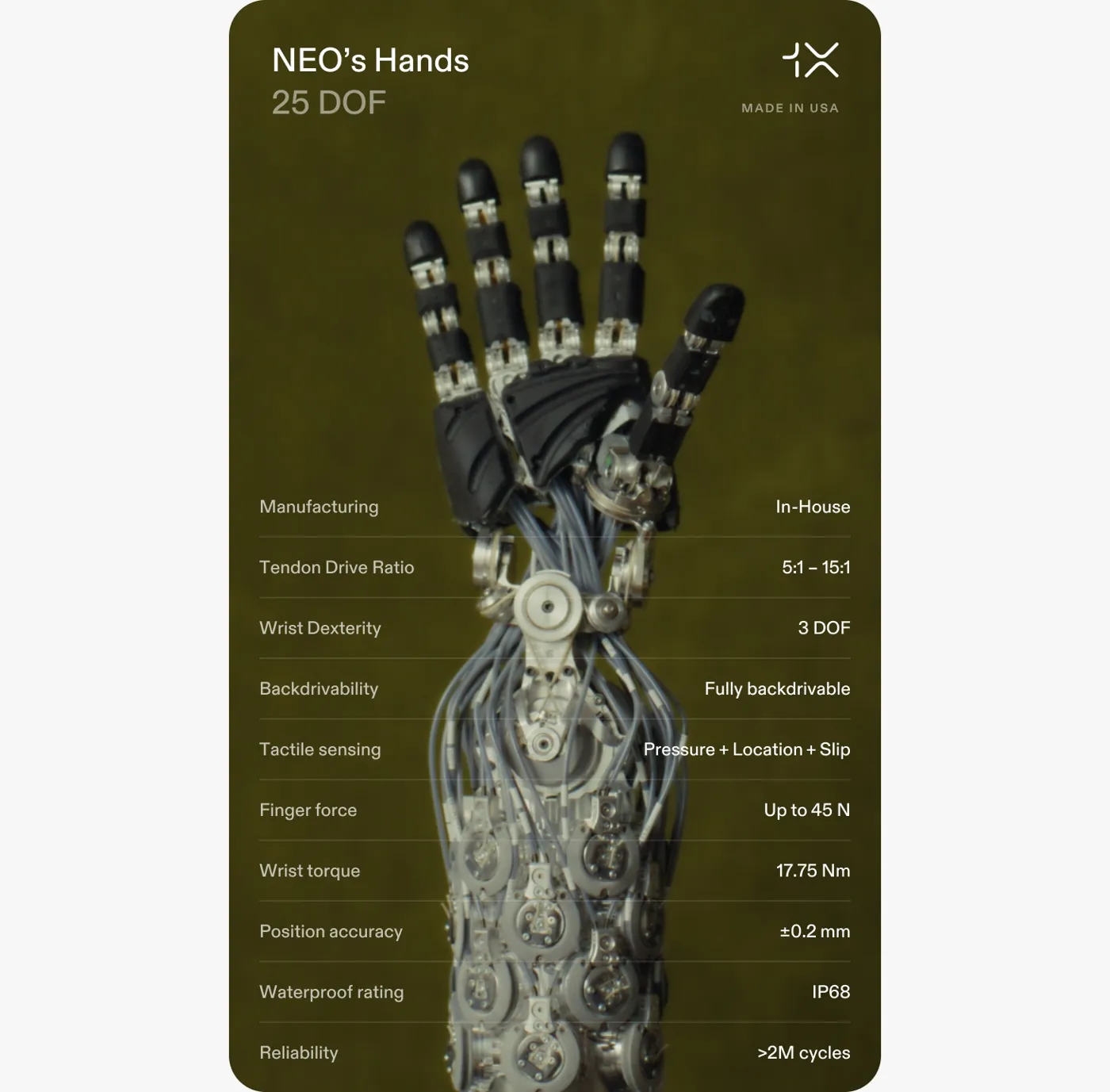
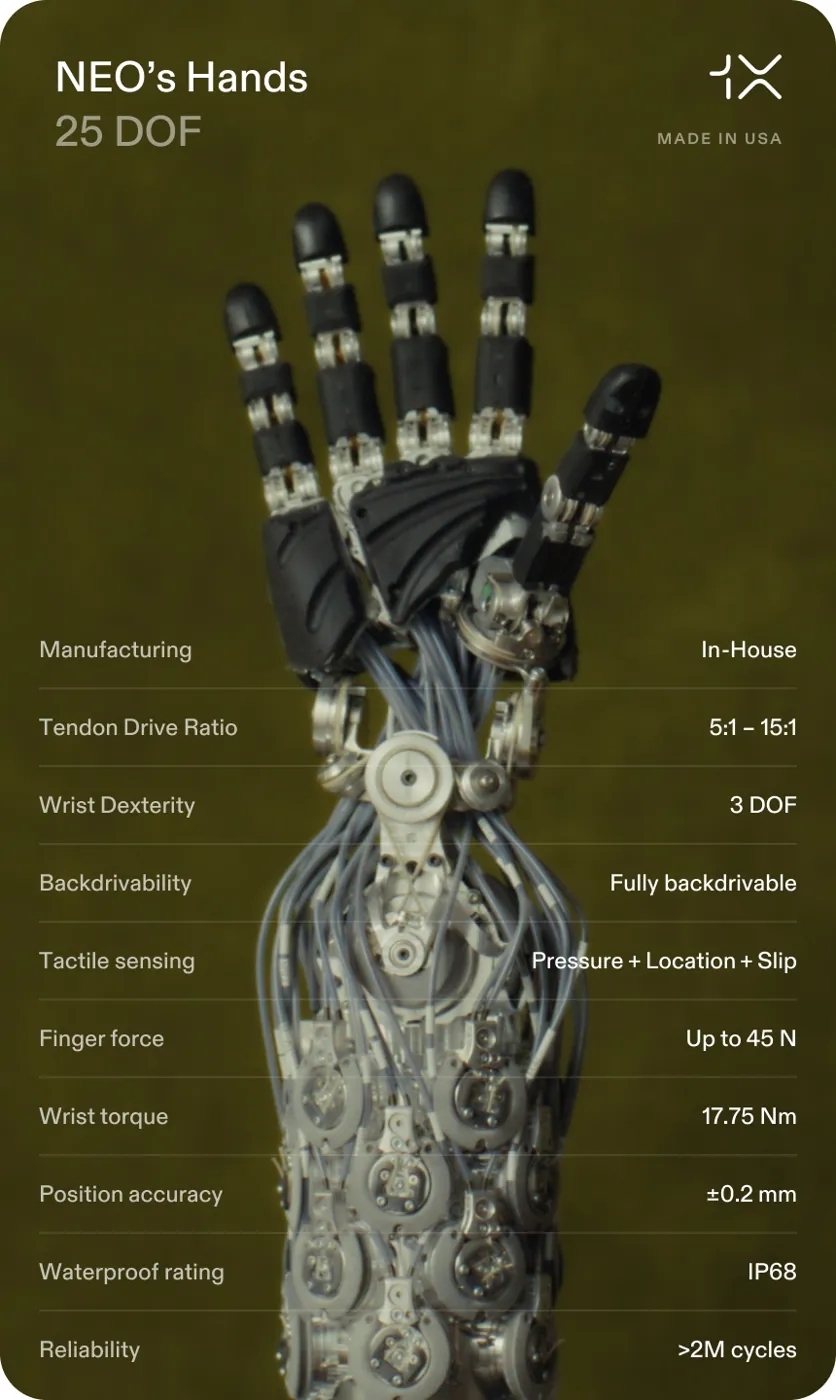
The NEO hand is read-write. Developed from the ground up by 1X's engineering team, it runs quasi-direct-drive tendons via the 1X Tendon Drive at low gear ratios of approximately 5:1 to 15:1. All 25 degrees of freedom (22 fully actuated DoF in the fingers and palm, plus 3 at the wrist) are natively force-controlled and fully backdrivable.
Push on a finger and it yields — and reports exactly how hard you pushed. Force flows out and information flows back through the same physical path. This is called force transparency, and it's what turns a push into a measurement. There's also a quieter read running alongside closed-loop: the hand always knows its own configuration without looking, in the same way you can touch your fingertips together with your eyes shut.
25 Force-Transparent Degrees of Freedom
What do 25 force-transparent degrees of freedom actually buy? Not joints for their own sake — a repertoire of grasps and questions. The allocation matters more than the count: the DoF are distributed the way anatomy distributes them, biased toward a thumb that genuinely opposes. This architecture was chosen as the optimal balance between human-like manipulation capability and practical manufacturing, control, and serviceability.
The result speaks for itself. These new hands match or exceed human performance in fine manipulation. NEO can:
- Assemble LEGO structures
- Pick up individual screws and coins from a wallet
- Spin and install light bulbs
- Use a screwdriver
- Rotate objects in-hand
- Zip a jacket
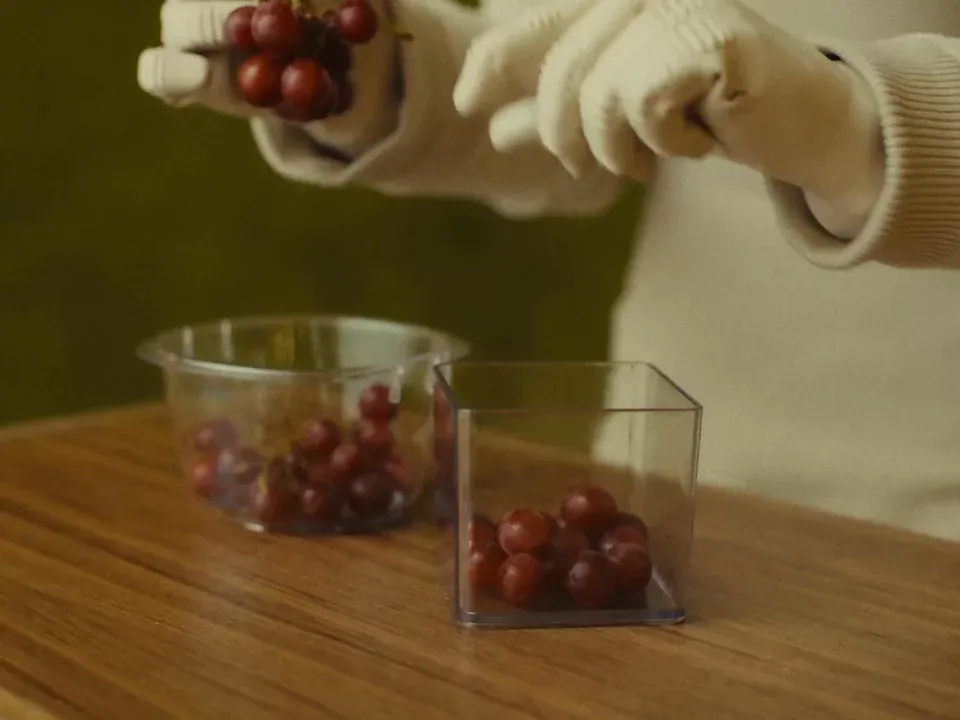
- Sort grapes by color
- Pour tea from a kettle
- Catch a squishy ball
- Plug in a USB-C charger
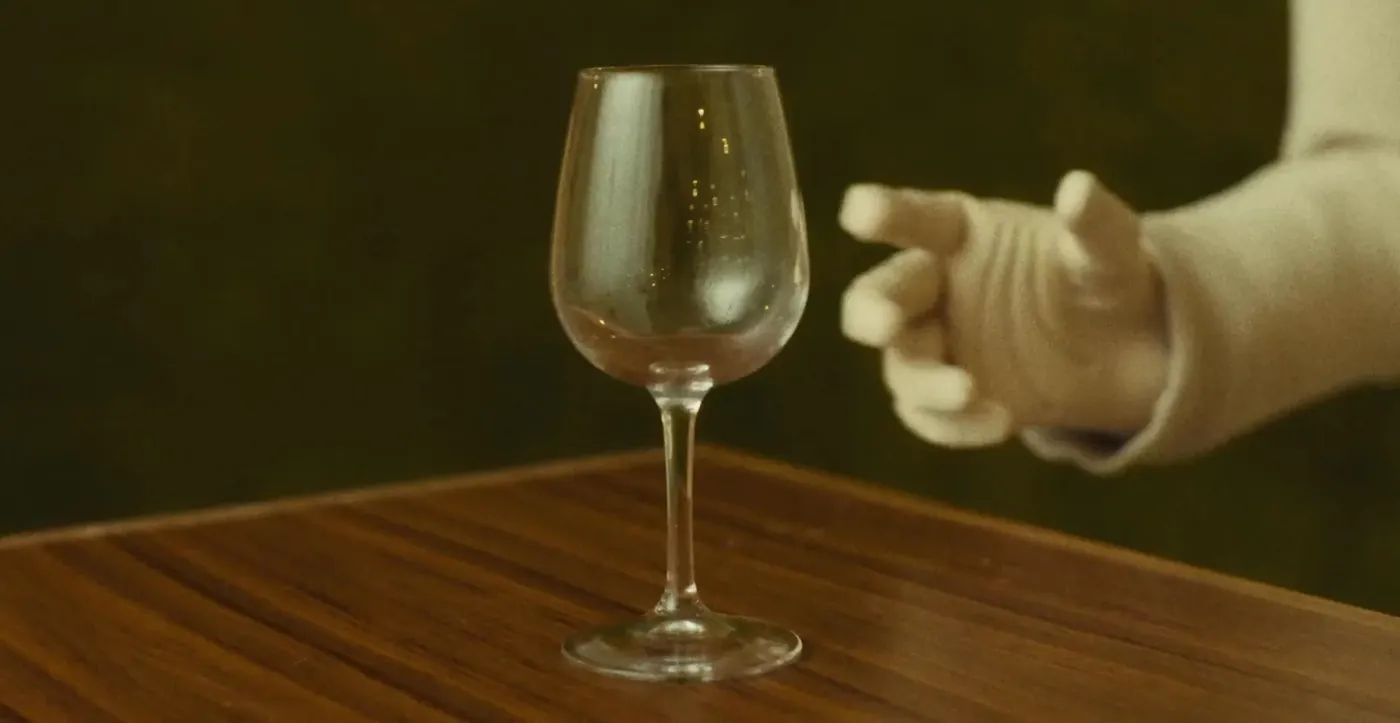
- Grab a wine glass
- Wipe surfaces with a paper towel and spray
- Communicate via sign language
Strength, Precision, and Durability
These 25-DoF hands are IP68 waterproof and food-safe, allowing NEO to wash its own hands like a human. Far from fragile, they deliver powerful, useful strength:
- Peak torques reach 3.5 Nm at the thumb CMC and 2.6 Nm at the finger MCP joints
- Distal flexion forces up to 45N
- The wrist delivers 17.75 Nm of torque
- ±0.2 mm positioning accuracy
This enables strong whole-hand grasps, tool use, lifting and carrying, opening doors, pushing loaded carts, and precision pinch under load, all while retaining full dexterity. Those aren't demo modes. They're the natural output of enough independent, force-controlled DoF at human scale.
The Skin: Tactile Sensing as an Image
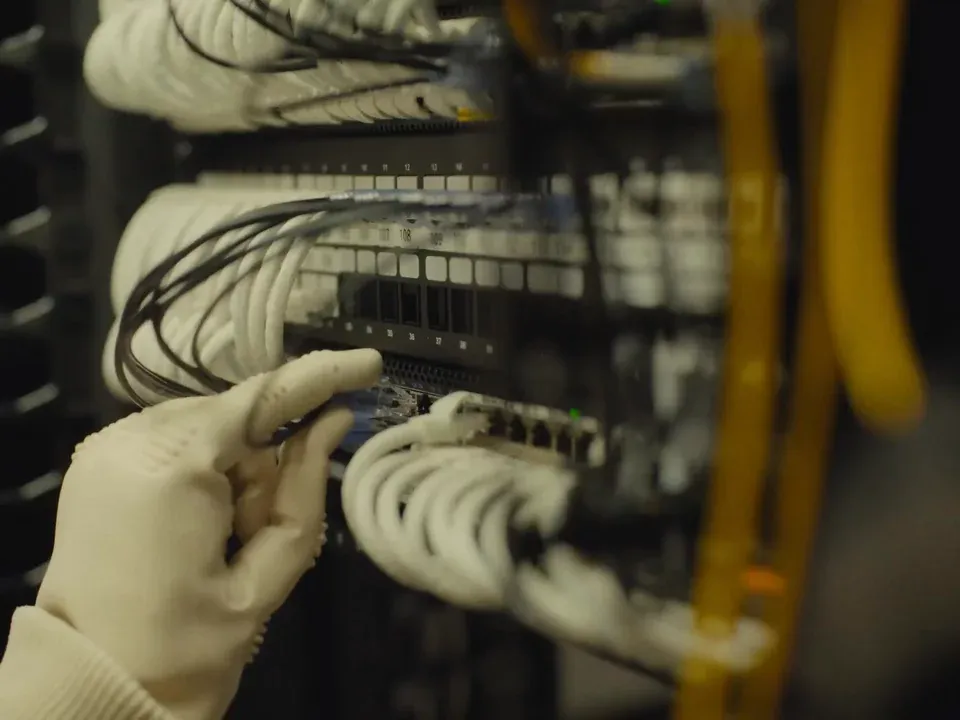
The skin adds the channels. Tactile data is an image — it has dynamic range, resolution, channels, and field of view. NEO's hands feature rich, high-resolution tactile sensing across the fingertips and surfaces, measuring normal force, contact location, and shear. This enables NEO to detect when objects begin to slip and respond in real time.
The skin is co-designed with the sensors inside it and the tendons behind it. It is a functional material, not a cosmetic one. Because vision alone is insufficient for many tasks (especially with small, transparent, deformable, or occluded objects), this contact feedback is critical for adaptive, intelligent manipulation.
Reflex, Robustness, and Safety
Perception through action has a clock speed. Feel the slip begin through the shear channel; re-grip through the transparent joints before it finishes. A hand that learns by touching everything must survive touching everything. These hands are built for continuous operation and maintain performance after millions of interaction cycles.
Reliability was designed into every subsystem: tendon routing, bearings, finger structures, electrical cable routing, tactile integration, electronics, and assembly procedures. Drive units have been tested at extreme temperatures, and wrist joints have been proven reliable well beyond 2 million cycles under high loads.
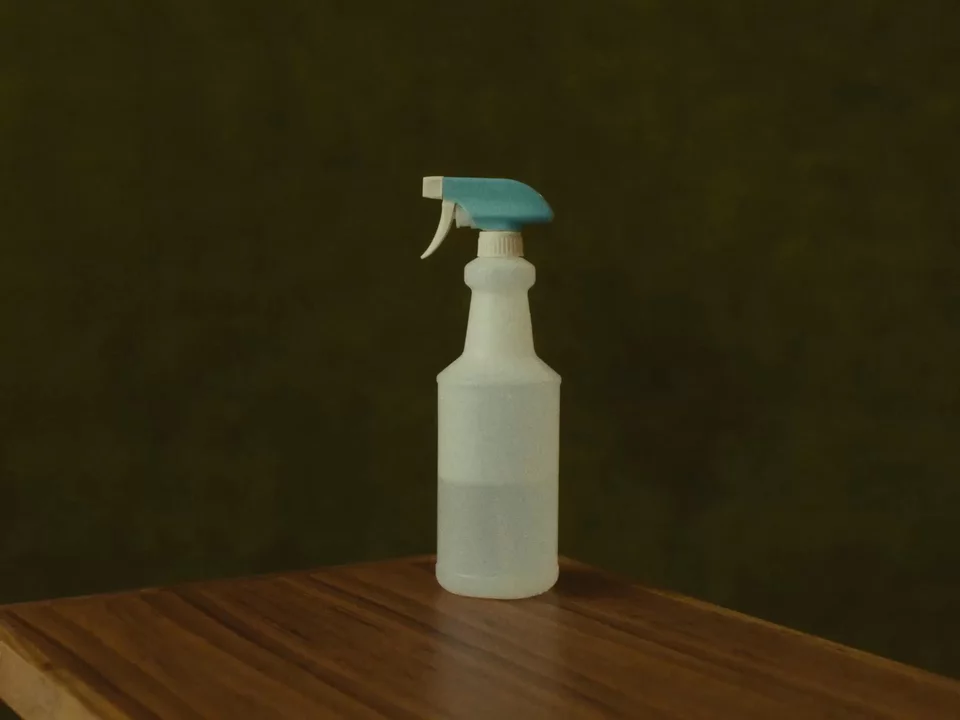
The whole hand is sealed to IP68 with food-safe materials, so it works at the sink and washes itself when dirty. Compliance closes the loop on safety: extremely low gear ratios, combined with the tendon drive and low distal inertia, allow external impacts to safely backdrive the fingers. A machine that perceives by touching had better be gentle by construction, because the world it needs to touch has people in it.
Vertical Integration: The Full Stack
An API is only as good as its physical layer. The motors live in the forearm, where most of your own grip strength lives — pulling proprietary tendons through the wrist. This is how a lightweight hand produces such high forces while running cool enough for continuous operation. The hands are designed as an integral part of the full NEO stack — tightly integrating in-house motors, custom electronics, embedded sensing, proprietary tendon systems, compact transmissions, and hand-specific firmware.
This deep vertical integration enables rapid iteration and compounding improvements that modular approaches simply cannot match. Every grasp is an experiment.
Conclusion: The Substrate Learning Has Been Waiting For
A hand that perceives by acting turns every task into an experiment: every joint reports force, every fingertip reports contact and shear, every pose is known. Every grasp a policy takes arrives pre-labeled, and every probe returns a measurement. This is the substrate learning-based manipulation has been waiting on — and it's the same substrate that makes NEO useful in a home. The hardware ceiling is gone. What remains is data.
Source: 1X Tech — NEO's Hands | An API to the Physical World
Source:1X Techhttps://1x.tech/discover/neos-hands