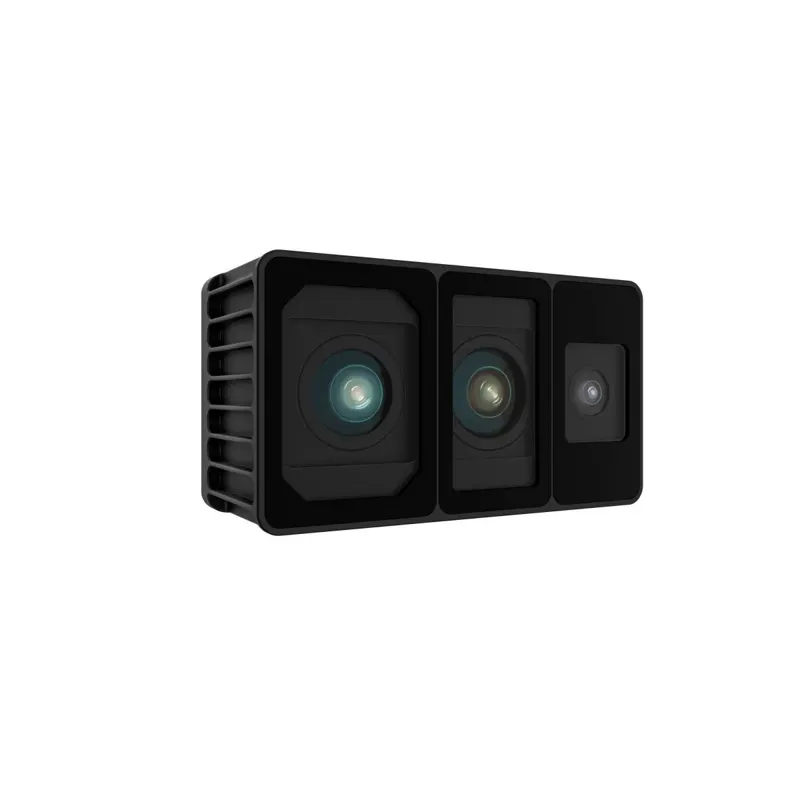
Liuxing's Eye of Odin Odin1 spatial memory module: on the hardware side, a SPAD dToF depth module, global-shutter RGB camera, high-precision IMU and on-board NPU deliver native space-time synchronization; on the software side, the in-house MindSLAM multi-sensor fusion stack performs fusion, 3D mapping, 6DOF pose estimation and spatial-memory relocalization on-module, outputting pose, point cloud and trajectory directly.
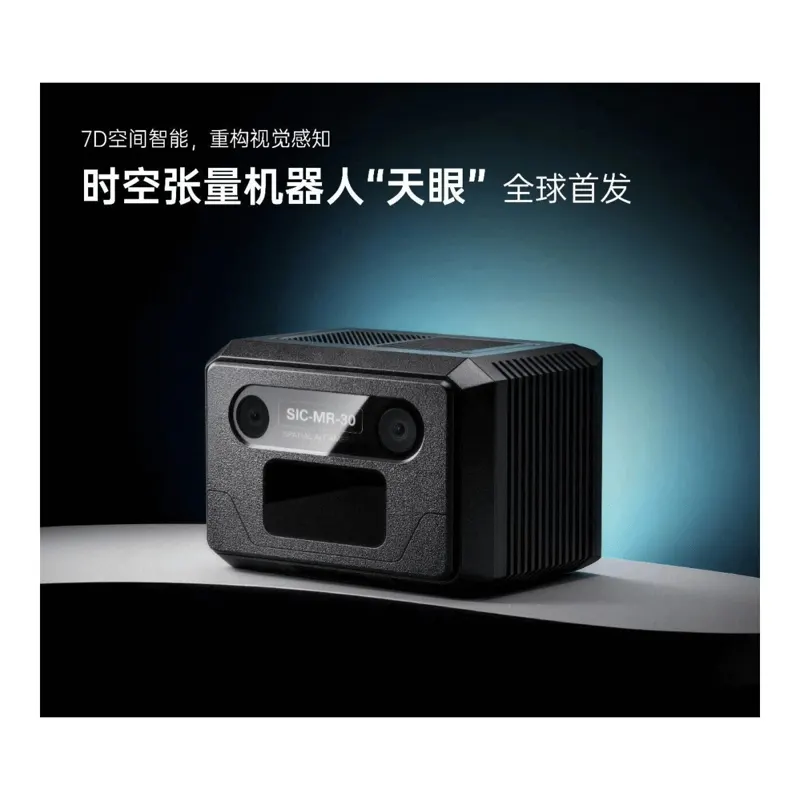
Tensopt, inheriting 60+ years of precision optoelectronics from the Chinese Academy of Sciences' Xi'an Institute of Optics, debuted its Sky Eye SIC-MR-30: a proprietary single-optical-path dual-mode architecture performing 3D ranging and 2D semantic imaging simultaneously on one hardware, front-end fusing RGB, depth, point cloud and temporal information into 7D data (XYZ + RGB + timestamp); 0.15-30 m range with <1% distance precision, up to 30.72M points/s, on-board AI outputting colored depth point clouds directly, with standout detection of transparent and highly reflective objects.
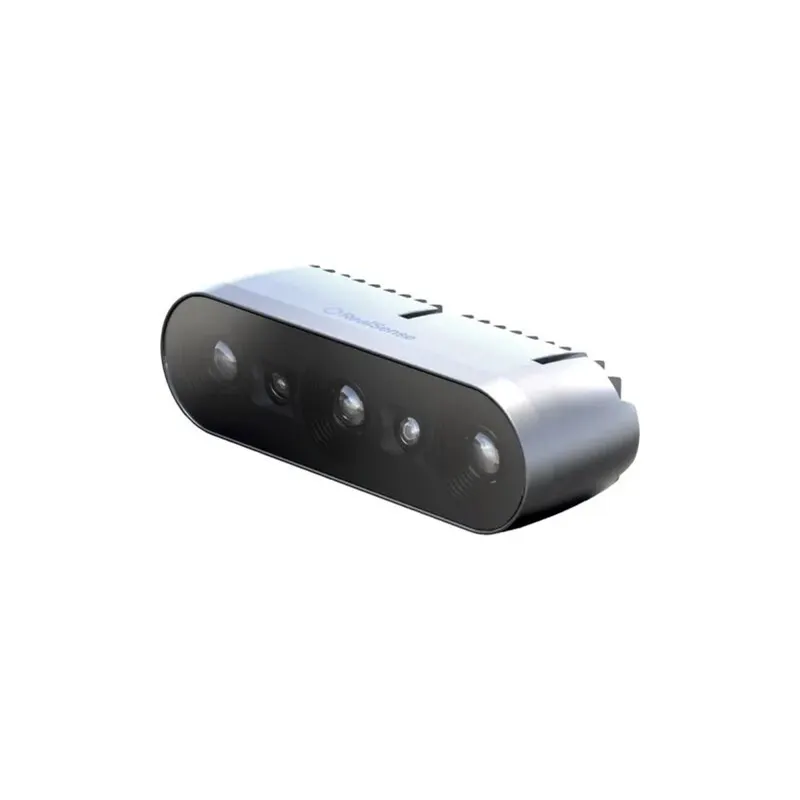
The latest RealSense D585 pairs a V5 processor and fifth-generation architecture with on-camera depth and edge-AI compute: 12 cm to 10 m+ ranging, a 120° ultra-wide FOV at 60 FPS, IP65 as standard, and dual RGB plus stereo structured light — one camera covering the full perception stack from manipulation to navigation.
Orbbec's next-gen robotics vision series unveiled at WRC 2026: 257 g body, 63 mm stereo baseline, 120°x90° FOV, dual 1920x1200@60fps color streams, 0.1 m to 10 m+ depth range, with integrated IMU and AI depth engine that pushes depth computation, synchronization and edge processing onto the camera itself — turning the sensor from data collector into data processor.
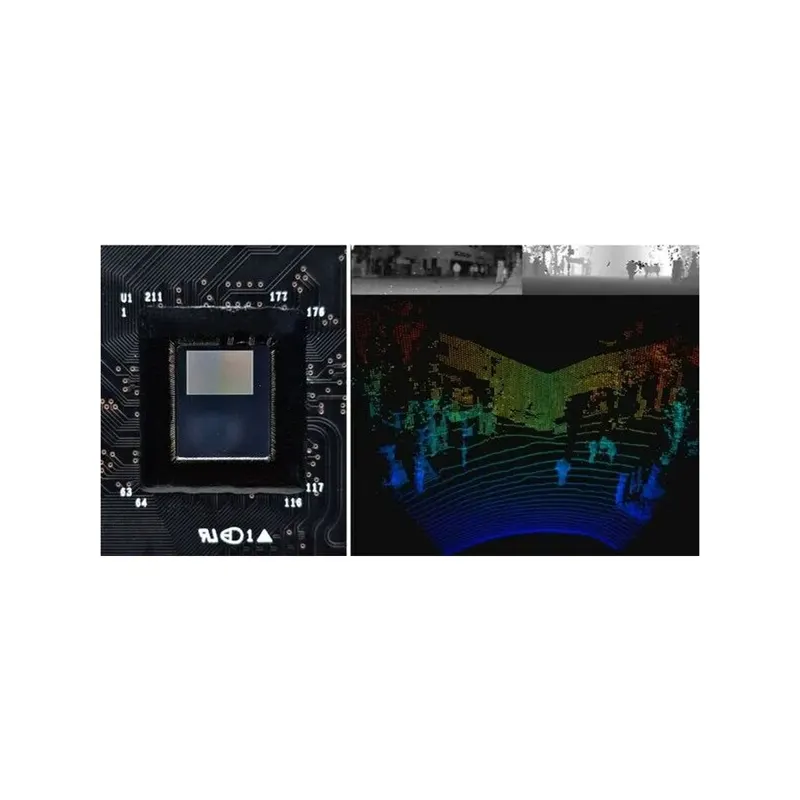
SolidVue SV120 from Korea: an area-array SPAD-SoC using CMOS-process SPAD pixels and a full-chip dToF architecture, up to 512x384 resolution and 48 m range, targeting mass production in Q2 2027 — entering a crowded single-chip color SPAD-SoC race against in-house efforts from RoboSense, Hesai and Huawei as well as chip vendors such as Fushi Technology and Lingming Photonics.
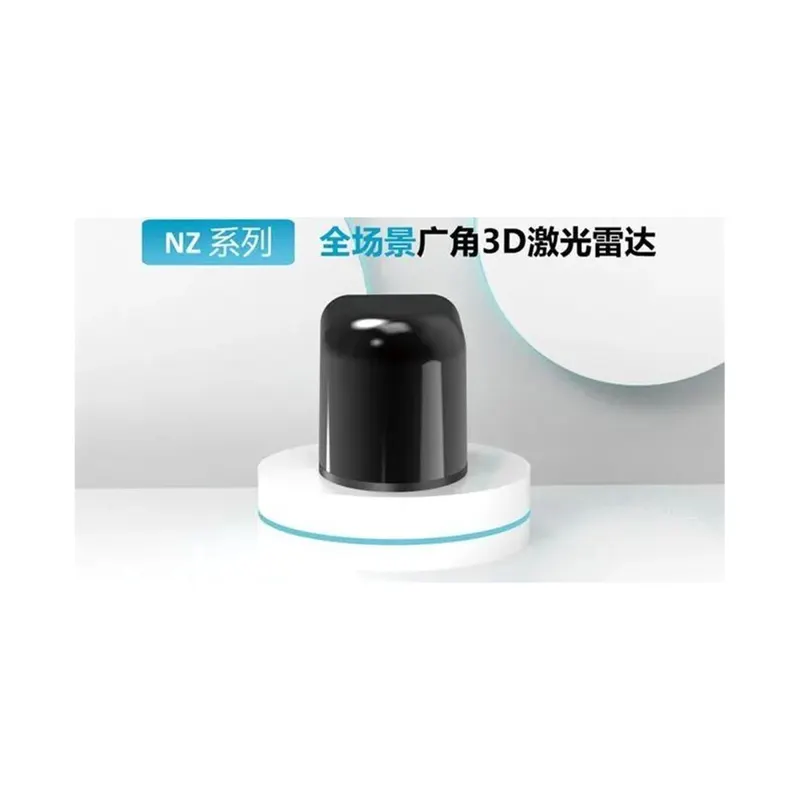
ZVISION's NZ-series semi-solid-state LiDAR: 240° horizontal and 80° vertical FOV, up to 150 m range (115 m per other sources), shown in 96- and 192-line configurations; its SPAD-SoC receiver plus semi-solid-state scanning is a rare combination in short-range LiDAR, targeting drones, robot dogs, autonomous sweepers, delivery robots, forklifts and mowers.
Seyond's solid-state LiDAR optimized for robotics: pure electronic scanning with zero mechanical moving parts, a 140°x100° FOV and detection of obstacles as low as 10 cm — high reliability and long life for mobile robots, AMRs and autonomous forklifts.
A solid-state LiDAR-video integrated sensor that simultaneously outputs 1200-class dense point clouds and 1600x1200 high-resolution RGBD, with millisecond-level synchronization and pixel-level alignment between point cloud and image — native RGB+Depth fusion, already winning design-ins from multiple embodied robotics companies.
The world's first non-repetitive-scanning LiDAR with a 100° full FOV: vertical FOV from -10° to +90°, up to 70 m range, 319k points/s and ±2 cm precision, accumulating point clouds evenly across the FOV for embodied robots, AMRs and other large-FOV close-range perception scenarios.
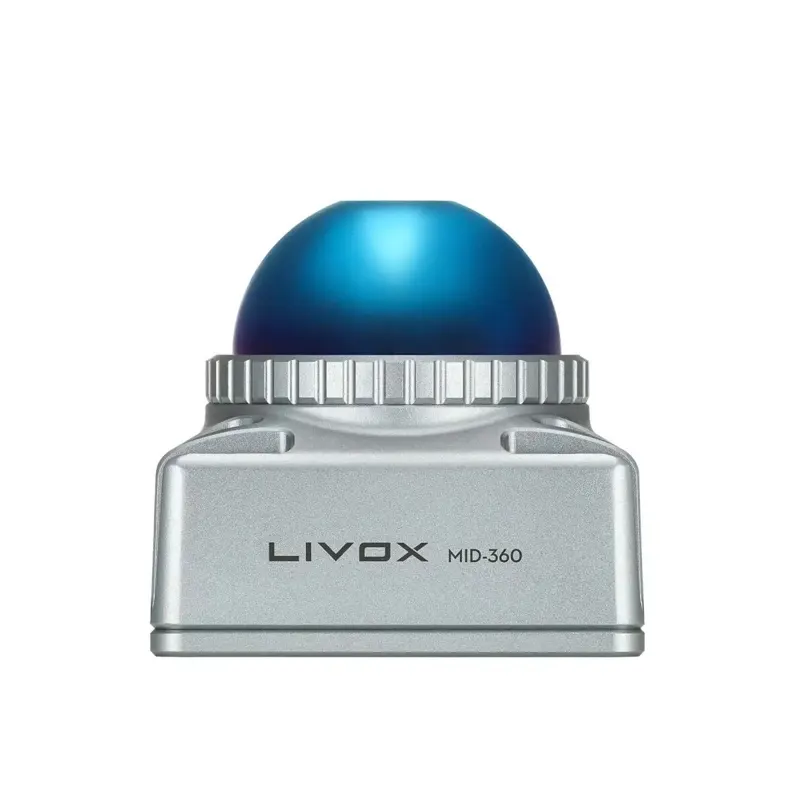
The latest refresh of the Livox Mid-360 family — the most widely deployed 360° hybrid solid-state LiDAR in robotics — now lighter, lower-power and more cost-optimized, with ~100k points/s point density, targeting cost- and weight-sensitive mobile robots such as service robots, AGVs/AMRs and inspection platforms.
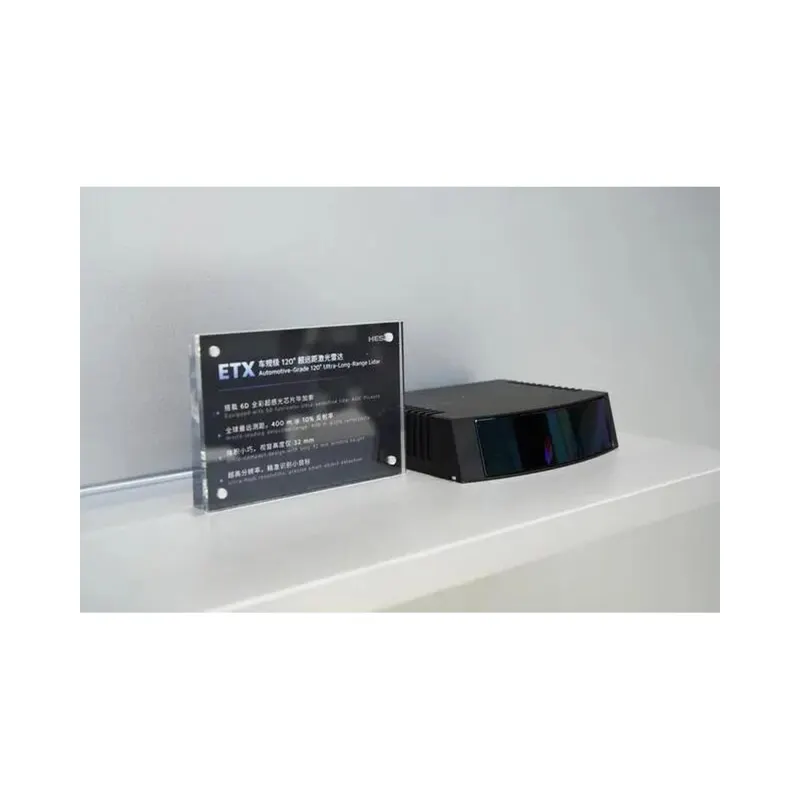
A 6D full-color LiDAR built on Hesai's Picasso SPAD-SoC: every pixel carries depth and RGB color simultaneously in real-time imaging, supporting up to 4320-line full-color 4K perception with native RGBD output from a single chip — pointing LiDAR from geometry sensing toward spatial vision, with mass production planned for H2 2026.
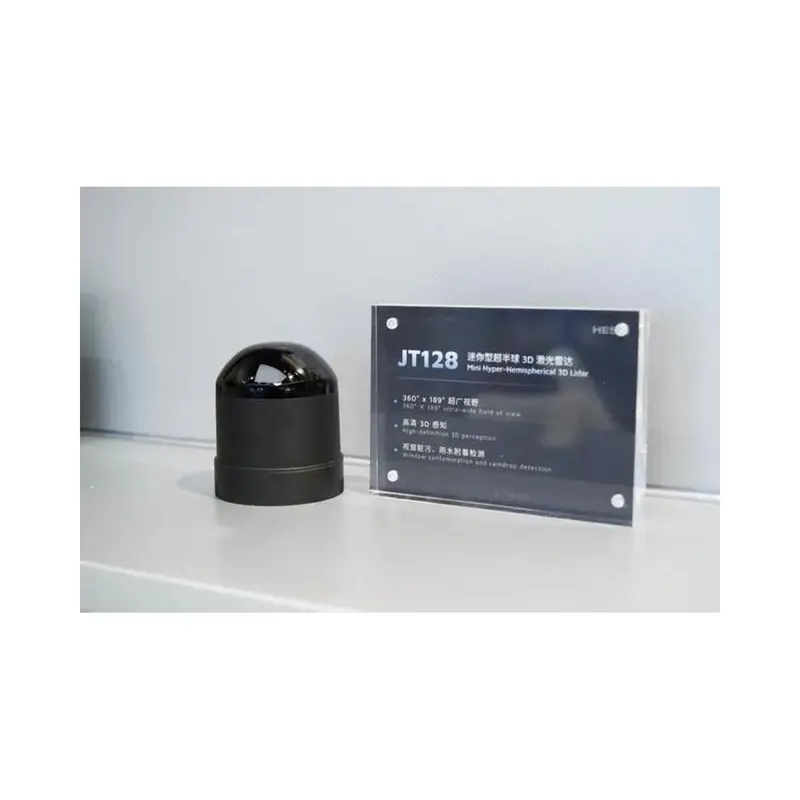
The flagship of Hesai's JT-series robot LiDARs, featuring 128 independent transceiver channels, up to 1.15M points/s single-return point rate and a 360°x89° hyper-hemispherical FOV; already chosen by 50+ robotics companies including Unitree and Ant Lingbo, making it one of the mainstream 360° LiDARs for robotics at WRC 2026.