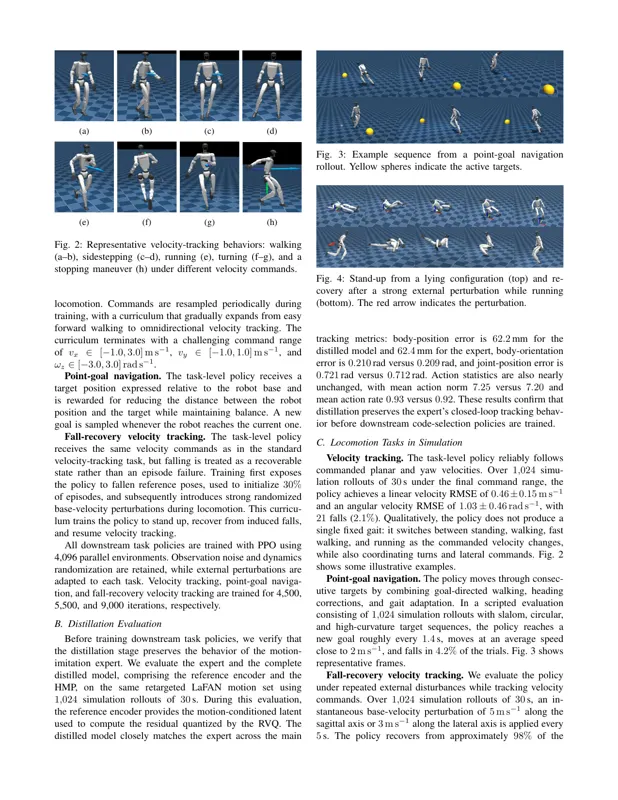
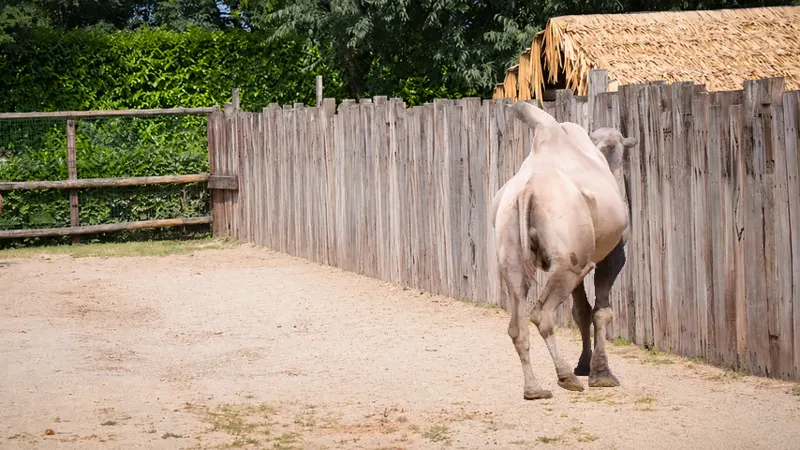
Reinforcement learning can produce robust humanoid controllers, but each new task is typically trained as a separate policy with its own reward design and training process. Motion imitation provides an alternative source of motor competence by training policies to track retargeted human motions, yet the resulting controllers remain reference trackers and are not directly usable as task policies. We propose a three-stage pipeline that turns motion-imitation skills into a reusable hybrid motion prior (HMP) for humanoid locomotion. First, an expert policy is trained to imitate retargeted human motion-capture clips. Second, the expert is distilled into a frozen architecture composed of a proprioceptive encoder, a residual vector-quantized (RVQ) codebook, and an action decoder. Third, task-level policies are trained to solve locomotion tasks by selecting discrete codebook entries while the HMP remains frozen. We evaluate the method on velocity tracking, point-goal navigation, and fall-recovery velocity tracking in simulation, and deploy the velocity-tracking policy on a real Unitree G1 robot. The distillation process preserves the tracking behavior of the expert, while the resulting HMP can be reused without retraining as the action interface for different downstream locomotion policies. The learned HMP reveals an interpretable codebook structure in which the number of active RVQ stages modulates the available gait patterns. We further show that training the codebook with the rotation trick improves latent organization and reduces downstream falls compared with a standard straight-through estimator.
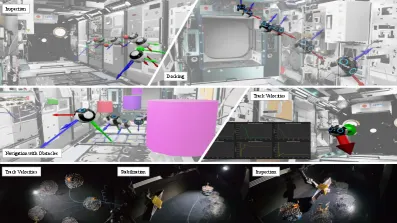
Autonomous free-flying robots in orbital environments require controllers that are both versatile and resource-efficient, yet maintaining a separate, task-specific policy for each mission profile is architecturally brittle and limits operational flexibility as requirements evolve. We introduce HYPER-GNC, a multi-task reinforcement learning framework in which a hypernetwork maps physics-informed task embeddings to the weights of a shared actor-critic policy, enabling a single compact controller to master four distinct GNC tasks: velocity tracking, docking, inspection, and navigation with obstacle avoidance. The continuous embedding space allows the controller to generalize to novel mission configurations at deployment time without any retraining. Extensive experiments demonstrate that HYPER-GNC achieves sample efficiency comparable to single-task specialists while maintaining stability under significant inertial perturbations and external body wrenches. We further validate the framework on a physical satellite emulator, successfully bridging the simulation-to-reality gap across all mission profiles. Code, trained models, and deployment scripts are made publicly available to support reproducibility.
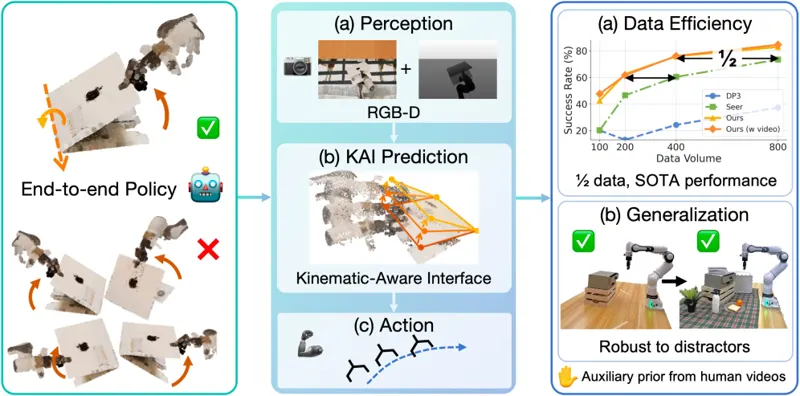
Articulated object manipulation requires an understanding of kinematic structure that is difficult and costly to learn from robot demonstrations alone. We introduce the Kinematic-Aware Articulation Interface (KAI), a structured intermediate representation that captures the kinematic structure of articulated objects. By embedding interpretable geometric and kinematic priors into policy learning, KAI provides a strong inductive bias aligned with the underlying structure of articulated motion. This design effectively improves sample efficiency, with gains particularly pronounced in low-data regimes: across six simulation tasks, our method achieves an average success rate of 82.9%, matching or surpassing baseline performance while using only half the demonstration data. Our method also exhibits robust generalization to unseen backgrounds and visual distractors, transferring from a single clean training environment to cluttered real-world scenes. KAI's action-agnostic design further enables co-training with human interaction videos to enhance real-world robustness: under diverse visual distractions, our method with video co-training achieves over 70% average success rate.
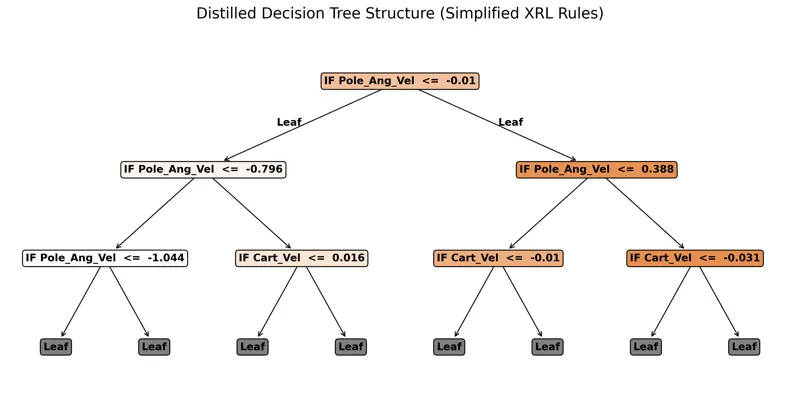
In safety-critical sectors such as robotics and automotive engineering, the deployment of Deep Reinforcement Learning (DRL) is often hindered by the black-box nature of deep neural networks. This lack of transparency poses significant challenges for regulatory compliance and human-agent trust. This paper presents an experimental study aimed at making high-performance continuous control DRL systems interpretable. A policy distillation framework is implemented using the classic Inverted Pendulum benchmark. A high-performance Twin Delayed DDPG (TD3) agent serves as an opaque, continuous teacher model, whose policy is distilled into an interpretable student surrogate based on a shallow Decision Tree. By leveraging a custom physics-aware feature and "Noisy Oracle Rollouts" for dataset generation, the distillation process achieves performance equivalent to the expert teacher. Furthermore, comparative control theory analysis reveals a fundamental trade-off: transitioning from continuous to discrete rule-based control induces high-frequency Bang-Bang actuation and a stable bimodal limit cycle. Simulation results indicate that Bounded-Input Bounded-Output (BIBO) stability is maintained while providing both global and local interpretability for safe autonomous systems.
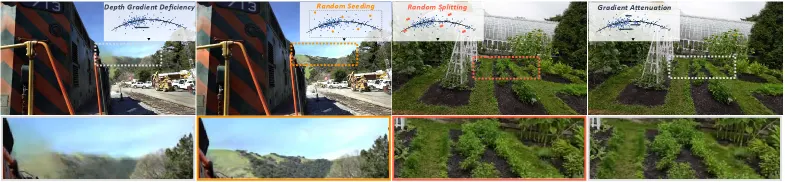
3D Gaussian Splatting (3DGS) employs Gaussian primitives for explicit scene representation, facilitating real-time, high-fidelity reconstruction and novel view synthesis of complex scenes. However, the explicit modeling inherent in 3DGS introduces a gradient bias during optimization, rendering its non-convex optimization process highly susceptible to convergence toward local suboptimal solutions. This constitutes a fundamental limitation in 3DGS optimization, which we term the Blur Trap. To address this limitation, we integrate simple explicit exploration into the 3DGS optimization framework. First, through rigorous mathematical analysis of the 3DGS optimization formulation, we identify the underlying optimization bias responsible for the Blur Trap and categorize it into two distinct subtypes: the Far-Side Blur Trap and the Near-Side Blur Trap. Subsequently, we propose two highly straightforward exploration strategies (Random Seeding and Random Splitting) to mitigate the far-side and near-side blur traps, respectively. Experimental validation demonstrates that the incorporation of these exploration operators effectively and complementarily overcome the Blur Trap, achieving high-quality rendering performance across multiple datasets. Project page: https://chengbo-wang.github.io/ExploreGS/
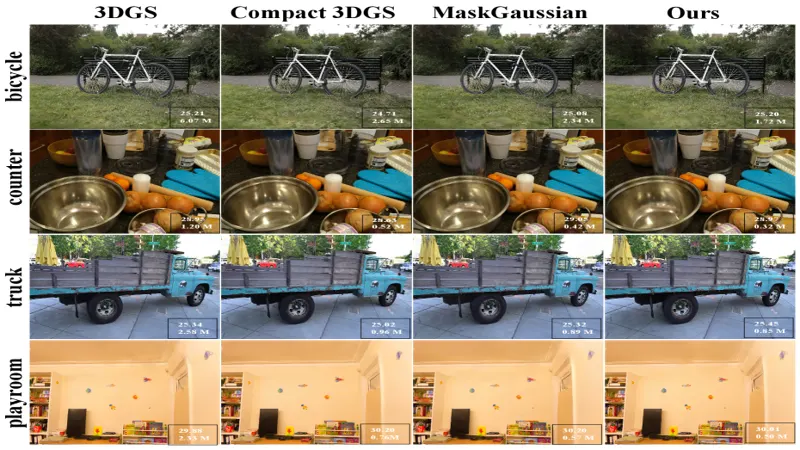
3D Gaussian Splatting (3DGS) achieves high-quality real-time rendering by representing a scene with a large collection of anisotropic Gaussian primitives. However, complex scenes often require millions of Gaussians, resulting in substantial storage and rendering costs. Existing compression methods mainly reduce redundancy through primitive-wise pruning, attribute quantization, clustering, or neural coding, while redundancy caused by strongly overlapping and non-orthogonal Gaussian basis functions remains largely unexplored. We present QIRF, a quantum-inspired non-orthogonal function-space compression method for 3D Gaussian Splatting. QIRF models neighboring Gaussian primitives as a local non-orthogonal basis and formulates primitive reduction as a subspace-aware selection problem. Specifically, an analytic Gaussian overlap matrix and a radiance-response density matrix are constructed to characterize functional redundancy and rendering relevance. Generalized eigendecomposition is then used to identify the dominant local subspace and select representative Gaussian primitives. An RRDM-based response model and detail-aware safeguarding further preserve visually important high-frequency structures under aggressive pruning. Experiments on 13 scenes from Mip-NeRF 360, Tanks and Temples, and Deep Blending show that QIRF reduces the Gaussian count and raw PLY storage by 71.7 percent on average, corresponding to approximately 3.54 times compression, while maintaining reconstruction quality comparable to 3DGS and achieving a marginal average PSNR improvement of 0.10 dB. QIRF also improves the average rendering speed over 3DGS by 34.3 percent. These results suggest that non-orthogonal function-space redundancy is an important yet underexplored source of representational redundancy in explicit Gaussian radiance fields.
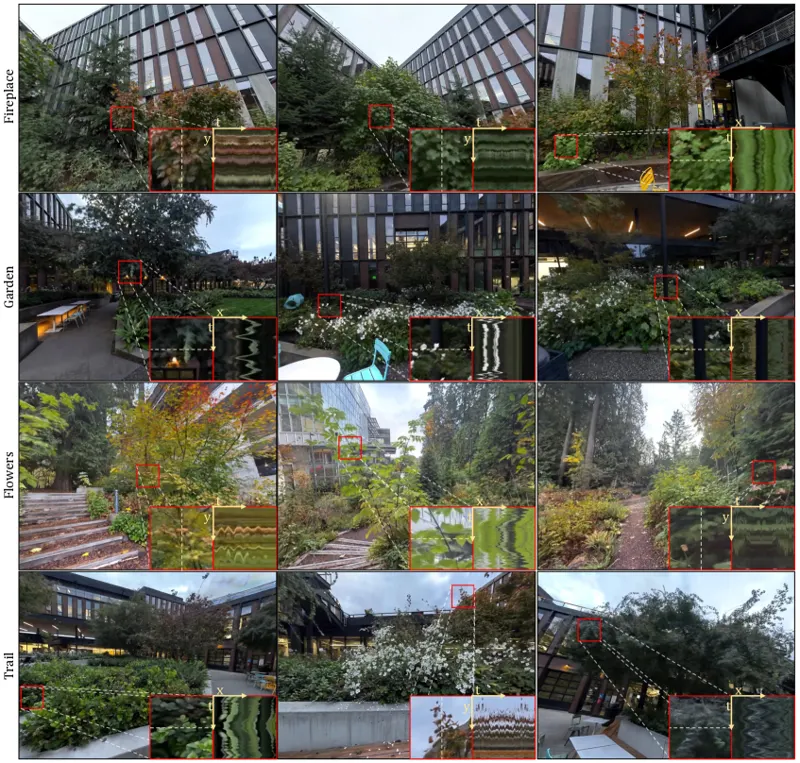
Novel view rendering of large and complex reconstructed scenes is becoming increasingly photorealistic. However, most reconstructions remain static and lack the ambient motion that makes environments immersive. We present AniGS, a method for scene-level animation of 3D Gaussian Splatting (3DGS) reconstructions that adds subtle, distributed dynamics, e.g., vegetation motion, while preserving rigid structures. Unlike existing 3D animation techniques which are limited to object-centric subjects or small regions, AniGS is designed for large, cluttered, navigable scenes. AniGS represents the scene with a canonical 3DGS and models motion using a time-conditioned deformation field. To animate the entire scene, we leverage a pretrained video diffusion model and introduce an iterative dataset–model update strategy that progressively expands viewpoint coverage and repeatedly updates camera-fixed training videos using a render-and-refine scheme. To prevent artifacts from unintended motion in static areas, we further introduce a composed video-to-video refinement scheme that restricts motion to desired regions. Experiments on five real-world, large-scale outdoor scenes demonstrate that AniGS produces natural ambient dynamics and high-quality novel view videos, enabling more immersive viewing experiences of reconstructed environments.
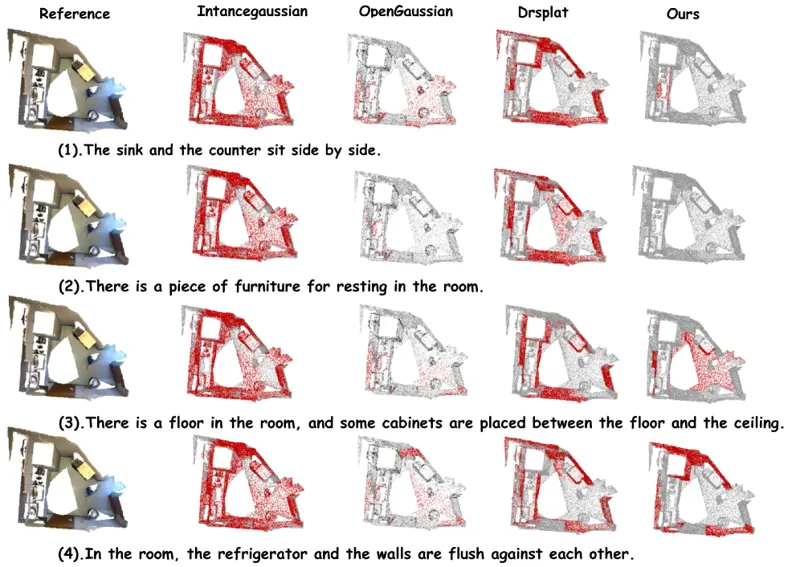
Recent advancements in 3D Gaussian Splatting (3DGS) have enabled language-guided scene understanding. However, existing Referring 3D Gaussian Splatting (R3DGS) methods are fundamentally restricted to single-target queries. To reflect the ambiguity of real-world instructions, we introduce the Generalized Referring 3D Gaussian Splatting Segmentation (GR3DGS) task, which requires dynamically segmenting an arbitrary number of targets (0, 1, or N). To facilitate comprehensive evaluation of this new task, we construct two new benchmarks: GR-LERF and GR-ScanNet. Crucially, existing R3DGS paradigms exhibit fundamental technical bottlenecks that severely limit their performance on the GR3DGS task: they lack intrinsic 3D point-level understanding by operating merely on 2D rendered pixels, and they incur prohibitive computational overhead by requiring per-scene optimization to embed heavy semantic features. To dismantle these bottlenecks, we propose ZeroSplat, a novel training-free and zero-feature framework. ZeroSplat lifts 2D Vision-Language Model (VLM) priors into 3D space through robust multi-view geometric constraints. This strategy enables intrinsic point-level understanding without incurring any additional feature storage. Extensive experiments demonstrate that ZeroSplat significantly outperforms state-of-the-art methods across generalized and single-target scenarios while maintaining exceptional efficiency. Project Page: https://inkmind-ai.github.io/ZeroSplat
While Implicit Neural Representations (INRs) and dynamic 3D Gaussian Splatting (3DGS) achieve impressive results in video processing, they often fall short of producing representations that are easily editable. Recent methods address this by introducing complex spatial deformations or folded distributions, which constrain optimization and reduce flexibility for downstream editing. In this paper, we introduce TOM-GS, an editable video representation that forgoes complex deformations in favor of regular 3D Gaussians equipped with a continuous temporal opacity formulation. By assigning a learnable temporal mean and scale to the opacity of each Gaussian, our model enables static 3D spatial components to fade smoothly in and out of the scene. Grounded by robust, off-the-shelf pose estimation, our approach maintains a static spatial geometry that naturally supports a wide range of manual and physics-based edits. TOM-GS outperforms prior editable video representations in visual fidelity, while its reliance on standard 3D Gaussians ensures seamless compatibility with established 3D editing tools.
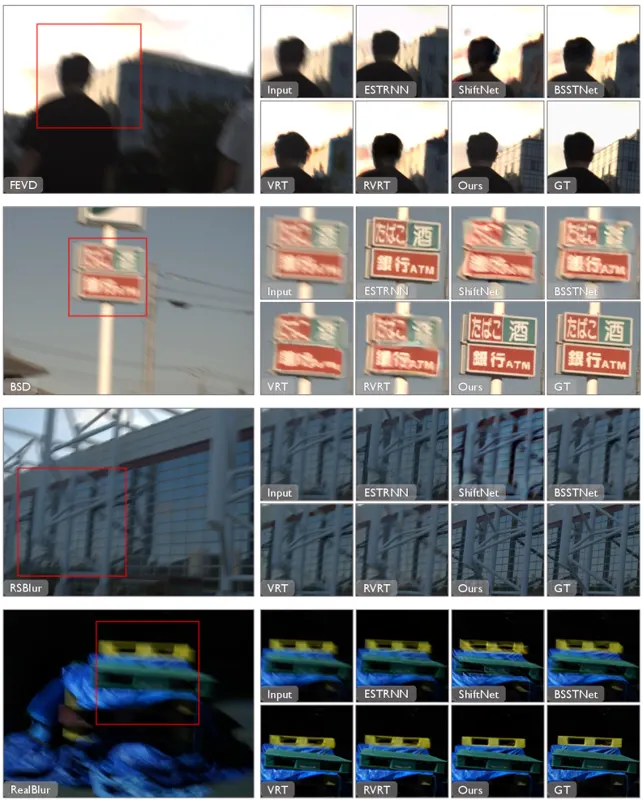
Real-world video deblurring remains challenging due to diverse motion patterns, complex degradations, and the scarcity of realistic training data, yet robust restoration is critical for downstream pipelines such as mobile imaging and 3D reconstruction. This work presents RealVDeblur, an efficient generative framework designed to improve in-the-wild robustness under diverse real capture conditions. First, a large-scale, physically grounded blur synthesis pipeline is constructed from scene-level 3D Gaussian Splatting (3DGS) assets and high-frame-rate videos, providing realistic training data covering both camera-induced and object-motion blur. Second, a video diffusion prior is leveraged for restoration; to better accommodate frame-dependent blur variations, temporal compression in the VAE is disabled and a frame-wise encoding scheme is adopted. For practical deployment on long videos, multi-step diffusion sampling is distilled into an efficient one-step generator, and a training-free Temporal Window Mask stabilizes inference beyond the training horizon with constant memory usage. Extensive experiments on diverse real-world benchmarks demonstrate strong perceptual quality, semantic fidelity, and temporal consistency on unseen videos, as well as improved robustness in downstream 3D reconstruction under severe motion blur. Project page: https://rbjin.github.io/RealVDeblur
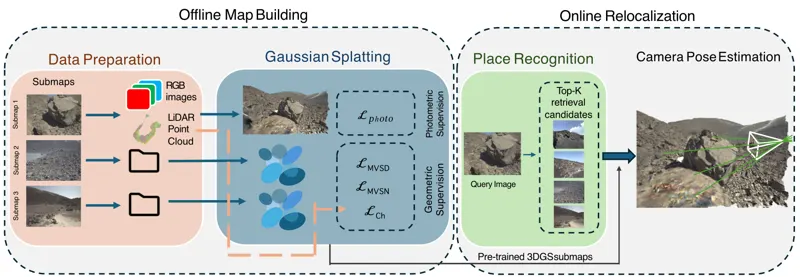
Visual localization becomes extremely challenging in planetary-like terrains characterized by low texture, perceptual aliasing, harsh illumination, and sparse, weakly overlapping viewpoints induced by forward rover motion and unconstrained driving directions. Under these conditions, state-of-the-art image-to-image and image-to-map matching pipelines suffer significant performance degradation. In this work, we propose a visual relocalization method that departs from classical correspondence-based pipelines by directly estimating camera poses against a differentiable map representation built with 3D Gaussian Splatting (3DGS). Our key contribution is a geometry-aware training strategy that combines photometric and geometric losses, where the geometric supervision is provided for the first time by combining multi-view stereo (MVS) and LiDAR depths. We show that this joint optimization produces a 3DGS model that better fits the underlying scene geometry, leading to improved photometric and geometric consistency and more robust, accurate single-image 6-DoF pose estimation. Extensive experiments on data acquired in planetary-analog environments validate the effectiveness of our approach, showing substantial gains in relocalization accuracy under challenging conditions. Code is available at https://github.com/DLR-RM/multimodal-gsplat-relocalization.
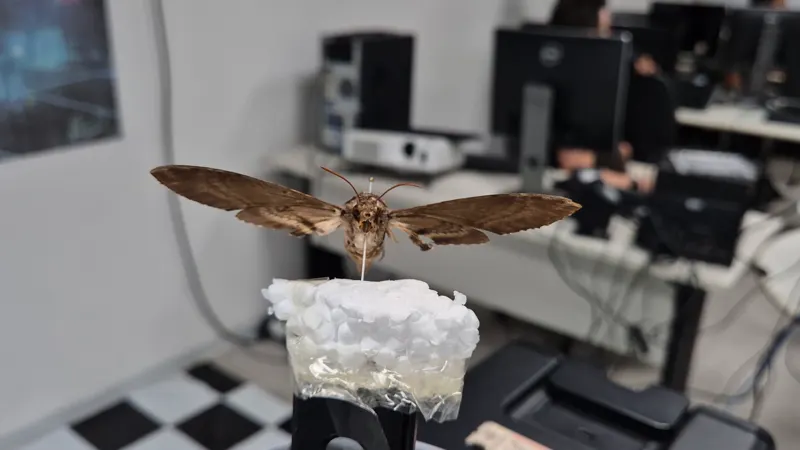
Domain Randomization (DR) is a standard technique for closing the Sim-to-Real gap, yet traditional DR pipelines rely on classical computer graphics rendering driven by polygon meshes. For complex organic subjects, such as insect specimens, extracting and rendering textured meshes is challenging. To address this issue, we propose a meshless DR framework that operates on the parameter space of 3D Gaussian Splatting (3DGS). Our method employs two independent perturbation pipelines to synthesize randomized training datasets. First, a Photometric DR pipeline alters the baked illumination and color balance by modulating the Spherical Harmonics (SH) coefficients. Second, a Procedural DR pipeline isolates the subject's geometric shape by replacing its original textures with 3D spatial noise. Finally, these perturbed radiance fields are composited over stochastically varied backgrounds using a rasterization engine. Our parameter manipulation provides a meshless alternative for generating robust datasets for complex geometries.