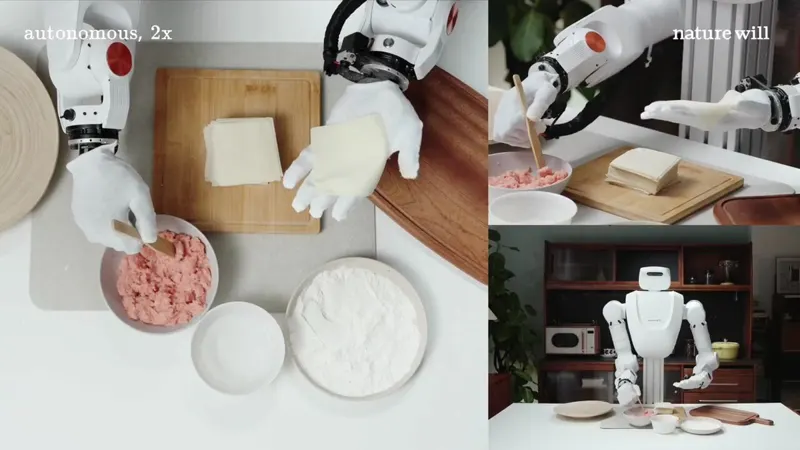
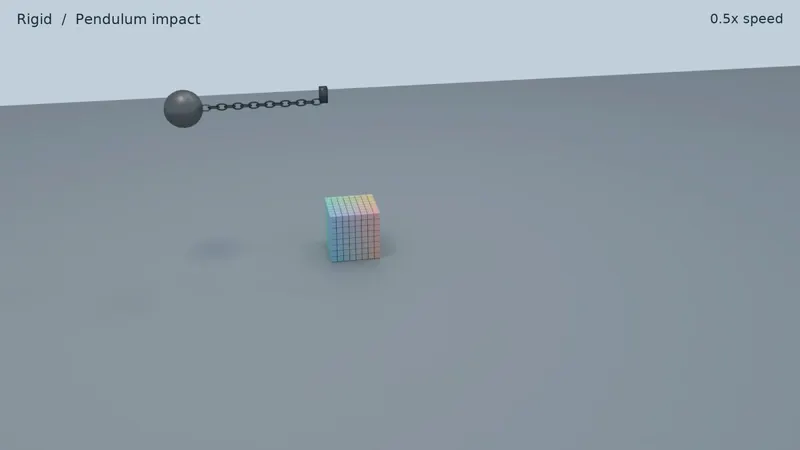
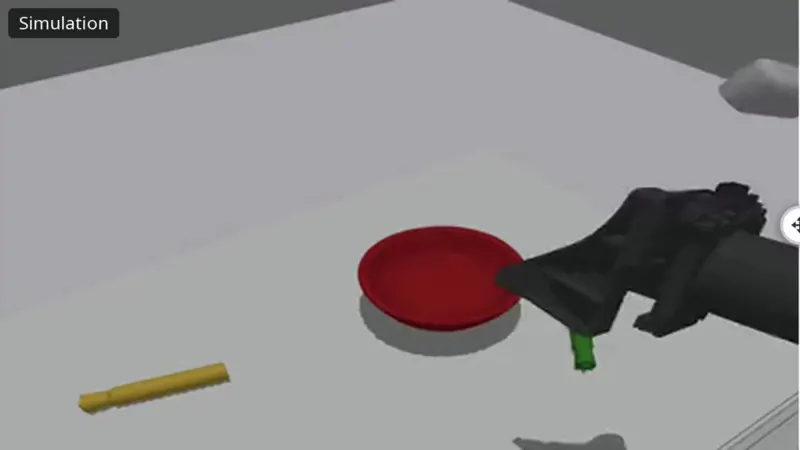
Nature Will unveiled Natura-1, a 50B-parameter physical general foundation model; the demo shows two-handed kneading and shaping of food.
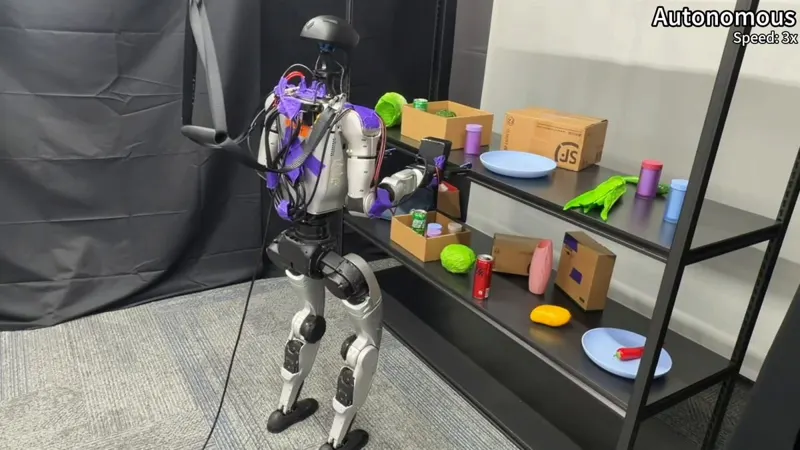
Aether AI CRIS-0 brings causal reasoning into the physical world: it tracks the conditions a task depends on, predicts how each action will change them, and replans when reality diverges from the plan. The demo has the robot pull a metal can off a plate before it reaches the microwave, tell an empty can from an unfinished drink while tidying, and order a search from its own memories.
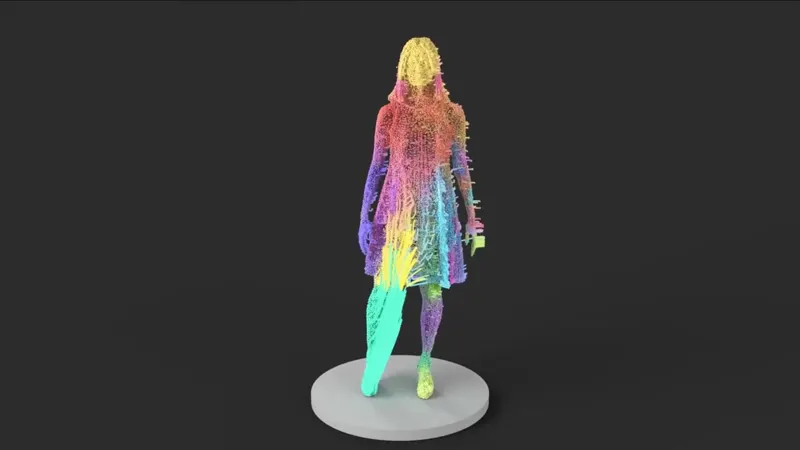
GaussiAnimate compresses a 4D capture into a rigged 3D asset while keeping its secondary dynamics, the follow-through motion of cloth, hair and similar detail. It does so without physics simulation and without a learned deformable model. Accepted at SIGGRAPH Asia 2026.
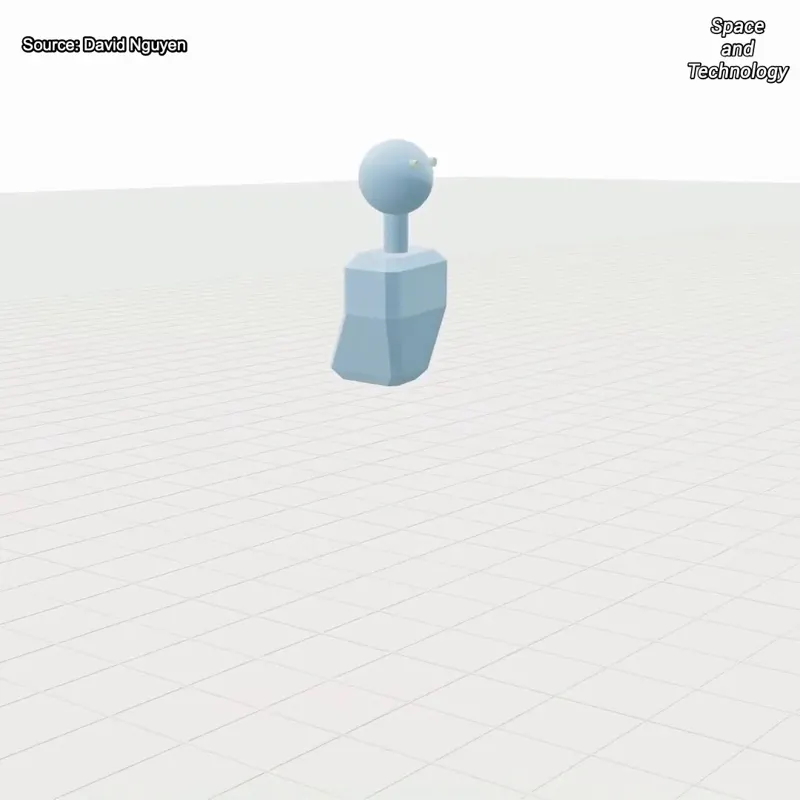
Draft is a parametric generation tool from MIT whose generalised engine compiles any parametric tree of serial chains into a simulation-ready MJCF model with no CAD step in between, so engineers can adjust limb length, body size or motor power and immediately test how the change affects controller performance in simulation. Free parameters are grounded by trends fitted to a survey of 114 actuators and 49 published robot descriptions, and reinforcement learning is used to estimate whether a design is feasible.
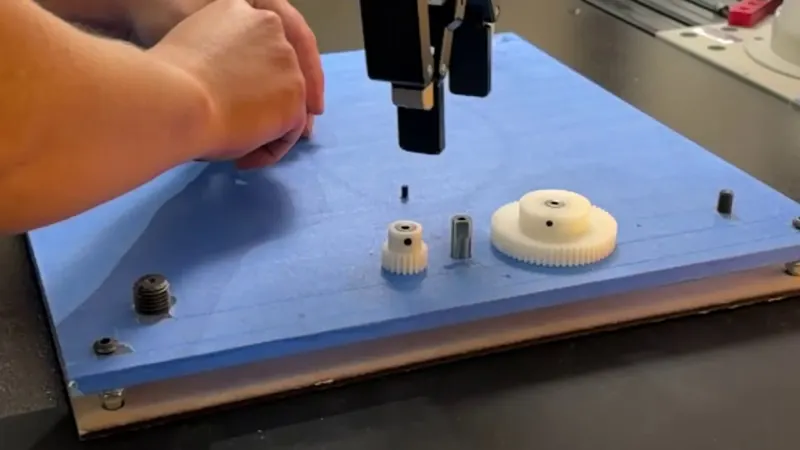
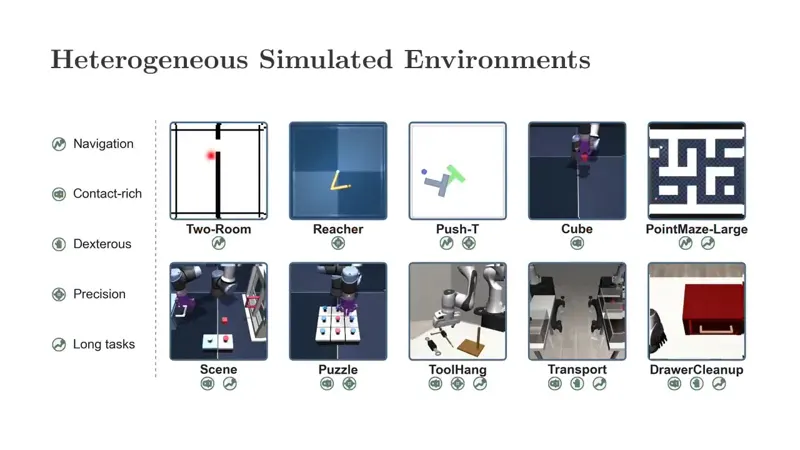
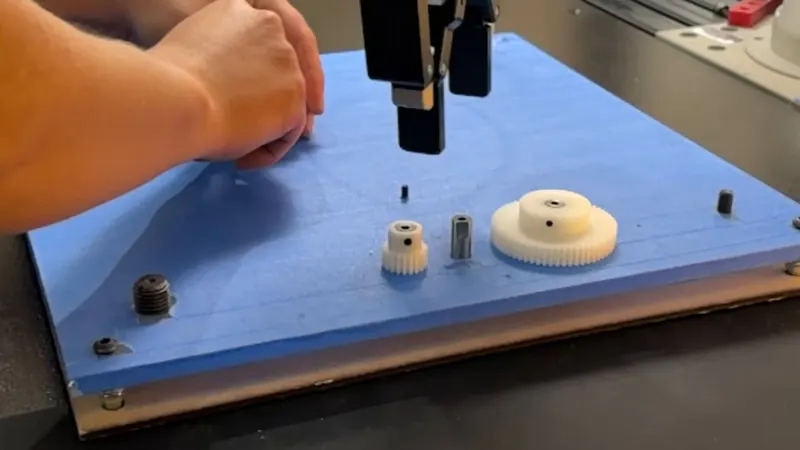
Success-Guided Sampling picks task configurations near the frontier of what the policy can already do, so massively parallel simulation stops wasting experience on setups it has mastered or cannot attempt yet. Across runs with over one million parallel environments it solves multi-terrain quadruped locomotion and contact-rich assembly that prior pipelines fail, then distills the manipulation policies into RGB-based ones that transfer zero-shot to real hardware.
Whole-Body UMI transfers UMI manipulation skills to humanoid whole-body control: a diffusion policy over native UMI demos plus a mocap-trained motion prior generates task-agnostic end-effector-conditioned motion, reaching 90% drawer-closing and 80% shelf pick-place on a real Unitree G1 without task-specific whole-body demos.
LeWAM is an end-to-end JEPA for control: joint next-latent prediction and action flow matching let one 17M-param model act directly and plan visually, lifting contact-rich success from 28.6% to 89.7% on a real robot.
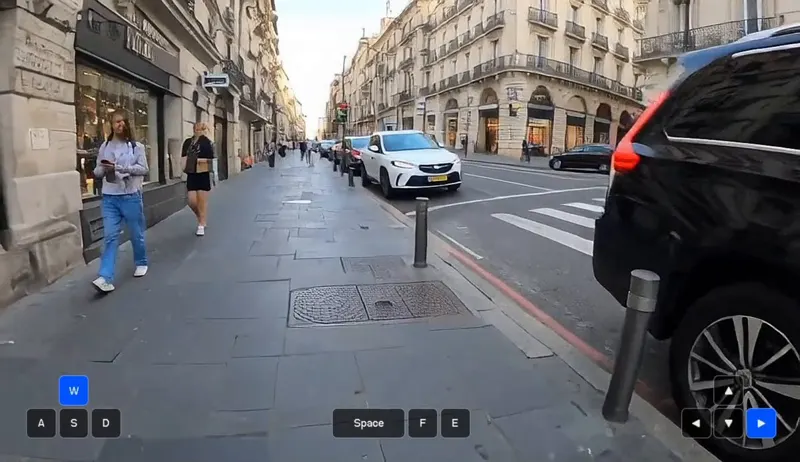
Odyssey 3 simulates physical experience - collisions, breakage, reactions - so robots train with far less real data; a Madrid street filmed the same day shows why outdoor chaos remains the hard part.
Success-Guided Sampling trains 1x reactive policies with scaled-up sim-to-real RL: no demonstrations, retargeting, tactile sensors, or reward tuning, yet precise contact-rich manipulation on real hardware.
NVIDIA ships 38 Isaac Sim Agent Skills with the distribution: procedures, handoff contracts and acceptance thresholds in SKILL.md teach coding agents to finish and validate robot sims like engineers.
Text2Sim is a simulation-specialized agentic pipeline that turns a text-only request into an executable, editable Genesis physics case: a Planner coordinates scene, body, action and render Writers while an independent Critic drives execution-based repair with Debug Cards distilled from graphics demos. On 42 held-out prompts it beats four SOTA baselines on automatic physical and visual scorers and in blinded user studies.
RoboRender tackles the visual sim-to-real gap by converting simulated trajectories into photorealistic RGB video for policy learning. A robot-oriented video generation model is conditioned on simulated depth, language instructions and robot RGB masks, preserving simulator geometry, robot motion and action labels while synthesizing realistic textures, backgrounds and distractors. Policies trained on the generated video reach a 71% average zero-shot real-world success rate across pick-and-place, articulated-object and mobile manipulation, about 7.1x raw simulation rendering and 3.6x visual domain randomization. From Stanford, Nvidia and Microsoft Research.
As an Amazon Associate, we earn from qualifying purchases.