NavVerse: a physics-enabled benchmark for indoor-to-outdoor embodied navigation — best zero-shot VLA reaches 11.6% and halves across the boundary
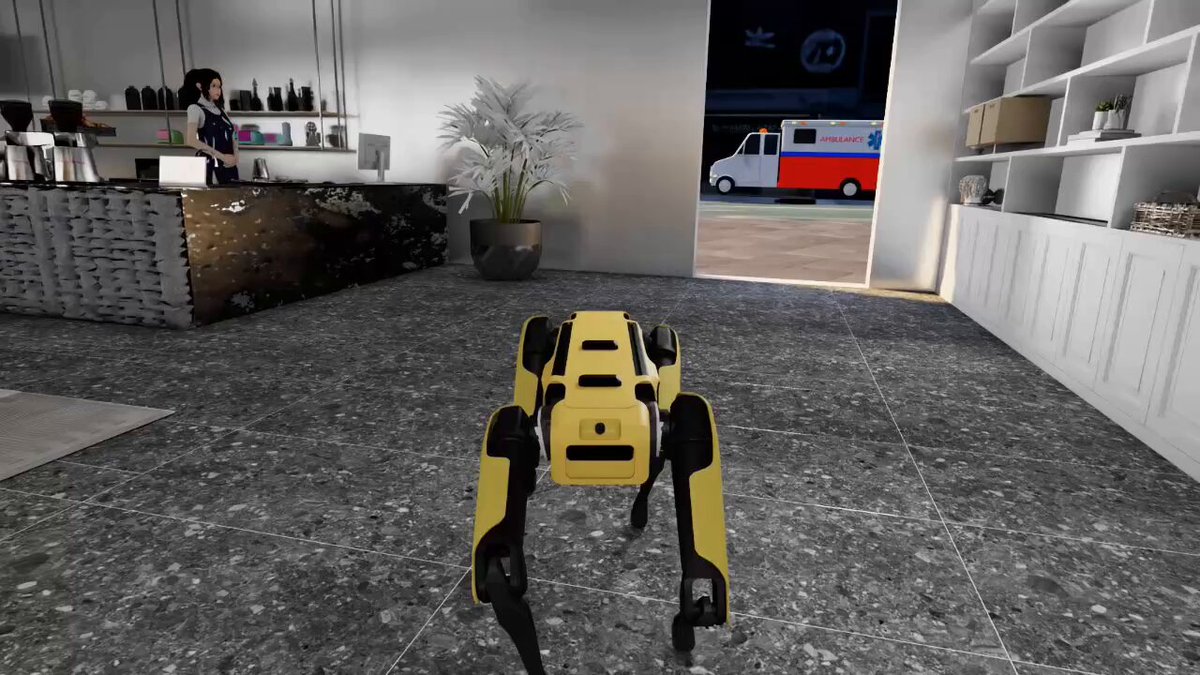
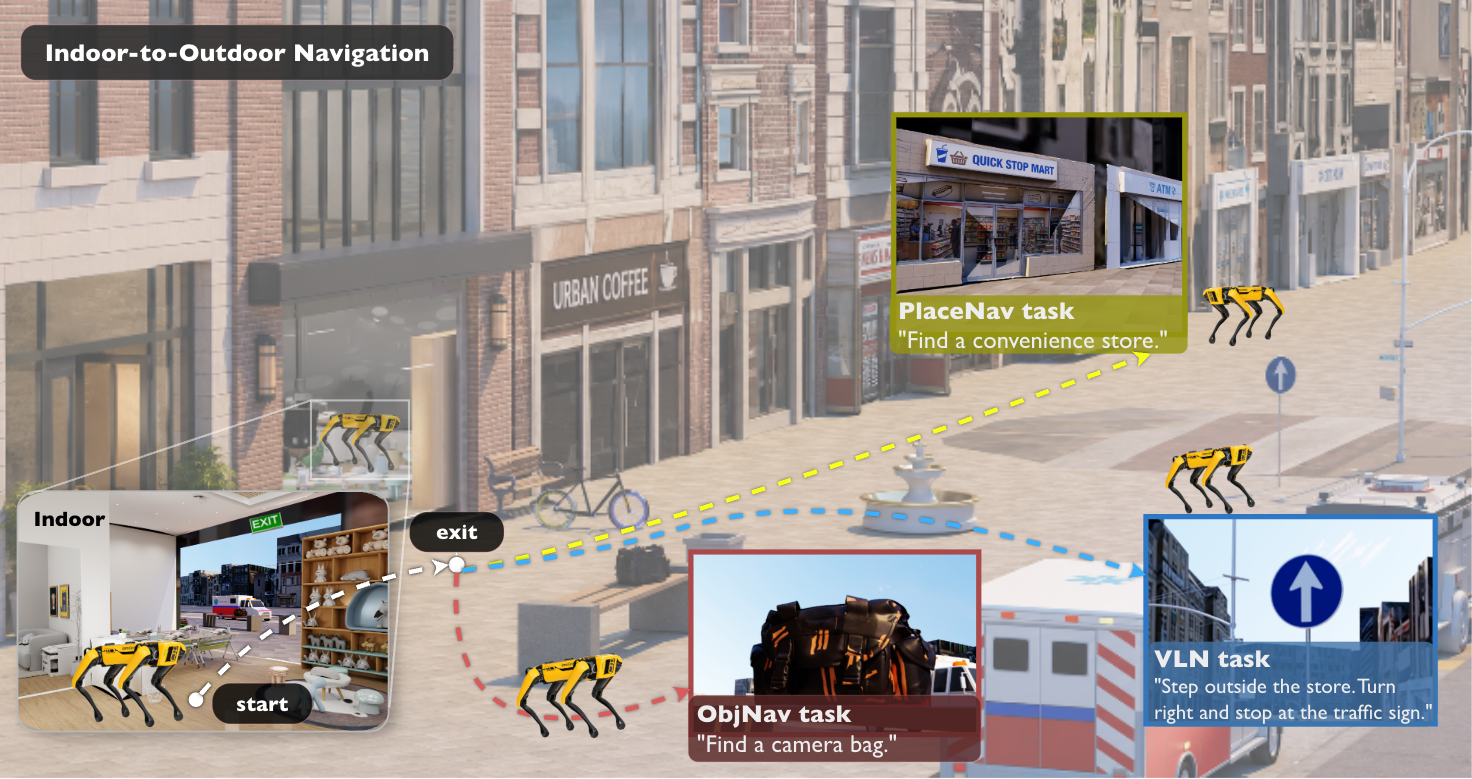
UMich-CURLY (CoRL 2026) introduces NavVerse: the first physics-enabled benchmark for continuous indoor-to-outdoor embodied navigation. It spans 200 scenes (100 indoor + 50 outdoor urban + 50 connected indoor-to-outdoor), 10,000 episodes and three tasks (ObjNav, VLN, and the new place-level PlaceNav). Built on Isaac Sim for both photorealistic visuals and executable robot dynamics; connected scenes use door-to-facade assembly so the robot walks from corridor to street in one physical world. Evaluation covers three orthogonal axes: success (SR/SPL), efficiency (CE coverage efficiency) and safety (CR collision rate, ADO distance to obstacles, NSR navigable surface ratio). All four zero-shot baselines fall short: the strongest VLA (UniNaVid) reaches 11.62% ObjNav, 11.38% PlaceNav, 10.67% VLN; the modular method is safest yet barely explores; the VLA-RL policy keeps the largest clearance but most often stops at wrong goals. The sharpest finding is the transition gap: for UniNaVid, PlaceNav success drops from 17.65% outdoors to 3.64% on connected episodes (a 14.01-point absolute fall), with 25-48% of episodes never even reaching the outdoors, and every method's coverage efficiency declines post-exit (manifesting as in-place spinning). Diagnostics also show that on the same oracle trajectories the legged Spot completes 100% under both friction settings while a wheeled Turtlebot manages only 30.75-47.50% — benchmarks ignoring embodiment dynamics systematically overestimate executability. Prior work evaluates indoor and outdoor separately and abstracts away execution; NavVerse supplies the three long-ignored stages: exit finding, boundary crossing, and post-exit re-adaptation.