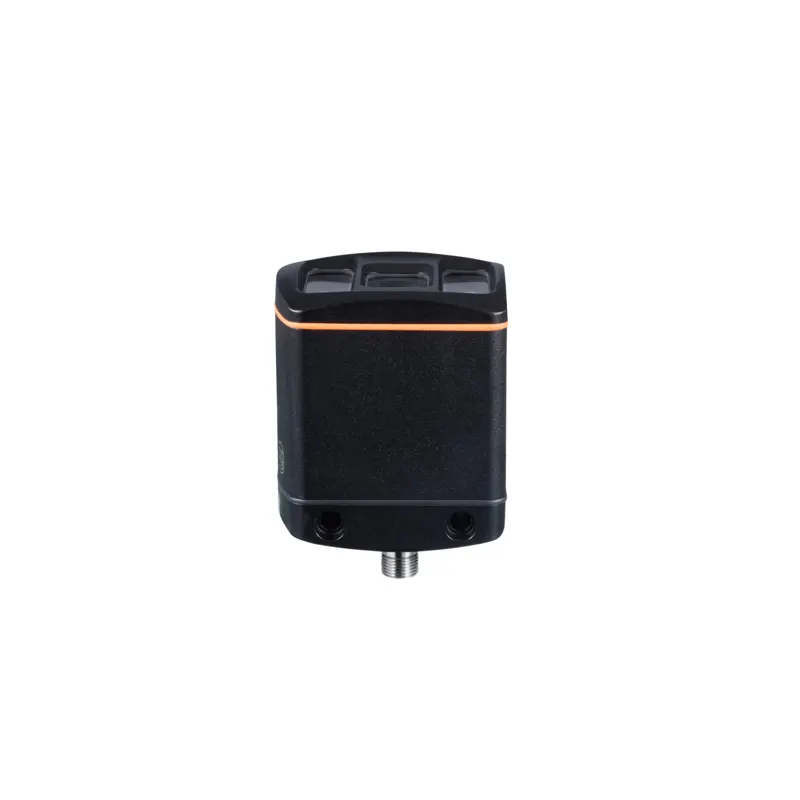
ifm (Germany) is a global leader in industrial sensors and IO-Link. The O3D300 is a 3D time-of-flight vision sensor (PMD chip, 176x132 px, 850 nm infrared) with a 0.3-10 m operating range and up to 25 Hz frame rate, featuring built-in volume, dimensioning, completeness and level monitoring plus robot gripper navigation and depalletizing, with switching outputs and an Ethernet process data interface for mobile robot and logistics automation.
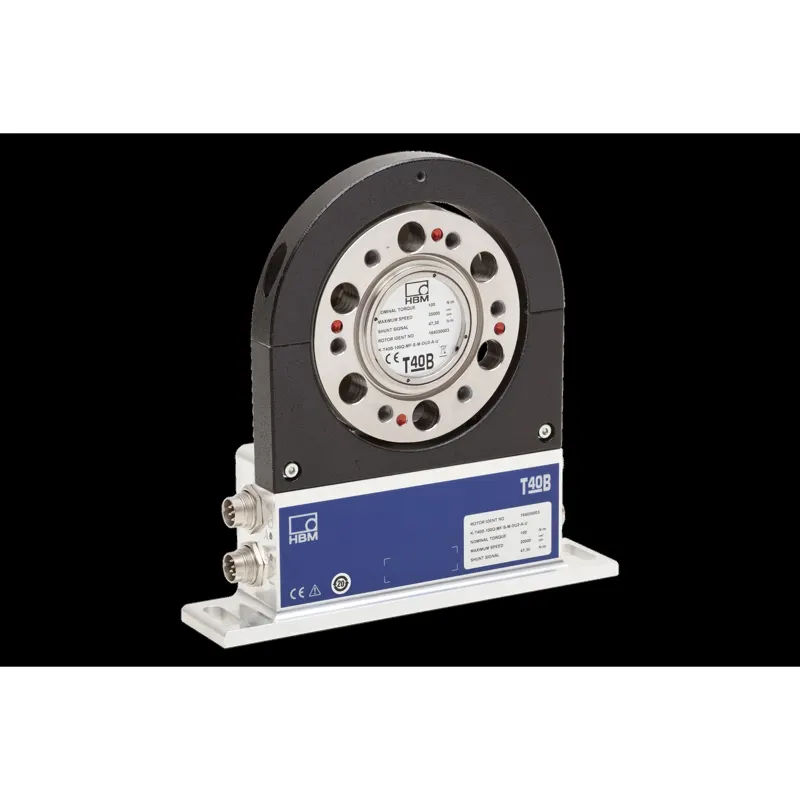
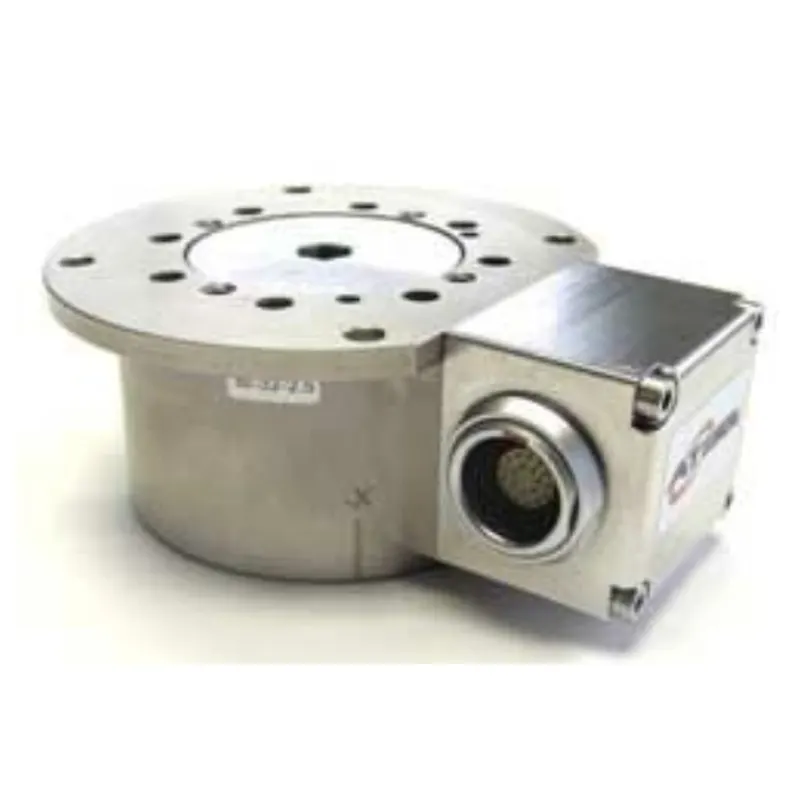
HBK (formerly HBM, Germany) is the benchmark in test & measurement and torque sensing. The T40B is a low-inertia torque flange with 0.05% accuracy class (linearity incl. hysteresis), nominal torques from 50 N·m to 10 kN·m and speeds up to 24,000 rpm. Non-contact power supply and digital transmission make it maintenance-free; TIM-EC (EtherCAT) and TIM-PN (PROFINET) interface modules plus optional magnetic speed measurement with reference pulse suit e-drivetrain, driveline R&D and end-of-line test benches.
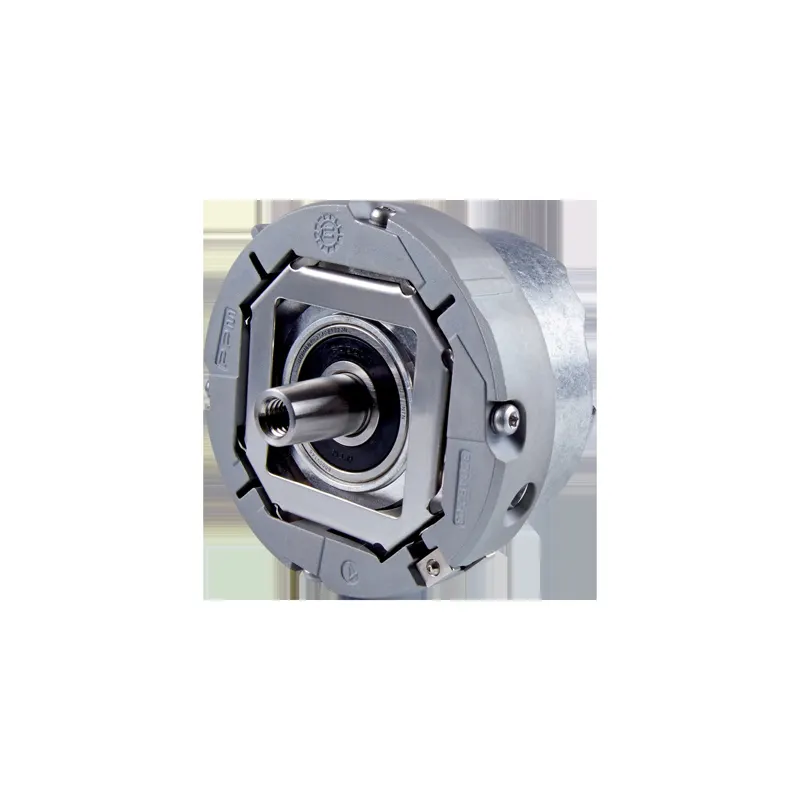
HEIDENHAIN (Germany) is the global benchmark for precision encoders and CNC controls. The ECN/EQN 1300 series are built-in rotary encoders with 25-bit resolution (33,554,432 positions per revolution), ±20 arcsec system accuracy, an integrated 4096-revolution multiturn gear for EQN, EnDat 2.2 and DRIVE-CLiQ interfaces, functional safety to SIL 2 and a Ø56 mm housing for servo motor and robot joint integration.
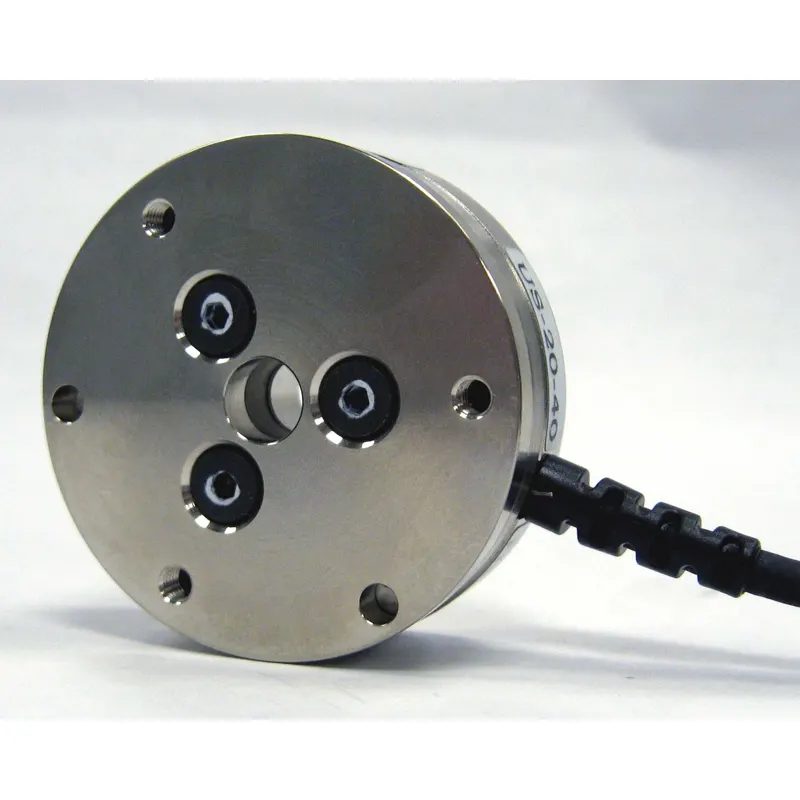
ATI Industrial Automation (USA) is the de-facto standard for six-axis force/torque sensing in robotics. The Mini40 uses silicon strain-gauge technology with 25 NIST-traceable calibration ratings, ±0.003% FS repeatability and IP60/65/68 options, widely used for collaborative polishing, assembly and force-control research.
ATI Industrial Automation (USA) is a world leader in robot tooling and force/torque sensing. The Gamma 6-axis F/T sensor is machined from high-strength aircraft aluminum with silicon strain gages producing a signal 75x stronger than foil gages for near-zero noise. Ratings span SI-32-2.5 to SI-130-10 (32-130 N Fxy, 100-400 N Fz, 2.5-10 N·m), with 6.9-31.6x rated overload (±1200 N Fxy, ±4100 N Fz, ±79 N·m Txy, ±82 N·m Tz), IP60/IP65/IP68 (10 m) versions, 0.255 kg, Ø75.4 mm x 33.3 mm, 1400-2000 Hz resonant frequency, 16-bit DAQ / EtherCAT / Net / WNet systems and NIST-traceable calibration; used for real-time force control, robotic assembly, haptics and part testing.
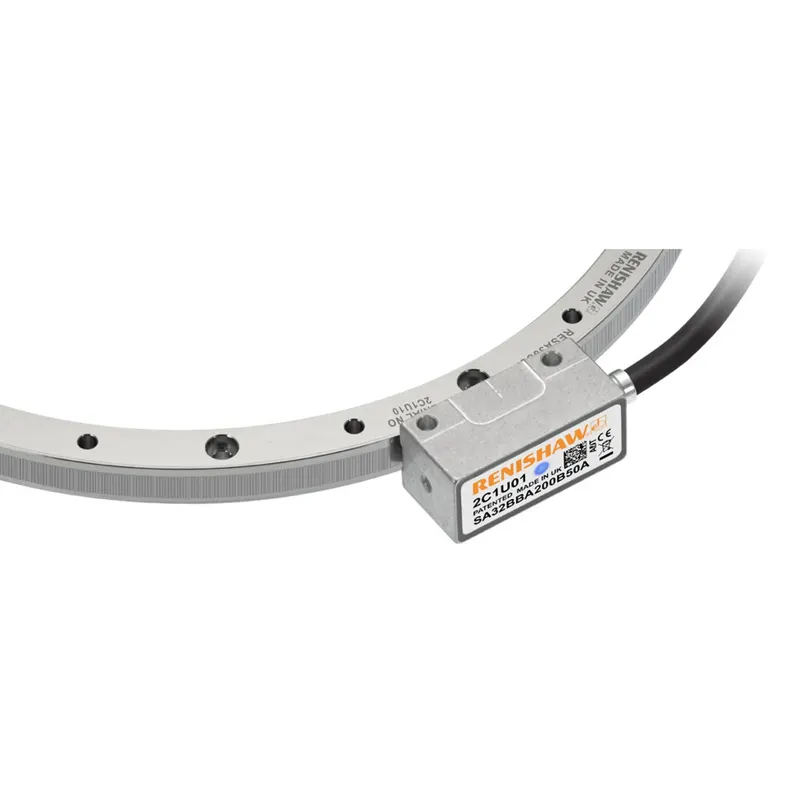
Renishaw (UK) is a world leader in precision measurement and encoders. RESOLUTE is a high-speed, fine-resolution true-absolute open optical encoder system: the readhead acts as an ultra-fast miniature camera imaging a single-track 30 um-pitch absolute scale, with a DSP computing absolute position - position is available immediately at switch-on with no battery and no multi-track de-phasing. Linear resolution down to 1 nm, rotary up to 32 bit (4,294,967,296 counts/rev, ~0.0003 arcsec), max reading speed 100 m/s (36,000 rpm), SDE +/-40 nm and jitter <10 nm RMS, with dirt-immune scale reading. Variants include UHV (120 C bake-out), ETR (-40 to +80 C) and FS (functional safety SIL 2 / PL d); serial interfaces cover BiSS C / BiSS Safety, FANUC, Mitsubishi, Panasonic, Siemens DRIVE-CLiQ and Yaskawa. Linear scales RTLA/RELA/RSLA up to 21 m; RESA30/REXA30 rotary rings 52-550 mm with typical installed accuracy of +/-1.9 arcsec. Used in semiconductor equipment, radar/SATCOM antennas, precision rotary tables and high-end robot joints.
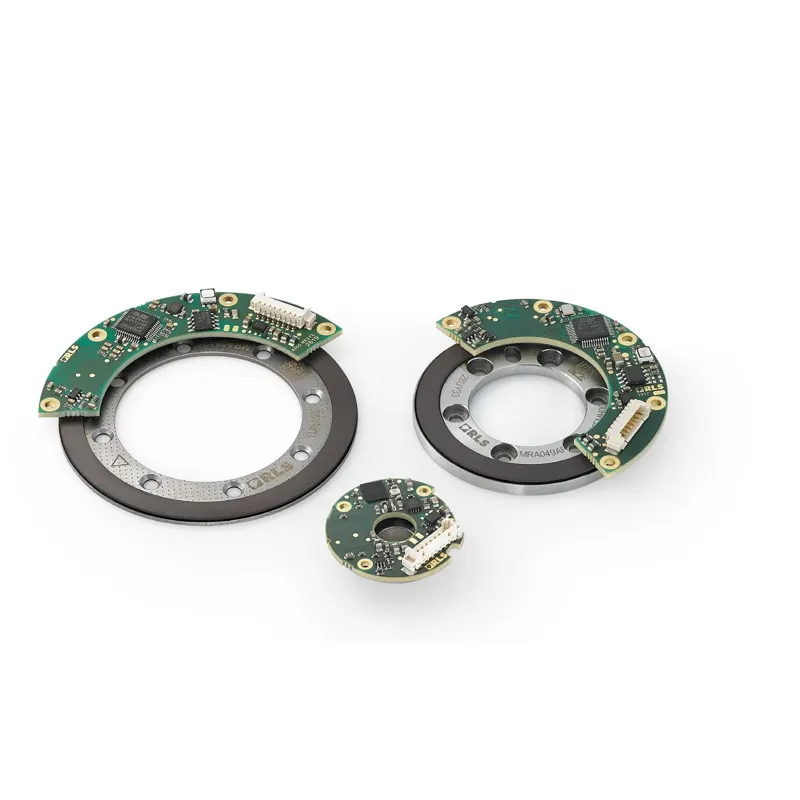
RLS (Slovenia, part of the Renishaw group) is a specialist in rotary and linear magnetic encoders. AksIM-2 is a non-contact off-axis absolute rotary encoder module for applications with limited installation space: a compact, low-profile readhead detects the field of a thin axially magnetized ring. It uses a custom magnetic-sensor ASIC with BiSS C, SSI or asynchronous serial output, resolutions up to 20 bits, true absolute measurement with no hysteresis, built-in self-monitoring and a self-calibration option, and immunity to external magnetic fields; system accuracy after self-calibration is +/-0.004 to +/-0.020 deg (+/-14 to +/-72 arcsec), max speed 10,000 rpm, 4.5-5.5 V supply (typ. 130 mA); ring inner diameters span 8-68 mm in 11 sizes with -40 to +105 C operation. Used for position feedback in electric motors, medical devices and robot joints.
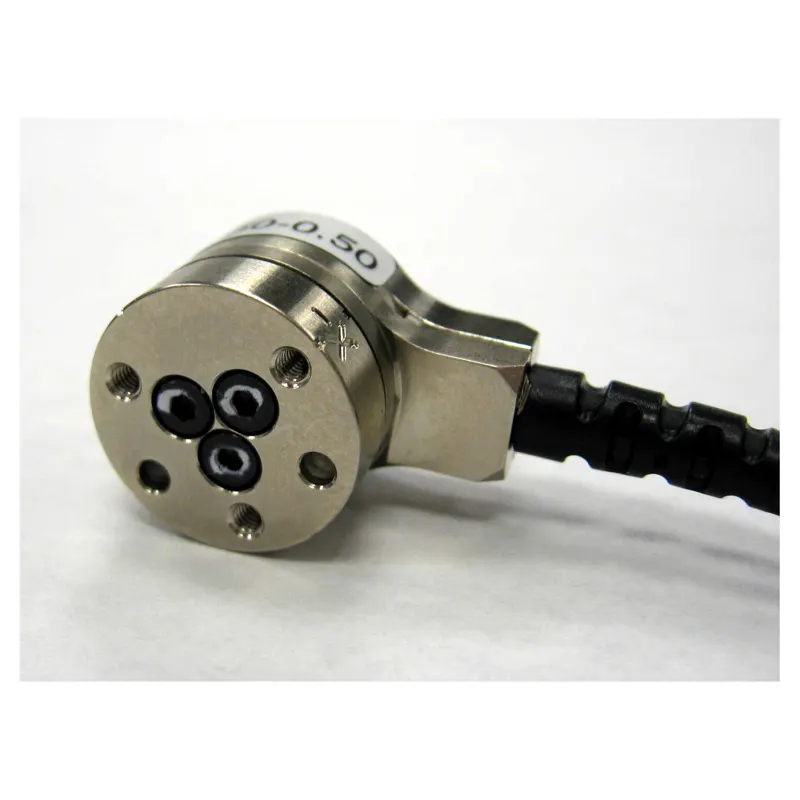
ATI Industrial Automation (USA, a Novanta company) leads the world in 6-axis force/torque sensing. The Nano17 is the smallest commercial 6-axis transducer available: 17 mm diameter, 14.5 mm height and just 9.07 g including interface plates; silicon strain gages deliver 75x the signal of foil gages with resolution down to 1/320 N (~0.32 gf); SI calibrations SI-12/25/50 span 12-50 N (Fxy), 17-70 N (Fz) and 120-500 N-mm torque; single-axis overload of +/-250 N (Fxy) and +/-480 N (Fz), 3.1-13.8x rated; 7200 Hz resonant frequency; IP65 and IP68 (10 m) versions; NIST-traceable calibration under ISO 9001. Used in robotic surgery, dexterous-hand and finger-force research and dental research.
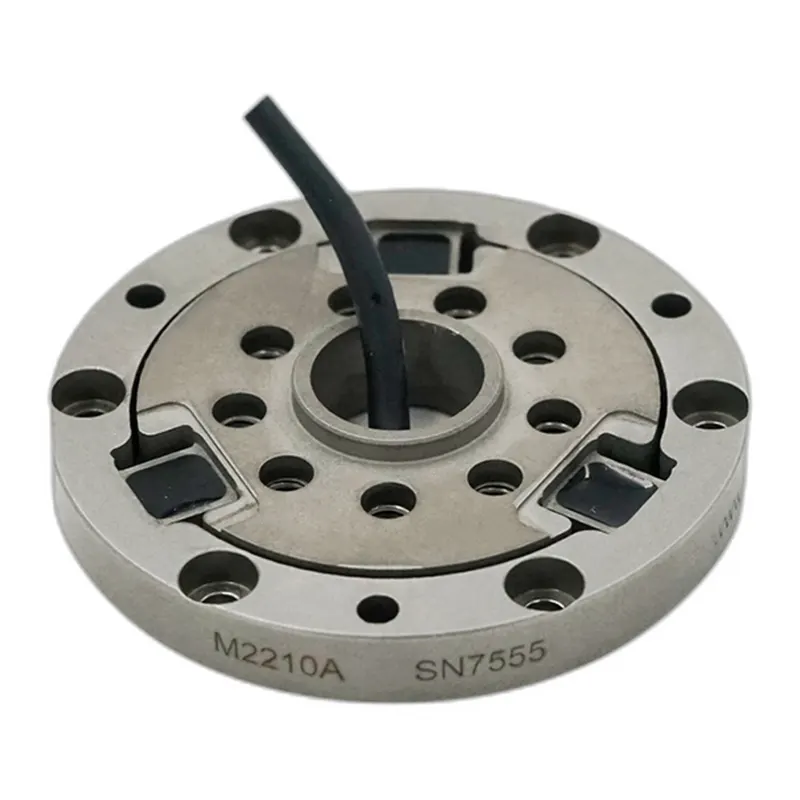
The SRI Instruments M2210 family (M2210–M2214, 257 models) measures motor/reducer output torque across 10–850 N·m with high precision, thin profile, light weight, high rigidity and strong bending resistance. Representative M2210A covers 50/100 N·m in a Φ53 OD x 7 mm, 0.09 kg body; M2210B covers 250 N·m at Φ100 x 8 mm, 0.37 kg; high-bending M2210B5 and RS485 digital variants (e.g. M2210A2A) are also offered. Applications include medical surgical robots, exoskeletons and collaborative robots.
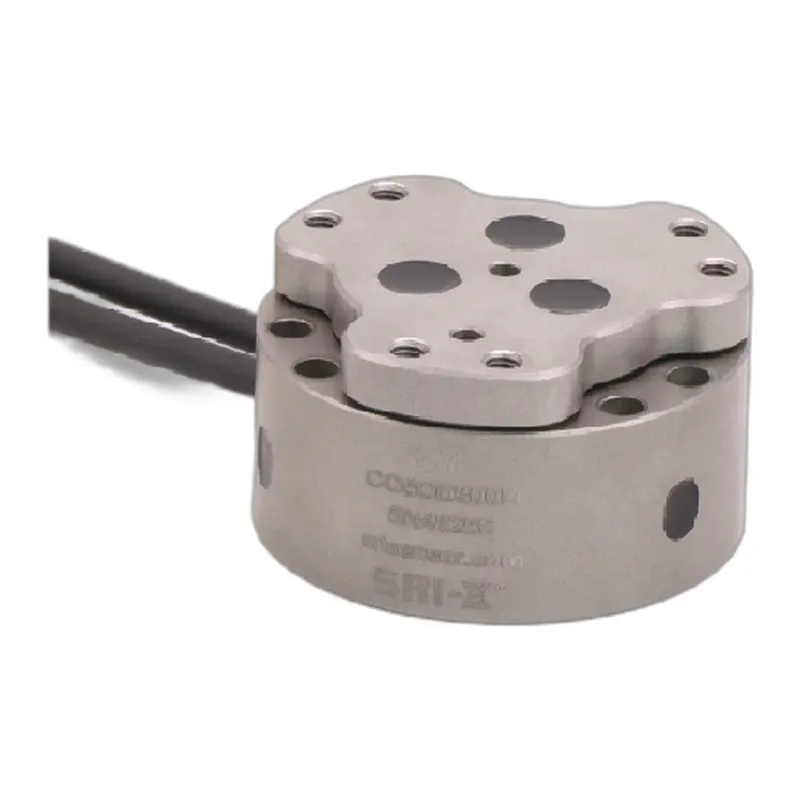
SRI Instruments (Qinhuangdao SRI, Yuli) is a leading Chinese six-axis force/torque sensor maker serving robotics, automotive safety, medical and general testing. The patented C25XX–C60XX series is purpose-built for humanoid-robot wrist mounting with low zero drift, high precision, isolated power supply, superior shock resistance and single-side mounting: accuracy better than 0.5% F.S. across the series, zero drift better than 0.1%/10 C on selected models, up to 3x overload with 100-cycle 3x-overload survival per axis. Ranges span Fx/Fy/Fz 50–600 N (extra-thin Fz up to 1000 N) and Mx/My/Mz 5–40 N·m in OD 45–60 mm bodies as thin as 9.2 mm and as light as 0.03 kg, with EtherCAT (IN & OUT), Ethernet TCP/IP, CAN, CAN FD, RS485, RS232 and USB interfaces for humanoid wrist/ankle six-axis perception and joint force control.
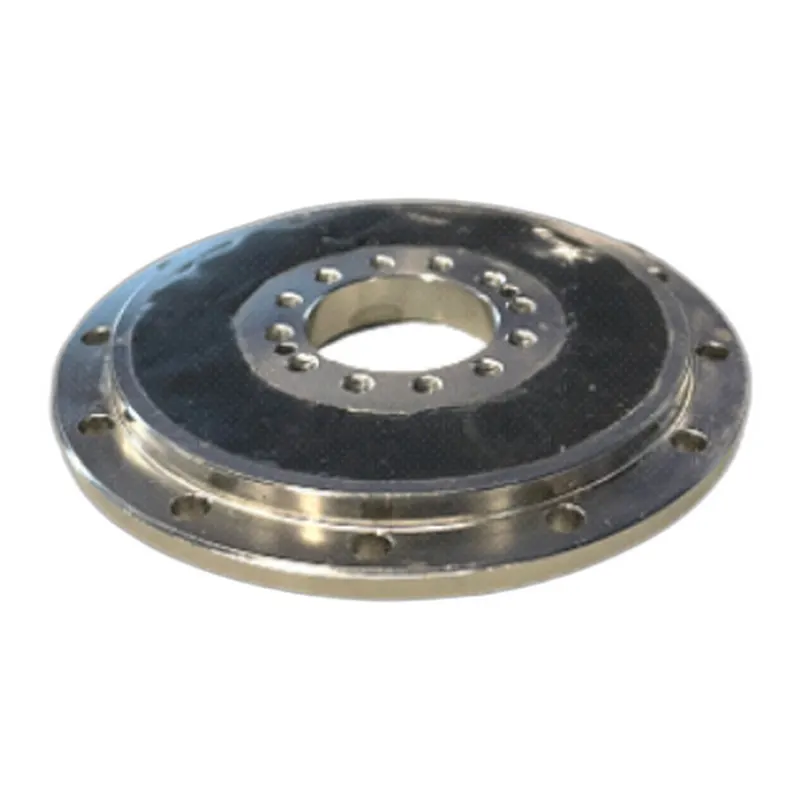
The Keli Sensing JTS/NJ-K joint torque sensors target robot-arm joint torque detection with strain-gauge precision: five ranges 50-250 N·m, sensitivity 1.3±0.2 mV/V, non-linearity ±0.5%FS, repeatability/creep ±0.1%FS, zero temp drift ±0.05%FS, IP65 sealing in alloy steel with a thin flange form (Φ72 OD, 7.2 mm thick), 300%FS safe / 500%FS ultimate overload and 5-10 V DC excitation - high torsional stiffness and strong overload resistance for cobot/industrial joint force control and test benches.
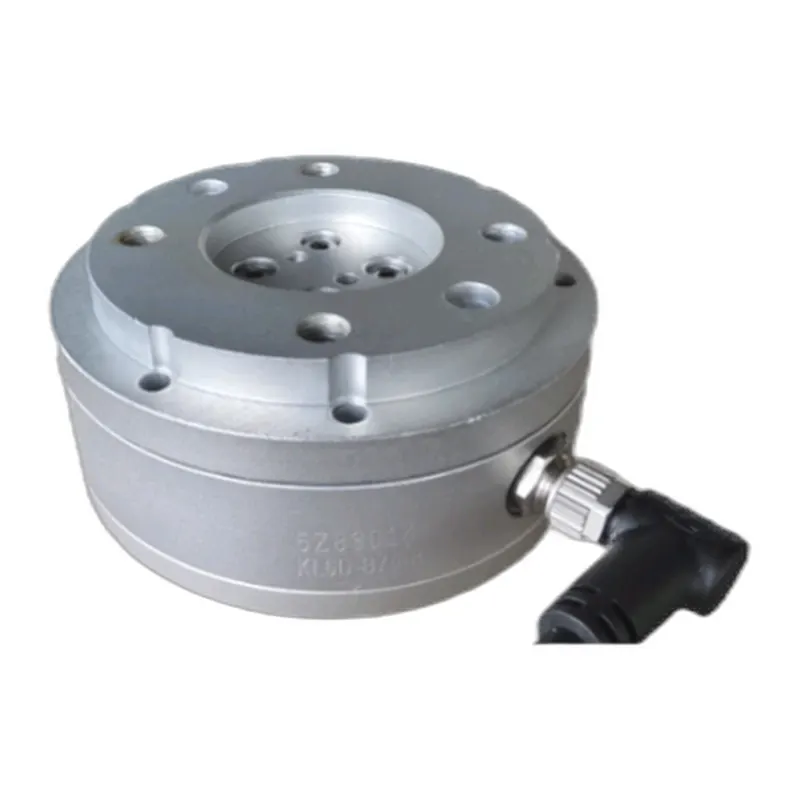
Keli Sensing (Ningbo Keli Sensing Technology, SSE 603662) is a leading Chinese force-sensor manufacturer. The KL6D/KL6F six-axis force/torque sensors use high-precision strain-gauge principle with four range tiers (Fx/Fy/Fz 100-700 N, Mx/My/Mz 4-18 N·m), RS485 digital output at 1000 Hz, non-linearity ±0.5%FS, crosstalk ±1%FS, repeatability/creep ±0.1%FS, IP65 sealing in aluminium alloy, 300%FS safe / 500%FS ultimate overload and 5-36 V DC excitation in a flange-mounted Φ75 x 42.5 mm body - suited to industrial arm force detection, automation and machine tools as well as humanoid wrist/ankle six-axis force perception.