PAPER DEEP DIVE
StaccaToe: A Single-Leg Robot that Mimics the Human Leg and Toe
Introduces StaccaToe, a human-scale electric motor-powered single-leg robot with an actuated toe and co-actuation configuration inspired by the human leg. Without energy storage mechanisms, it demonstrates balanced tip-toe stance and dynamic jumping, providing empirical evidence for replicating human leg attributes in robotic design.
One-Sentence Summary
StaccaToe is a human-scale electric motor-driven single-leg robot with an actuated toe and co-actuation configuration inspired by human biomechanics, achieving tiptoe balance and dynamic jumping without springs or clutches—providing empirical evidence that replicating critical human leg attributes enables agile locomotion with pure electric actuation.
Background and Motivation
Developing humanoid robots that match human locomotion agility is a long-standing robotics goal. Agile movements like jumping offer a flexible, dynamic mode for navigating challenging terrain—overcoming barriers, evading danger, and traversing disconnected ground. A robot with such agility can expand its operational range across terrains and reach elevated vantage points for surveillance. Toward this vision, the authors developed StaccaToe: a single-leg robot capable of both stable balance control and explosive jumping.
In jumping robot development, hydraulic and pneumatic actuators have been widely adopted for their high force/torque density, rapid response, and impact robustness. Raibert's early work used a hydraulically actuated hip and pneumatic leg. Boston Dynamics' Atlas and Festo's Bionic-Kangaroo achieved jumping through hydraulic and pneumatic actuation, respectively. However, hydraulic systems suffer from inefficiency and maintenance issues (oil leaks), while pneumatic systems share these drawbacks alongside limited energy storage, low precision, and noise.
Electric motors offer higher efficiency and lower maintenance, but their output torque is limited. Most electric jumping robots rely on specially designed mechanisms: Salto-1P achieves 1m+ jumps via a series elastic actuator with variable mechanical advantage; TAUB, JumpRoACH, GRILLO III use mechanical advantage enhancement; human-scale RAMIEL uses a parallel wire-driven mechanism. However, these special mechanisms are difficult to extend to general-purpose humanoids—springs, clutches, and energy storage devices enhance instantaneous explosive power but conflict with stable walking control requirements.
StaccaToe's core design philosophy: achieve human-scale agile motion through pure electric actuation without any special energy storage mechanisms. This requires replicating key human biomechanical features in mechanical design—actuated toe and co-actuation configuration—to compensate for motor torque limitations. The deeper motivation is developing a practical, high-performance humanoid capable of both human-like stable walking and explosive dynamic movements.
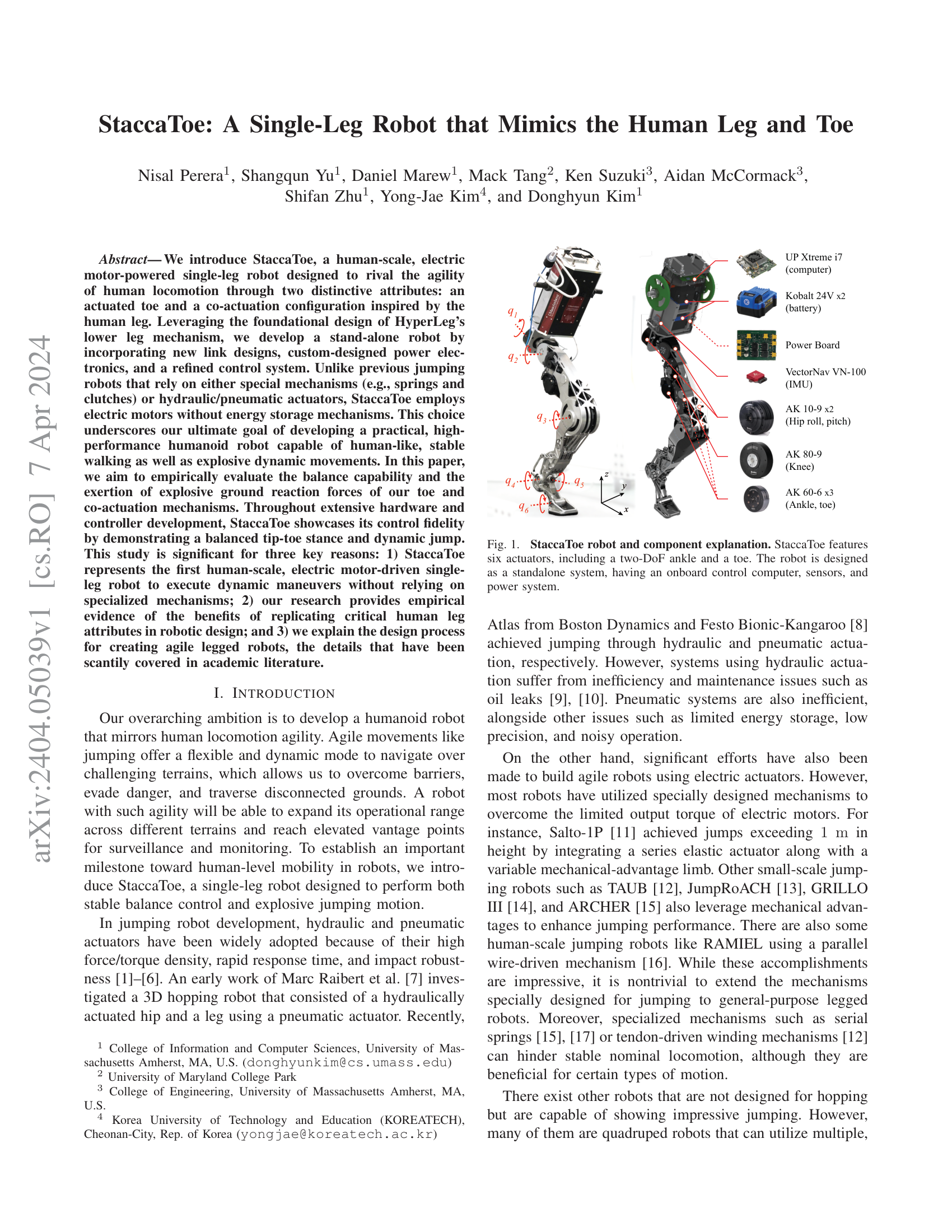
Figure 1: StaccaToe robot and component overview. Six actuators including a two-DoF ankle and toe. Designed as a standalone system with onboard computer, sensors, and power.
Preliminaries
HyperLeg Predecessor: StaccaToe builds on HyperLeg's lower leg mechanism design. HyperLeg demonstrated a biologically inspired leg design integrating an actuated toe, cooperative actuation, non-collocated actuators, and large range of motion. However, HyperLeg contained only the lower leg, lacked hip joints and a body, and required planar constraint assistance. StaccaToe creates a complete standalone robot with hip joints, torso, custom power electronics, and a refined control system.
Co-Actuation: Co-actuation is one of StaccaToe's core innovations, inspired by human leg biomechanics. In human legs, multiple muscles act on the same joint through tendons and fascia—the quadriceps and gastrocnemius both cross the knee. In robotics, co-actuation means multiple actuators simultaneously act on the same joint through transmission mechanisms, enabling torque beyond any single actuator's capability. For StaccaToe, during knee extension, the knee, ankle, and toe actuators collectively contribute torque through the co-actuation Jacobian $J_\theta$.
Method
1. Hardware Design and Development
StaccaToe comprises seven primary modules: torso, hip, thigh, shank, ankle, foot, and toe. The thigh and shank modules are critical as they bear primary locomotion loads while encapsulating transmission links, pulleys, and actuators.
Component Count and Leg Width Reduction: HyperLeg's thigh and shank used multiple aluminum plates connected by metal axles—many parts, high maintenance. StaccaToe consolidated components into two links per module, reducing thigh and shank parts by 28 and 7, respectively. Knee and ankle joint widths were reduced by 42mm and 7mm (~30% total width reduction), significantly reducing weight and streamlining the leg—critical for avoiding self-collision when extending to bipedal robots.
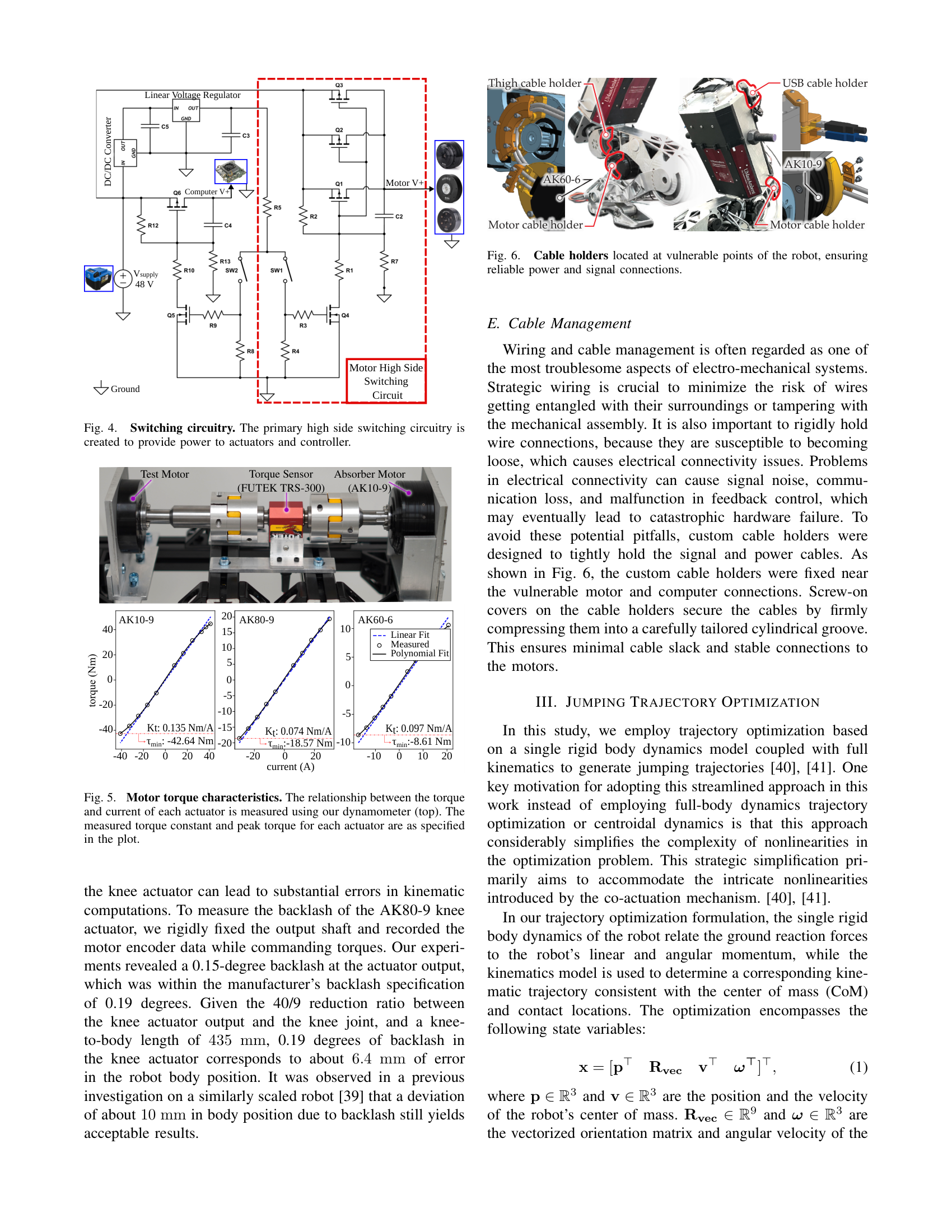
Figure 3/5: Topology optimization process and motor torque characteristic measurements. Optimized components maintain structural rigidity while reducing mass.
Topology Optimization: To reduce link mass without compromising rigidity, the authors used ANSYS for topology optimization on the thigh, shank, foot, and transmission links. The optimization minimizes strain energy under mass reduction constraints using Sequential Convex Programming. Optimized components withstand impact forces up to 600N (~4× robot weight) and twisting moments up to 50Nm. Through optimization, StaccaToe's leg is ~0.47kg lighter than HyperLeg, with lower leg mass reduced 14.78% (from 3.79kg to 3.23kg).
Motor Control and Power System: Actuators are driven by MAB Robotics MD80 V2.1 controllers (replacing T-Motor's original boards). A UP Xtreme Intel Core i7 communicates via two CANdle devices (USB 3.0), each daisy-chaining three actuators, achieving 500Hz real-time communication (CAN FD). The custom power board delivers high current at 48V using three parallel IXTT140P10T P-channel MOSFETs (140A continuous drain current each). 48V is achieved by connecting two 24V Kobalt Li-ion batteries in series.
Actuator Identification: The authors measured torque constants $K_t$ and peak torques of AK10-9, AK80-9, and AK60-6 actuators using a dynamometer. Measured torque constants were lower than specifications—a critical finding for proper impedance control torque generation. Knee AK80-9 backlash measured 0.15 degrees (within manufacturer's 0.19° spec), with minimal impact on kinematic computations given the 40/9 reduction ratio.
2. Trajectory Optimization
To generate jumping trajectories respecting actual actuator capabilities, the authors built a single rigid body model trajectory optimization. State variables include CoM position $\mathbf{p}$, velocity $\mathbf{v}$, vectorized orientation $\mathbf{R}_{\text{vec}}$, and angular velocity $\boldsymbol{\omega}$:
$$\mathbf{x} = [\mathbf{p}^\top, \mathbf{R}_{\text{vec}}^\top, \mathbf{v}^\top, \boldsymbol{\omega}^\top]^\top$$
The optimization minimizes a quadratic state error cost:
$$\min_{\mathbf{x}_k} \sum_{k=1}^{N} \mathbf{X}_{\text{err},k}^\top Q \mathbf{X}_{\text{err},k}$$
Orientation error uses the skew-symmetric matrix form, with small-angle approximation $\sin\theta \approx \theta$:
$$\hat{\boldsymbol{\omega}}_{\text{err},k}\theta_{\text{err},k} = \left(\frac{1}{2}(\mathbf{R}_{\text{err},k} - \mathbf{R}_{\text{err},k}^\top)\right)^\vee$$
where $(\cdot)^\vee: \mathfrak{so}(3) \to \mathbb{R}^3$ is the inverse skew function. Constraints include dynamics, forward kinematics, non-slipping, friction cone, contact force, joint limits, and critically, motor torque constraints.
3. Co-Actuation Torque Constraints
Due to StaccaToe's co-actuation design, maximum available joint torque depends on robot configuration—simple upper/lower bounds cannot be applied. Required joint torque approximates that for generating ground reaction forces:
$$\boldsymbol{\tau}_{j,k} \approx -S_j^\top \left(\sum_{i=1}^{n_c} J_i(\mathbf{q}_k)^\top \mathbf{f}_{i,k}\right)$$
where $S_j \in \mathbb{R}^{n \times n+6}$ is a selection matrix and $J_i \in \mathbb{R}^{3 \times n+6}$ is the $i$-th contact point Jacobian. The co-actuation torque constraint is:
$$|\boldsymbol{\tau}_{j,k}| \leq J_\theta(\mathbf{q}_k)^\top \boldsymbol{\tau}_{\text{motor}}^{\max}$$
where $J_\theta \in \mathbb{R}^{n \times n}$ is the motor Jacobian mapping joint velocity to motor velocity. The key significance: torque limits are no longer fixed constants but configuration-dependent constraints—when multiple actuators cooperate, the maximum available torque at a joint depends on the current joint angles and each actuator's speed and moment arm. This enables trajectory optimization to precisely exploit co-actuation advantages while respecting individual motor limits.
flowchart TB
    A[Trajectory Optimization] --> B[Single Rigid Body Model]
    B --> C[State: CoM pos/vel/orientation/ang_vel]
    C --> D[Constraints: Dynamics+Kinematics+Friction+Joint Limits]
    D --> E[Motor Torque: Configuration-Dependent]
    E --> F[Co-actuation Jacobian J_theta]
    F --> G[Generate Jump Trajectory]
    G --> H[WBIC Whole-Body Control]
    H --> I[Impedance Control Tracking]
    I --> J[Hardware Execution]
4. Control Architecture
StaccaToe uses Whole-Body Impulse Control (WBIC) to compute joint position, velocity, and torque commands. The WBIC task hierarchy includes: point contact constraints (four toe points + one heel), torso orientation task, torso position task, and joint control task. Simulation uses the custom DARoS-Core dynamics engine for controller validation before hardware deployment.
Experimental Results
Tiptoe Balance
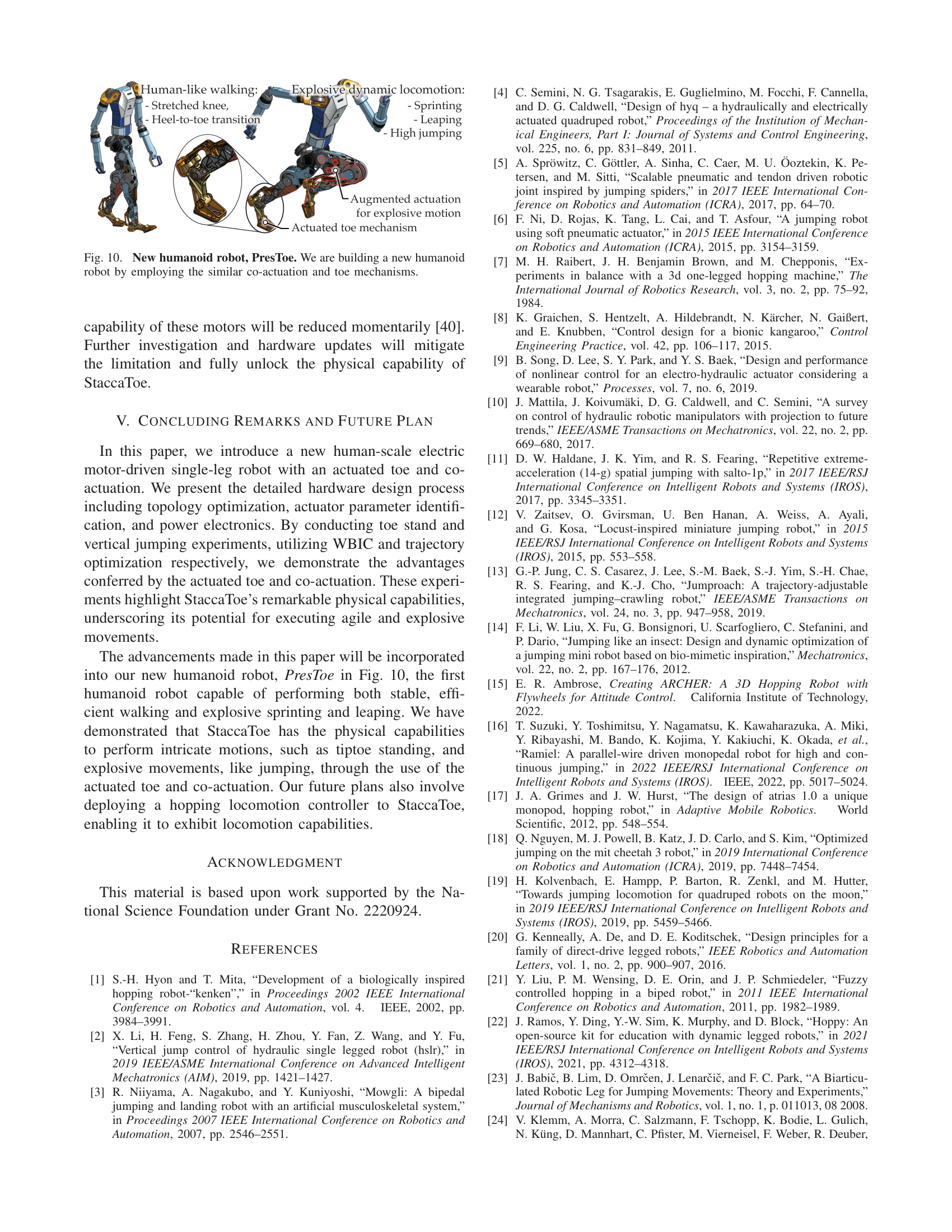
Figure 8: Tiptoe balance. WBIC tracking during tiptoe stand. The robot rises from flat-footed stance, shifts CoM over the toe, then removes heel contact constraint.
StaccaToe demonstrates tiptoe standing—balancing its entire weight on the small toe footprint. Implementation adds a knee joint position task to the WBIC hierarchy with time-based phase transition removing heel contact. The robot rises from flat-footed stance, shifts CoM forward over the toe, then locks the knee angle and removes heel constraint. The CoM remains within the support polygon throughout, and the drivetrain stiffness suffices for dynamic stability. Observed oscillations stem from drivetrain backlash—a nearly unavoidable characteristic that WBIC effectively compensates.
Jumping Test
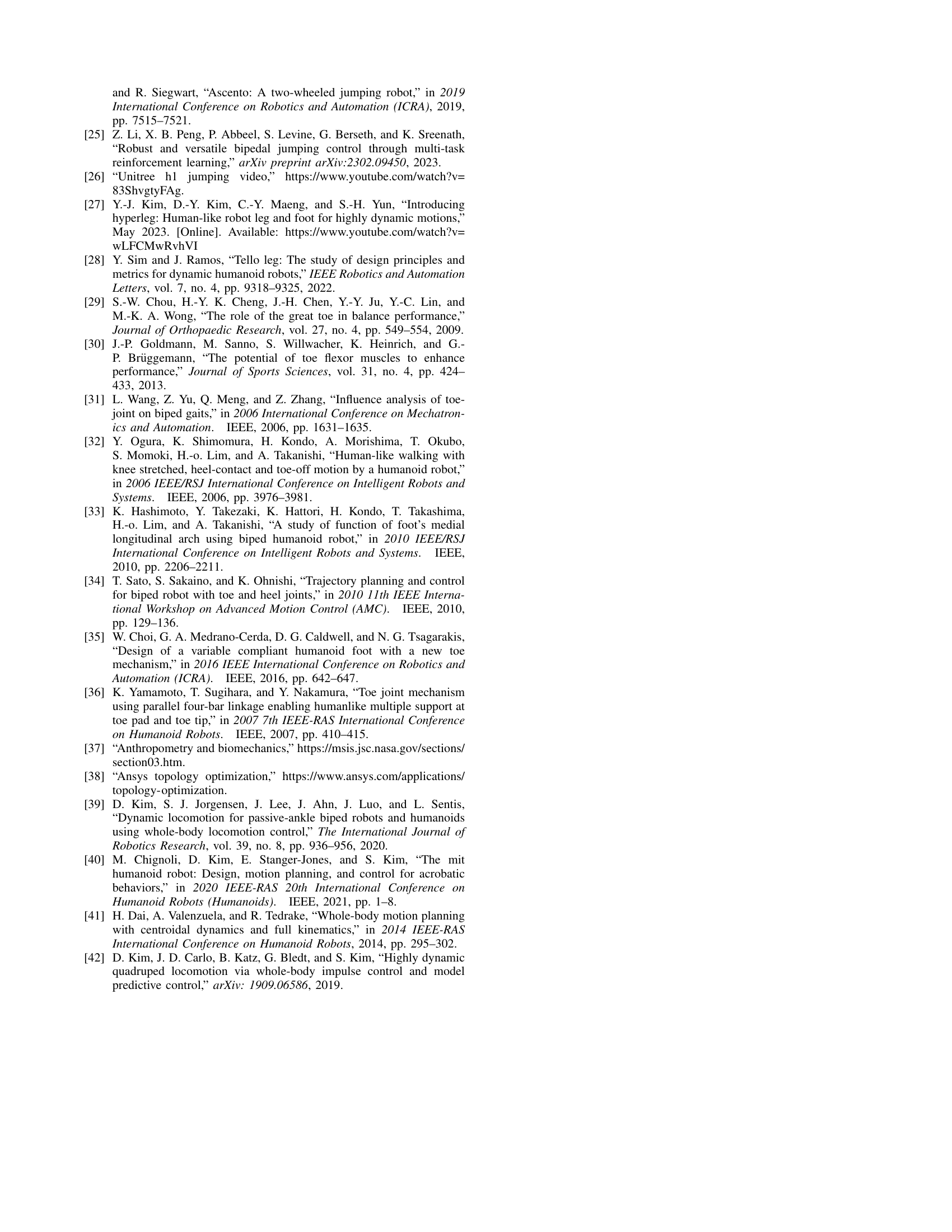
Figure 9: Vertical jumping. (a) StaccaToe achieves jumping via PD control tracking of offline trajectory. Co-actuation enables knee torque beyond single motor capability. (b) Bus and stator voltage profiles during jumping.
| Metric | Value |
|---|---|
| Knee peak torque | >100 Nm |
| Knee actuator alone (post belt reduction) | 80 Nm |
| Co-actuation torque increase | ~25% |
| Additional weight | 1 kg (momentum transfer) |
| Communication frequency | 500 Hz (CAN FD) |
| Power voltage | 48 V (2×24V batteries in series) |
Table: Key jumping test metrics.
Jumping experiments validate co-actuation's core value: during push-off, the knee generated over 100Nm—approximately 25% more than the knee actuator alone (80Nm post belt reduction). The knee, ankle, and toe actuators collectively contribute aggregated torque during knee extension, producing higher ground reaction forces.
| Actuator | Model | Measured $K_t$ | Peak Torque |
|---|---|---|---|
| Hip roll/pitch | AK10-9 | 0.135 Nm/A | -42.64 Nm |
| Knee | AK80-9 | 0.097 Nm/A | -8.61 Nm |
| Ankle/Toe | AK60-6 | 0.074 Nm/A | -18.57 Nm |
Table: Measured actuator torque characteristics.
However, the maximum jumping height predicted by trajectory optimization was not achieved. The primary bottleneck is the power system—during push-off, battery bus voltage drops significantly while stator voltages rise. When the bus-stator voltage difference diminishes, torque generation capacity drops sharply, especially for the high-speed ankle and toe AK60-6 actuators.
Limitations
Author-stated limitations: The maximum jumping height from trajectory optimization was not reached, primarily limited by battery bus voltage drop during high-current push-off. Drivetrain backlash (0.15° at the knee) causes oscillations during motion—though WBIC compensates, it affects control precision. An additional 1kg weight was added for better momentum transfer, suggesting the current mass distribution may not be optimal.
Independent assessment: First, as a single-leg robot, StaccaToe lacks bipedal coordination and lateral stability validation—out-of-plane balance control (e.g., lateral perturbation recovery) is entirely unaddressed, and extending to a bipedal humanoid faces challenges of doubled weight and self-collision avoidance. Second, the power voltage drop exposes an inherent contradiction in pure electric actuation: high torque demands high current, but battery internal resistance causes voltage drop—potentially requiring supercapacitors or active voltage stabilization. Third, while co-actuation increases knee torque by 25%, it adds mechanical complexity and transmission losses (multi-stage belt/linkage); the paper does not analyze whether the extra weight and friction from co-actuation partially offset the torque gains.
Conclusion and Future Work
StaccaToe demonstrates that a human-scale, electric motor-driven single-leg robot can achieve tiptoe balance and dynamic jumping without springs, clutches, or energy storage mechanisms. The two core bio-inspired design features—actuated toe and co-actuation—each play irreplaceable roles: the toe extends the support envelope enabling tiptoe balance, while co-actuation boosts knee torque ~25% beyond single-motor limits. Topology optimization and custom power electronics reflect the complete development process from concept to standalone system.
The paper's third contribution is equally important: detailed documentation of engineering details and challenges in agile legged robot design—actuator calibration, cable management, power electronics—that have been scantily covered in academic literature but are crucial for practical development. Future directions include addressing the power voltage drop bottleneck (possibly via supercapacitors), extending to a bipedal platform, and exploring co-actuation across more joints and locomotion modes.
SOURCE LINKS