PAPER DEEP DIVE
Industrial Dexterity Benchmark: A Hardware-Software Benchmarking Platform for Industrial Dexterous Manipulation
Dexterous manipulation remains a critical bottleneck in industrial automation; tasks such as cable routing, connector insertion, and precision assembly still rely heavily on manual labor despite decades of robotics research. This work presents a progression from classical, modular robotics pipelines toward an end-to-end multimodal imitation-learning framework for industrial dexterous manipulation. As a part of this work, we introduce three key contributions: a set of Industrial Dexterity Benchmark (IDB) boards aimed to mimic datacenter cable management, automotive cable harnesses, and gearbox assembly tasks; a scalable imitation learning framework (DAG-ROS); and a multimodal diffusion-based policy framework (AG-iDP3) that creates models fusing RGB images, point clouds, joint positions, and wrist-frame wrench data. Focusing on the datacenter cable manipulation board, we evaluate the performance of a task involving cleaning a single cable over variations of an end-to-end AI policy using 48 trials per configuration. The best performing configuration, a multimodal expansion Diffusion Policy (DP), includes a multi-view RGB image source passed through an R3M encoder and reaches a 78% grasp and insert combined task success rate. This performance marks a significant improvement over the 36% observed from the single-camera RGB DP baseline. Each of the tested configurations requires only approximately 100 teleoperated demonstrations per task phase. These results indicate that the correct learned policy can outperform classical vision and control robotic methods in robustness, generalization, and deployment efficiency, justifying a shift toward scalable robotic automation for high up-time industrial environments.
Industrial Dexterity Benchmark: A Hardware–Software Benchmarking Platform
Paper: Industrial Dexterity Benchmark: A Hardware–Software Benchmarking Platform for Industrial Dexterous Manipulation
Authors: Honglu He, Jacob Laufer, Zhiwu Zheng, et al. (Analog Devices, Inc.)
Links: arXiv:2607.14021
One-Line Summary
This paper introduces the Industrial Dexterity Benchmark (IDB) — a family of hardware benchmark boards mimicking datacenter cable management, automotive cable harnesses, and gearbox assembly — paired with the DAG-ROS imitation learning framework and multimodal diffusion policy AG-iDP3 (fusing RGB, point clouds, joint positions, and wrist wrench), achieving 78% success on the datacenter cable-cleaning task with multi-view RGB, far surpassing the 36% single-camera RGB baseline.
Background and Motivation
Dexterous manipulation remains a critical bottleneck in industrial automation. Datacenter cable management requires up-time exceeding $99.99\%$, with dense rack layouts and thermal constraints restricting physical access.
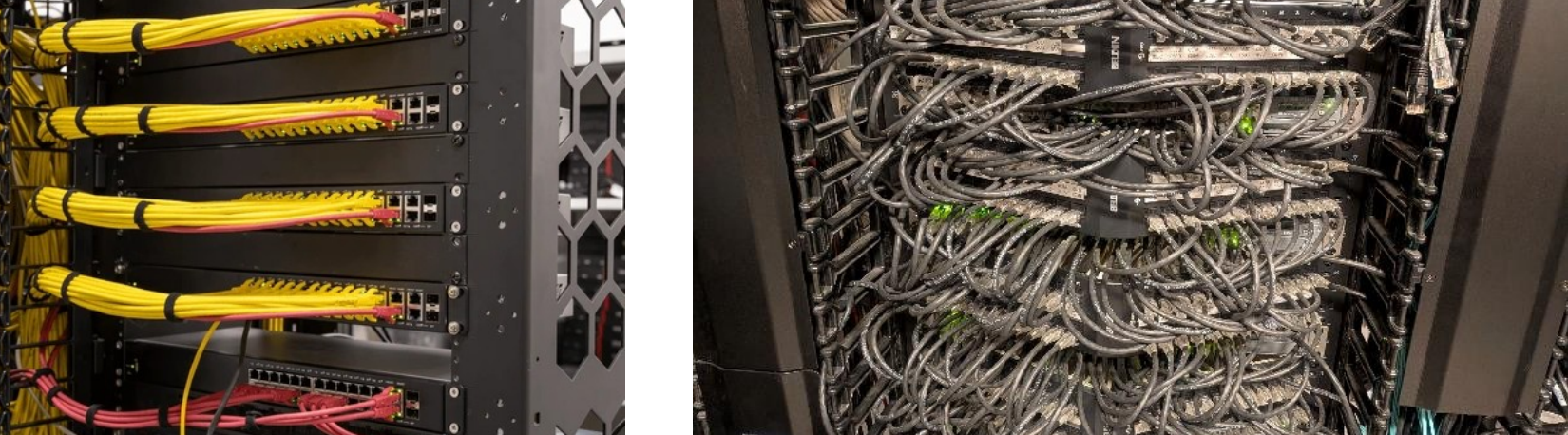
Figure 1: Densely populated rack switches in a datacenter — sub-millimeter cable separation and sharp-angle routing.
Classical vision-motion pipelines are sensitive to lighting, struggle with in-hand connector pose estimation, and require extensive recalibration for minor task changes. Existing diffusion policy research typically uses a single image modality, is validated only in simulation or tabletop tasks, and does not incorporate force/torque sensing as policy input.
Industrial Dexterity Benchmark (IDB) Design
IDB comprises three benchmark board designs following the NIST assembly task board philosophy, with total cost in the low hundreds of USD.
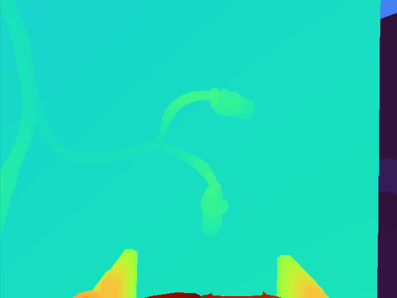
Figure 4: IDB Board #1 — datacenter cable management benchmark with three 3D-printed patch panels.
Board #1 (Datacenter Cable): Aluminum extrusion frame ($\sim 270\,\mathrm{mm}$ tall, $250 \times 340\,\mathrm{mm}$ footprint), three 3D-printed patch panels (RJ45, SC simplex, LC duplex fiber). Two tasks: cable port swap and fiber cable maintenance, yielding 6 sub-tasks. Difficulty is modulated by the number of pre-populated cables.
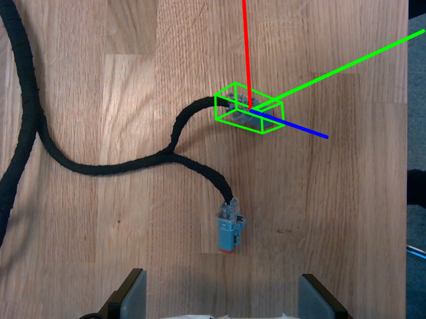
Figure 5: IDB Board #2 — automotive cable harness benchmark with 8 LED-verified connectors.
Board #2 (Automotive Harness): Three laser-cut acrylic panels simulating constrained electrical connections of automotive final assembly. 8 connectors (two 6-pin, six 2-pin) at varying heights and orientations, with LED verification on 2-pin connectors.
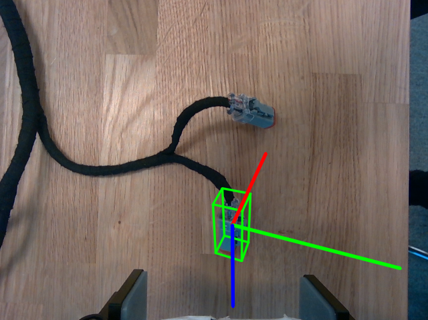
Figure 6: IDB Board #3 — gearbox assembly benchmark with planetary gearbox components.
Board #3 (Gearbox Assembly): Tests fine manipulation skills in assembling/disassembling a planetary gearbox driven by a NEMA 17 stepper motor, including gear mesh alignment and bolt tightening sequences.
DAG-ROS: Imitation Learning Infrastructure
DAG-ROS provides a scalable imitation learning data collection and deployment framework using Ubuntu 24.04 RT-kernel with ROS2 Control driving an FR3 arm, Robotiq 2F-85 gripper, and wrist-mounted RealSense D405. All data is logged in MCAP format and converted to Zarr for training.
AG-iDP3: Multimodal Diffusion Policy
AG-iDP3 fuses four sensor inputs: wrist RGB (D405), scene RGB (D435i), scene point cloud (D435i or ToF), and proprioception (joint positions + wrist wrench). RGB is encoded by R3M (ResNet18), point cloud by multi-stage PointNet, and proprioception is concatenated directly. All vectors form a single observation $\mathbf{o}$:
$$ \mathbf{o} = [\,f_{\mathrm{R3M}}(\mathbf{I}_{\mathrm{wrist}}),\; f_{\mathrm{R3M}}(\mathbf{I}_{\mathrm{scene}}),\; f_{\mathrm{PN}}(\mathbf{P}_{\mathrm{scene}}),\; \mathbf{q}_{\mathrm{joint}},\; \mathbf{w}_{\mathrm{wrist}}\,] $$The diffusion U-Net learns to reverse the noise process during training. Given clean action $\mathbf{a}_0$, the forward noising process is:
$$ q(\mathbf{a}_t | \mathbf{a}_0) = \mathcal{N}(\mathbf{a}_t;\, \sqrt{\bar{\alpha}_t}\,\mathbf{a}_0,\, (1-\bar{\alpha}_t)\mathbf{I}) $$The policy network $\epsilon_\theta$ learns to predict added noise, generating $T=15$ step action chunks at inference. Only the first $N=3$ steps are committed per inference.
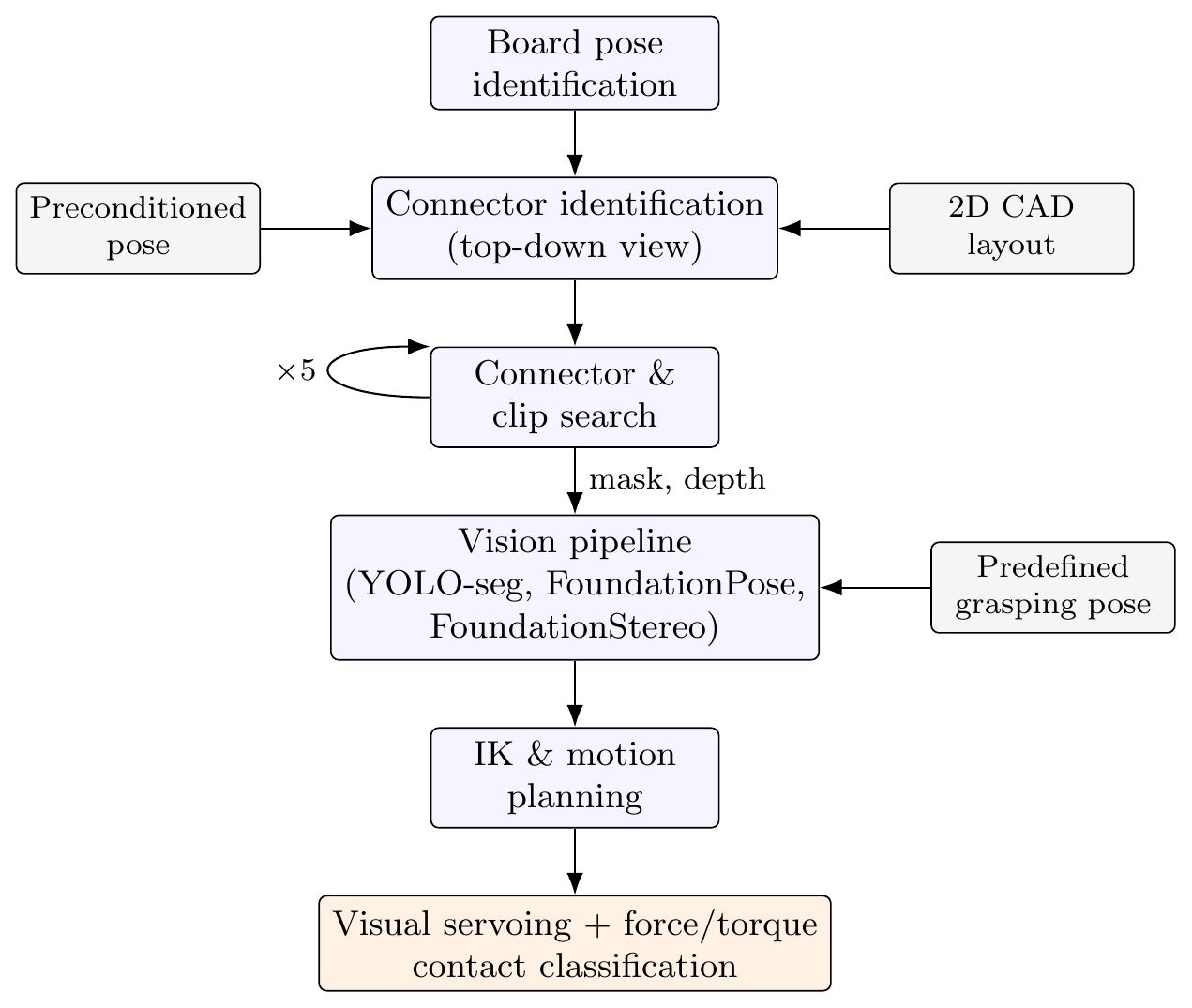
Figure 2: Classical vision pipeline — FoundationPose + FoundationStereo for 6-DOF connector pose estimation.
Per-Phase Wrench Gating: Wrench input only helps during the contact-rich insert phase; it is gated off for grasp and clean phases.
Action Chunking: Each inference outputs $T$ steps; only the first $N$ are committed. The executed action for time $t$ comes from the most recent inference covering that time:
$$ a_{\mathrm{exec}}^{(t)} = a_{i^*}^{(t)}, \quad i^* = \arg\min_{i} \mathrm{age}_i \quad \text{s.t.} \quad t \in [t_i, t_i + N] $$Temporal Ensembling: Successive inferences produce overlapping predictions, blended via exponentially weighted average:
$$ \bar{a}^{(t)}=\frac{\sum_{i}w_{i}\,a_{i}^{(t)}}{\sum_{i}w_{i}},\qquad w_{i}=\exp(-k\cdot\mathrm{age}_{i}) $$where $k=0.01$ controls decay rate, $a_i^{(t)}$ is the prediction from inference $i$ for time $t$, and $\mathrm{age}_i$ is elapsed time since inference $i$.
Trajectory Smoothing: Cubic spline interpolation fits a smooth trajectory between the last executed action and future $N$ waypoints, sampled at $50\,\mathrm{Hz}$:
$$ \mathbf{s}(u) = \mathbf{a}_{\mathrm{last}} + \sum_{j=0}^{3} \mathbf{c}_j \, B_j(u), \quad u \in [0, N/\Delta t] $$
flowchart LR
    A["Wrist RGB
D405"] --> E["R3M Encoder
ResNet18"]
    B["Scene RGB
D435i"] --> E
    C["Scene Point Cloud
ToF/Stereo"] --> F["PointNet Encoder"]
    D["Joint Pos
+ Wrist Wrench"] --> G["Direct Concat"]
    E --> H["Observation Vector o"]
    F --> H
    G --> H
    H --> I["Diffusion U-Net
T=15 action chunk"]
    I --> J["Temporal Ensembling
+ Cubic Spline"]
    J --> K["50Hz Impedance Ctrl"]
    style I fill:#e1f5fe
    style K fill:#e8f5e9
Results
Six configurations, 48 trials each on the datacenter cable-cleaning task. Cleaning succeeded $100\%$ in all configurations. Key findings:
- With 3D context (point cloud or dual RGB), grasp success is $88\%$-$98\%$; single RGB only $48\%$
- Insertion is the differentiating phase — $48$ percentage point variation across configs
- Best total score $78\%$ with multi-view RGB + R3M
- ToF scene camera outperforms RealSense D435i by $7$ percentage points
- All multimodal configurations beat the single RGB baseline ($36\%$)
| Config | Sensor Inputs | Grasp(%) | Insert(%) | Total(%) |
|---|---|---|---|---|
| 1 | RGB wrist + ToF scene | 90 | 65 | 59 |
| 2 | RGB wrist + RGB scene (D435i) | 96 | 75 | 72 |
| 3 | RGB wrist + PC (D435i) | 88 | 54 | 48 |
| 4 | RGB wrist + PC (ToF) | 94 | 56 | 53 |
| 5 | PC only (iDP3) | 98 | 54 | 52 |
| 6 | RGB wrist only (DP baseline) | 48 | 40 | 36 |
| Best | RGB wrist + RGB scene (R3M) | 96 | 81 | 78 |
| Config | PC Encoder | R3M Encoder | U-Net | Total |
|---|---|---|---|---|
| iDP3 (PC only) | 0.27M | — | 68.5M | 68.8M |
| DP (1×RGB) | — | 11.2M | 78.1M | 89.3M |
| DP (2×RGB) | — | 22.4M | 92.6M | 114.9M |
| COMB-iDP3 (PC+RGB) | 0.27M | 11.2M | 83.2M | 94.6M |
Limitations
- Point cloud resolution: Both scene cameras' point cloud resolution (further downsampled by PointNet) was insufficient to resolve receptacle features needed for tight-clearance insertion, likely why dual-RGB outperformed RGB+PC configurations. However, in industrial settings with non-constant lighting, equipment aging, and airborne particulates, ToF sensing may be more reliable than passive stereo.
- Visual sensitivity: The learned policy was brittle to small visual scene changes — cable slippage and insertion pose偏差 causing connection failures. Per-phase comparisons for the RGB-only baseline should be interpreted carefully due to its low grasp success rate filtering out many insert attempts.
Conclusion
This work progresses from classical modular pipelines to an end-to-end multimodal imitation learning framework. The IDB benchmark provides a reproducible evaluation platform for industrial dexterous manipulation, and AG-iDP3 achieves $78\%$ cable-cleaning success — requiring only $\sim 100$ teleoperated demonstrations per task phase, versus thousands of labeled images and extensive tuning for classical pipelines.
Key insight: "The correct learned policy can outperform classical vision and control methods in robustness, generalization, and deployment efficiency." Multi-view RGB lifted success from $36\%$ to $78\%$, revealing the indispensability of 3D context for tight-clearance industrial manipulation.
SOURCE LINKS