PAPER DEEP DIVE
The Curse of Precision: A Data Scaling Law for High-Precision Robotic Manipulation
While scaling laws for imitation learning have primarily focused on generalization in open-world settings, the relationship between data and precision in closed-world tasks like robotic assembly remains largely unexplored. This paper systematically investigates this relationship and introduces a novel scaling law. We find that to achieve a fixed success rate, the required number of demonstrations $N$ grows super-exponentially as the target precision $P$ approaches a limit $c$. This relationship is accurately captured by the model $\log(N) \propto 1/(P-c)$. Crucially, we reveal that the limit precision $c$ is not a static physical constant of the task but an emergent property of the entire agent system, including its sensors and expert policy. Through experiments on canonical manipulation tasks, we validate this law and demonstrate that improving system components, such as adding a wrist camera or using a more effective expert, measurably lowers $c$, thus expanding the system's achievable precision. Our work provides a new theoretical framework for precision in robotics and a quantitative metric to evaluate system capabilities. Furthermore, these findings provide a practical methodology for guiding the development and debugging of high-precision manipulation systems.
The Curse of Precision: A Data Scaling Law for High-Precision Robotic Manipulation
Institution: Tsinghua University | arXiv: 2607.23108v1
One-Sentence Summary
This paper reveals that the data volume N required for high-precision robotic manipulation grows super-exponentially as precision P approaches a limit c, captured by $\log(N) \propto 1/(P-c)$, where c is an emergent system property lowered by better sensors and expert policies.
Background and Motivation
Scaling laws for imitation learning have focused on open-world generalization. The relationship between data and precision in closed-world tasks like robotic assembly remains unexplored. High-precision applications (industrial assembly, electronic manufacturing) require near-perfect reliability, making precision scaling economically critical.
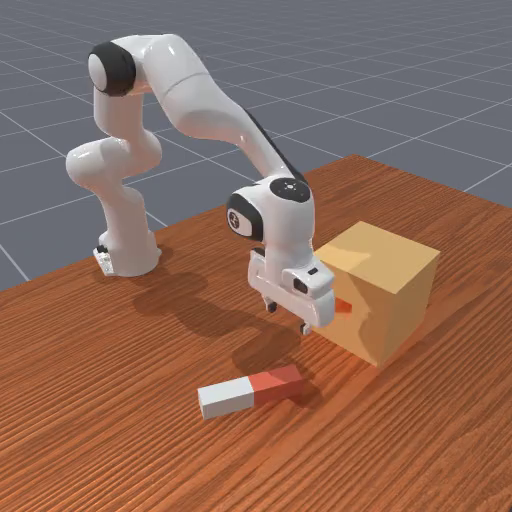
Figure 1: Three high-precision tasks — Peg Insertion, Cuboid Stacking, Roll Ball.
Methodology
Success Rate Scaling Law (Hypothesis 1)
For fixed precision P, failure rate follows a power law with data volume N:
$$\log(1-SR) = a \cdot \log(N) + b \quad (\text{at target } P)$$where $a$ and $b$ are fitting parameters. Parameter $|a|$ reflects data efficiency — larger $|a|$ means higher marginal benefit from additional data.
The success rate scaling law can be reformulated to express SR directly as a function of N:
$$SR(N, P) = 1 - \exp\left(a(P) \cdot \log(N) + b(P) ight) = 1 - N^{a(P)} \cdot e^{b(P)}$$where $a(P)$ and $b(P)$ are precision-dependent parameters. This reveals that the failure rate decreases as a power of $N$, with the exponent $a(P)$ becoming more negative at higher precision.
Precision Scaling Law (Hypothesis 2)
For a fixed target success rate, data volume N grows super-exponentially as precision P approaches limit c:
$$\log(N) = m \cdot \frac{1}{P-c} + n \quad (\text{at target } SR)$$where $c$ represents the highest achievable precision — an intrinsic system property independent of target SR. As $P \to c$, $N$ grows super-exponentially, creating a "precision wall."
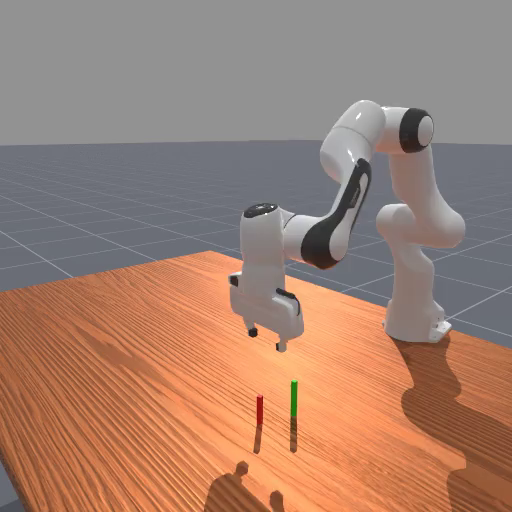
Figure 2: Empirical validation of both scaling laws across three tasks.
Robotic Learning System
ManiSkill3 simulation, Franka Panda 7-DoF arm. Observation: two 256×256 RGB-D images (static + wrist camera) + proprioceptive state. Action: 7-DoF end-effector delta pose. Diffusion Policy with ResNet-18 backbone and 1D U-Net denoising network, 100 DDPM steps.
graph TD
    A["Data Volume N
# demonstrations"] --> B["Success Rate Scaling Law
log(1-SR) = a·log(N) + b"]
    C["Task Precision P
tolerance"] --> D["Precision Scaling Law
log(N) = m·1/(P-c) + n"]
    E["System Configuration
sensors + expert policy"] --> F["Limit Precision c
system intrinsic property"]
    D --> F
    F --> G["Ablation: lower c = better system"]
    G --> H["Wrist camera: c 3.85→2.35mm"]
    G --> I["Aggressive expert: c 2.35→1.27mm"]
    G --> J["Low randomization: c→1.00mm"]
Experimental Results
Success Rate Scaling Law Parameters
| Task | Precision (mm) | a | b | R² |
|---|---|---|---|---|
| Peg Insertion | 4.0 | -0.19 | 1.35 | 0.921 |
| Peg Insertion | 10.0 | -0.72 | 5.08 | 0.967 |
| Stack Cuboid | 4.0 | -0.06 | 0.35 | 0.840 |
| Stack Cuboid | 10.0 | -0.26 | 1.41 | 0.958 |
| Roll Ball | 35.0 | -0.07 | 0.19 | 0.949 |
| Roll Ball | 200.0 | -0.50 | 1.88 | 0.918 |
$|a|$ increases with precision (e.g., Peg Insertion: 0.19→0.72 from 4mm to 10mm), showing higher-precision tasks are more data-sensitive.
Limit Precision c Under Different Configurations
| Configuration | c (mm) | R² (SR=0.5) | R² (SR=0.7) | R² (SR=0.9) |
|---|---|---|---|---|
| Baseline | 2.35 | 0.968 | 0.993 | 0.989 |
| Aggressive Expert | 1.27 | 0.986 | 0.988 | 0.979 |
| Without Wrist Camera | 3.85 | 0.983 | 0.997 | 0.987 |
| Low Randomization | 1.00 | 0.996 | 0.992 | 0.981 |
Each component's contribution quantifiable as $\Delta c = c_{\text{without}} - c_{\text{with}}$. Wrist camera: $\Delta c = 1.50$mm. Expert strategy: $\Delta c = 1.08$mm.
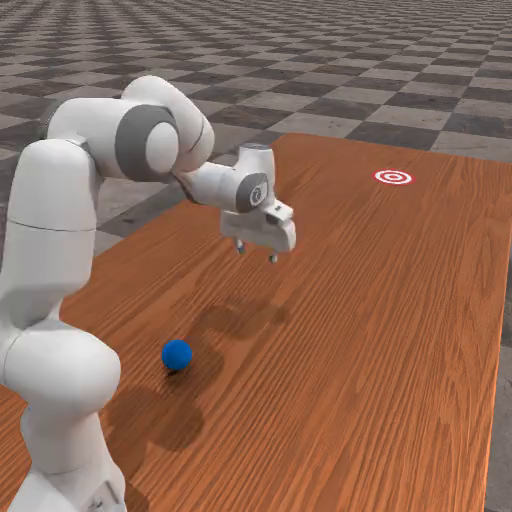
Figure 3: Ablation configurations — observation modality, task complexity, expert strategy.
From information theory, higher precision requires distinguishing finer state differences, with distinguishable precision levels growing exponentially. The precision wall means marginal returns diminish sharply beyond a threshold. The two laws form a complete framework: success rate law describes data-performance at fixed precision; precision law describes data requirements across precisions.
The precision scaling law can be understood through the lens of information theory. Higher precision requires the policy to distinguish finer state differences, and the number of distinguishable precision levels grows exponentially. The relationship between data requirements and precision can be expressed as:
$$N(P) = \exp\left( rac{m}{P-c} + n ight) = e^n \cdot \exp\left( rac{m}{P-c} ight)$$As $P o c^+$, $N(P) o \infty$ super-exponentially, creating the "precision wall." The derivative $ rac{dN}{dP}$ captures the marginal data cost of improving precision:
$$ rac{dN}{dP} = - rac{m}{(P-c)^2} \cdot N(P) < 0$$This negative derivative confirms that tighter precision requires more data, with the rate of increase accelerating dramatically near $c$.
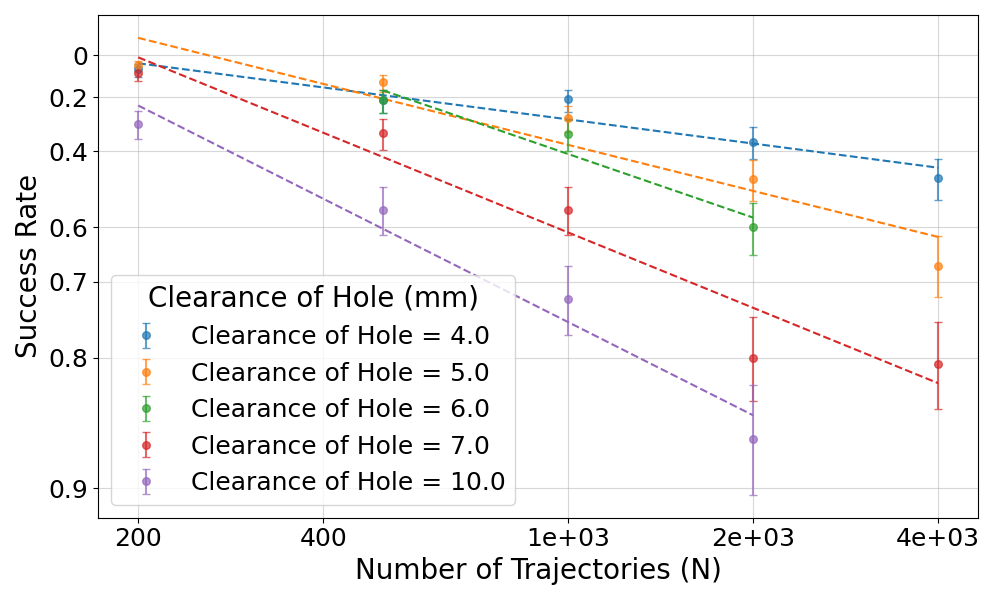
Figure 4: Precision scaling curves showing super-exponential data growth as P approaches c.
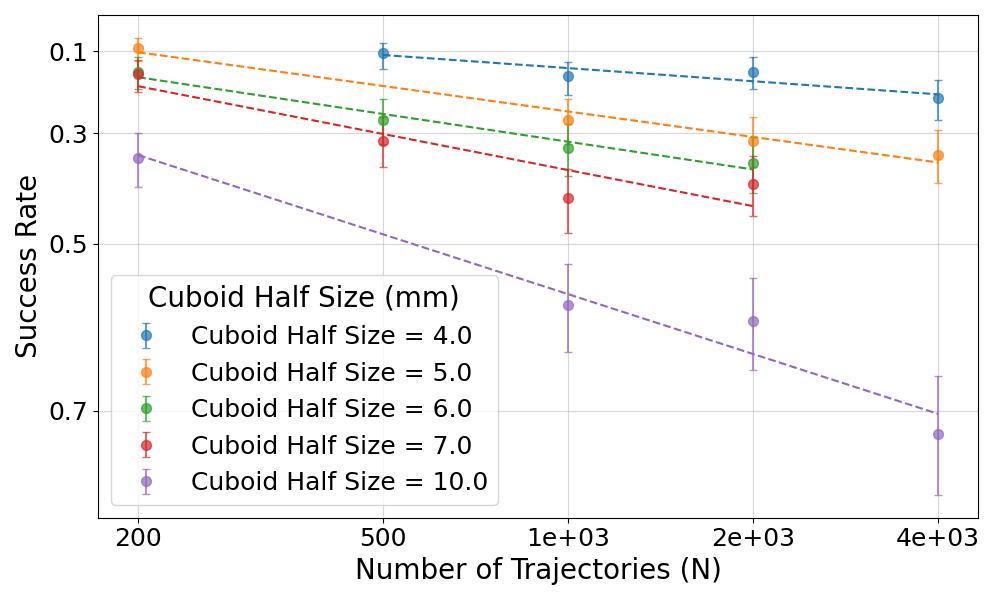
Figure 5: Ablation results showing how different system configurations shift the precision scaling curve.
Limitations
- Experiments in simulation; real-world precision scaling may differ due to sensor noise and physical uncertainties
- Single training run per data point due to computational cost (~20 A100-hours/run)
- Limited to three task types; broader validation needed
- Limit precision c assumes independence from target SR, which may not hold for extreme SR values
Conclusion
This paper reveals the super-exponential relationship $\log(N) \propto 1/(P-c)$ between data volume and precision in robotic manipulation. The limit precision c is an emergent system property, not a physical constant — improving sensors (wrist camera) and expert policies (aggressive strategy) measurably lowers c. This provides a theoretical framework for precision in robotics and a practical metric for system evaluation and debugging.
Key Insight: High-precision manipulation has a "precision wall" — as target precision approaches the system's limit c, data requirements grow super-exponentially, making system improvement (lowering c) more effective than simply adding more data.
SOURCE LINKS