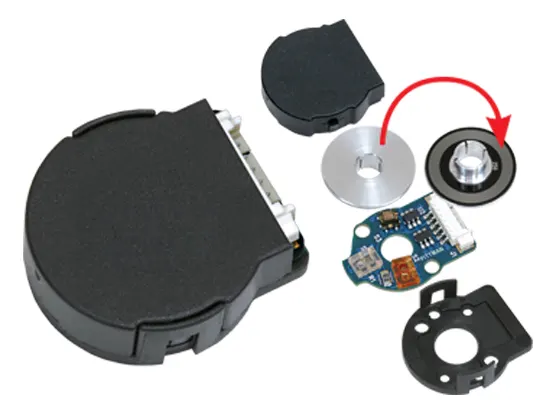
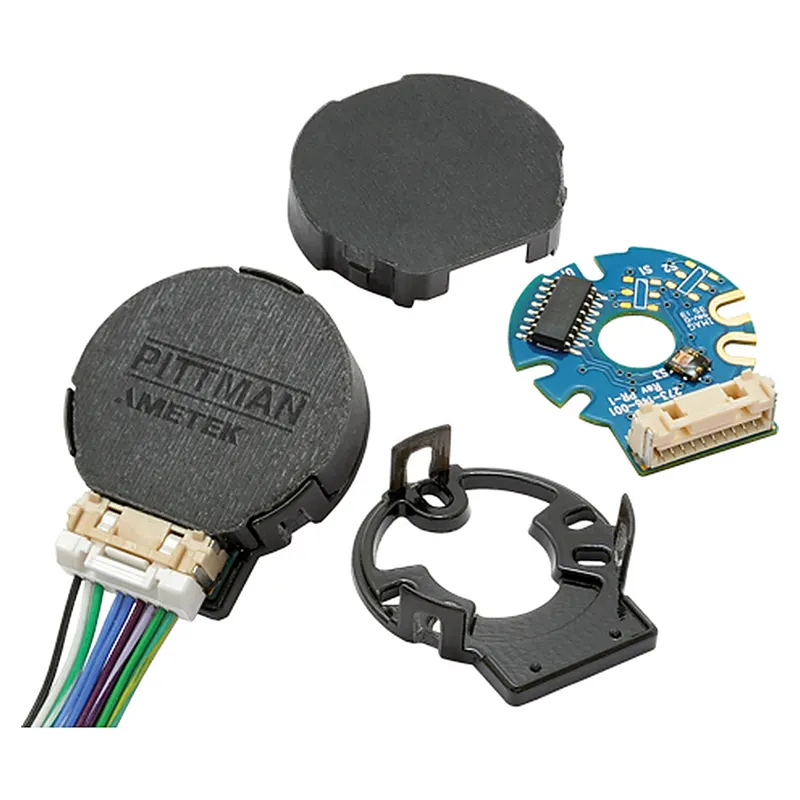
Haydon Kerk Pittman (AMETEK, USA) E21 is a micro incremental optical encoder in E21C/E21D versions: 120-8,192 CPR, 2-channel quadrature (index on D), TTL-compatible output, 4.5-5.5 VDC supply, max operating frequency 960 kHz, -20 to +85 °C and only 3.1 g; its tiny form embeds in micro motor rear ends to deliver speed/position feedback for robot joints, gimbals and precision stages.
Haydon Kerk Pittman (AMETEK, USA) Pittman E30 is a miniature incremental optical encoder family: E30C offers 200-500 CPR and E30D 500-2048 CPR with 2-channel quadrature TTL outputs, Z-index on E30D and optional differential line-driver; powered from 4.5-5.5 VDC at ≤20 mA with response to 220 kHz, -20 to +85 °C operation and 5.6 g mass, mounting directly on Pittman brushed/brushless motors for closed-loop speed or position control in robot joints and precision motion.
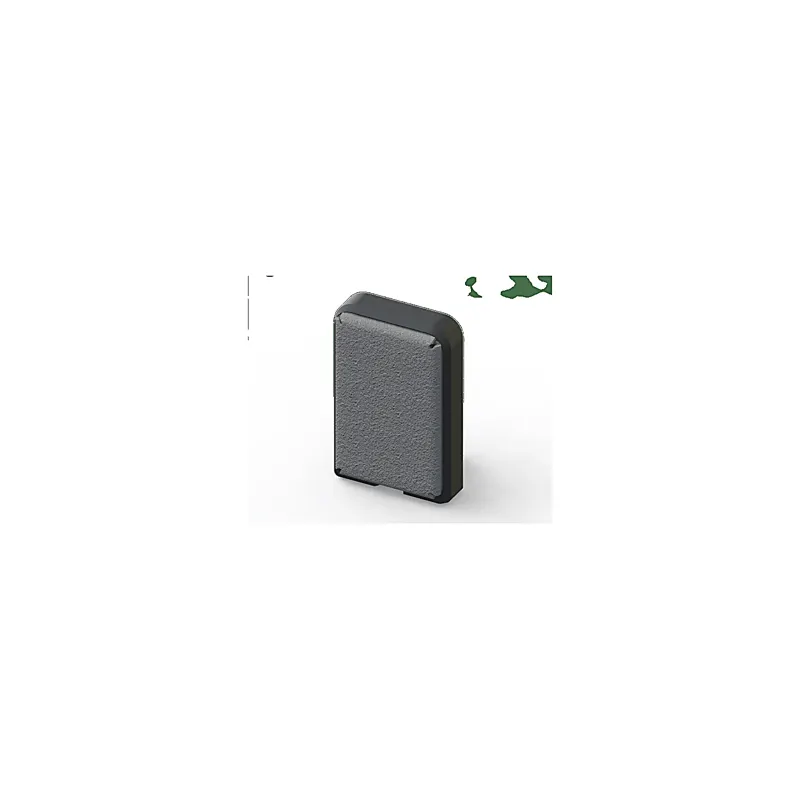
Robotiq TSF-85 tactile sensor fingertips replace the standard fingertips of 2F-85/2F-140 Adaptive Grippers: 28-taxel pressure array per finger at 1000 Hz with vibration and IMU sensing for proprioception and slip detection, tested over 2 million cycles with consistent readings; native ROS2 and NVIDIA Isaac Sim support for Physical AI data collection, foundation-model training and dexterous grasp decisions, with a plug-in data acquisition module.
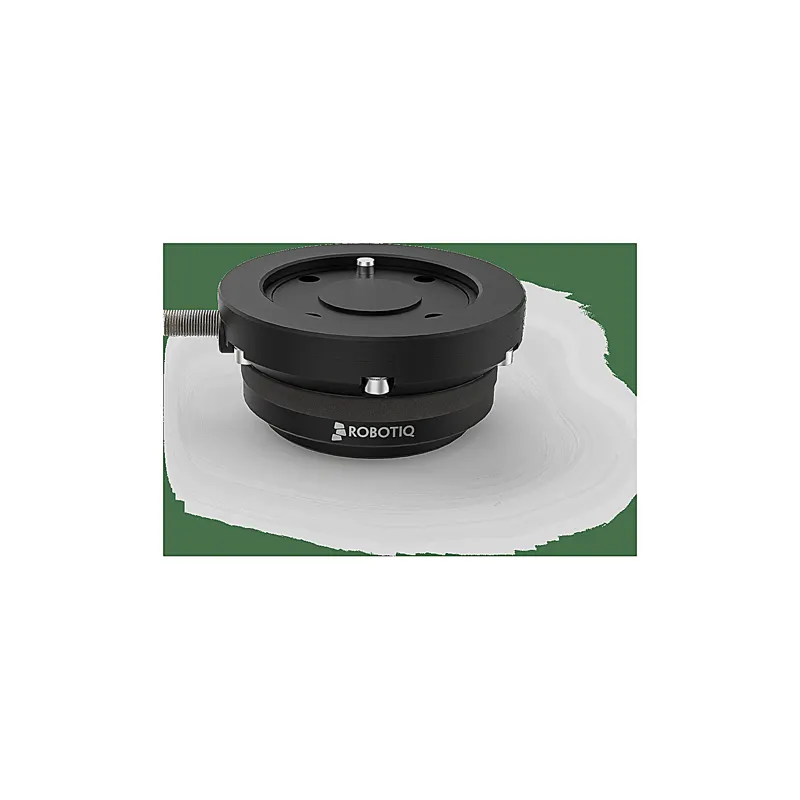
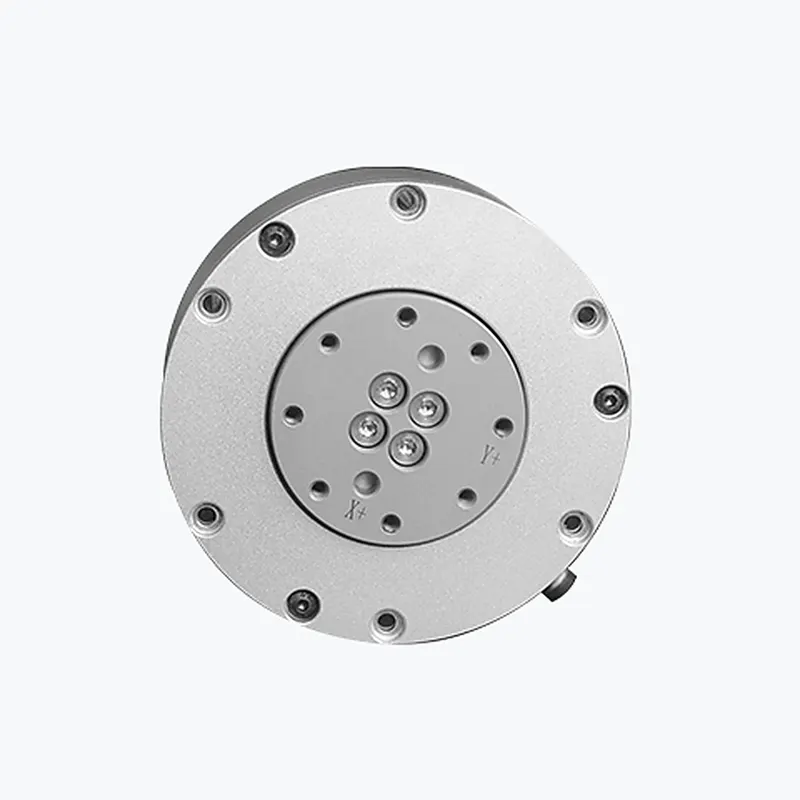
Robotiq (Canada) FT 300-S is a 6-axis wrist force/torque sensor for collaborative robots: ±300 N (FX/FY/FZ) and ±30 N·m (MX/MY/MZ) measuring range, 500% overload capacity, 100 Hz data output, immune to external noise (non-strain-gauge technology), 0.44 kg weight, IP65 rating, 5-40°C operating range, Modbus RTU (RS485) communication; compatible with UR and major cobots and bundled with Force Copilot software for precision assembly, finishing, force-controlled insertion and collaboration safety.
Resistive tactile sensing system from FLEXIBLE (Zhejiang Fulai New Materials, SHA 605488): multimodal pressure/temperature/proximity/shear perception in an ultra-thin conformable film for fingers and palms. FOS-P300-3DF measures 0.1-20 N normal force at 5% FS with 0.01 N resolution and <0.1 mm spatial resolution, 0.3-10 N shear; trigger pressure <3 kPa to >1 MPa, <10% point consistency, 4-pin UART at 100-300 Hz for robot tactile feedback.
Jiangsu Donghua Testing Technology Co., Ltd. (Donghua Testing, SZSE 300354) is a leading Chinese structural mechanics testing and sensing company. The 3F611 six-axis force/torque sensor simultaneously measures three force components (Fx/Fy/Fz) and three moment components (Mx/My/Mz) with five range tiers of 50/100/200/500/1000 N and 2/5/10/20/50 N·m; non-linearity, hysteresis and repeatability are all ±0.5%FS with ±1%FS zero output over -20 to +65 C, offering high accuracy, full perception, strong adaptability, low crosstalk, matrix decoupling and easy mounting for robot joints, dexterous hands and structural-test force feedback.
BITNAV (688282.SH) DHX-MZ104 lightweight cost-effective MEMS integrated navigation system: 68×50×25.5 mm, 105 g, 5-12 V supply, <2 W; gyro range ±450°/s with ≤3°/h (10s,1σ) bias stability and ≥200 Hz bandwidth, accelerometer ±16 g (±32 g optional) with ≤100 μg (10s,1σ) bias stability; horizontal attitude 0.1° (1σ) and heading 0.1° (1σ, 2 m baseline), single-point positioning 3 m (1σ) / height 4.0 m (1σ), velocity 0.1 m/s (1σ), RS-232/RS422 output; for unmanned vehicle, vessel and UAV navigation, control and survey.
Huayi Tech (SSE 688071) autonomous-driving INS line: IMU3000 automotive-grade ultra-high-precision IMU with bias stability ≤1°/h (S grade, Allan variance), 22×22×5 mm, gyro ±250°/s with ARW 0.15°/√hr, accel ±4g with bias instability ≤0.015 mg; INS4050 near-tactical INS assembly, gyro bias ≤5°/h, heading ≤0.2° (1 m baseline, RTK fixed) / ≤0.5° within 2 min after RTK loss, velocity 0.03 m/s, 100 Hz output; INS5050 with built-in automotive GNSS and ASIL-B IMU supporting NRTK/PPP-RTK; all IP67, ISO 26262 ASIL-B, RTK/PPP-RTK, OTA and AUTOSAR, multi-constellation BDS/GPS/GLONASS/Galileo.
Haozhi DSA series 6-axis force/torque sensors for collaborative-robot force control, five ranges spanning Fxy/Fz 100-1600 N and Mxy/Mz 3-50 Nm; world-class force-control accuracy ≤0.1 Nm with temperature self-compensation, low zero drift/creep and structural decoupling; 18/24-bit A/D at 1 kHz sampling with Kalman + Butterworth dual filtering for smoother output; 6-channel analog input with low-noise instrumentation amplifiers; nonlinearity/hysteresis 0.5 %F.S, crosstalk 2 %F.S, overload ≥300% (≥500% for DSA-16050), IP64, 12-24 V, EtherCAT/RS485/CAN/Ethernet interfaces.
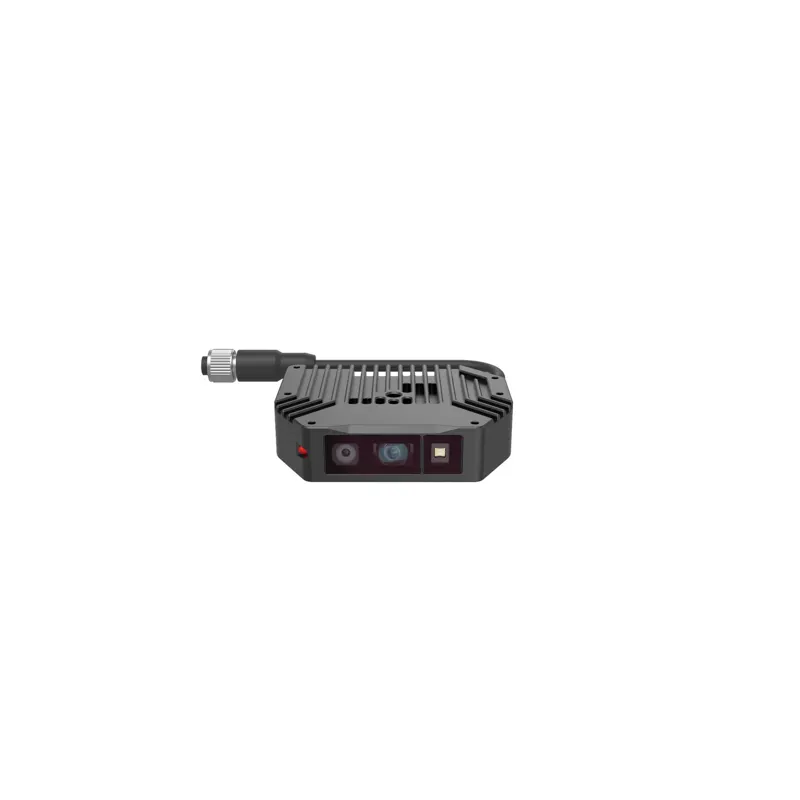
Percipio TM265-E1 3D dToF RGB-D camera: 940 nm IR laser, 120°/50° ultra-wide FOV, 0.05-5 m range, 240x96 @25 fps depth plus 1920x1080 @30 fps color with RGB-D alignment, Z accuracy 6 mm @1 m, 76 ms latency, 100 Mbps Ethernet over M12 connector, IP65, 85x68x20 mm / 174 g, <5 W; millimeter-level depth accuracy and strong-light resistance for mobile-robot navigation, obstacle avoidance and traffic counting.
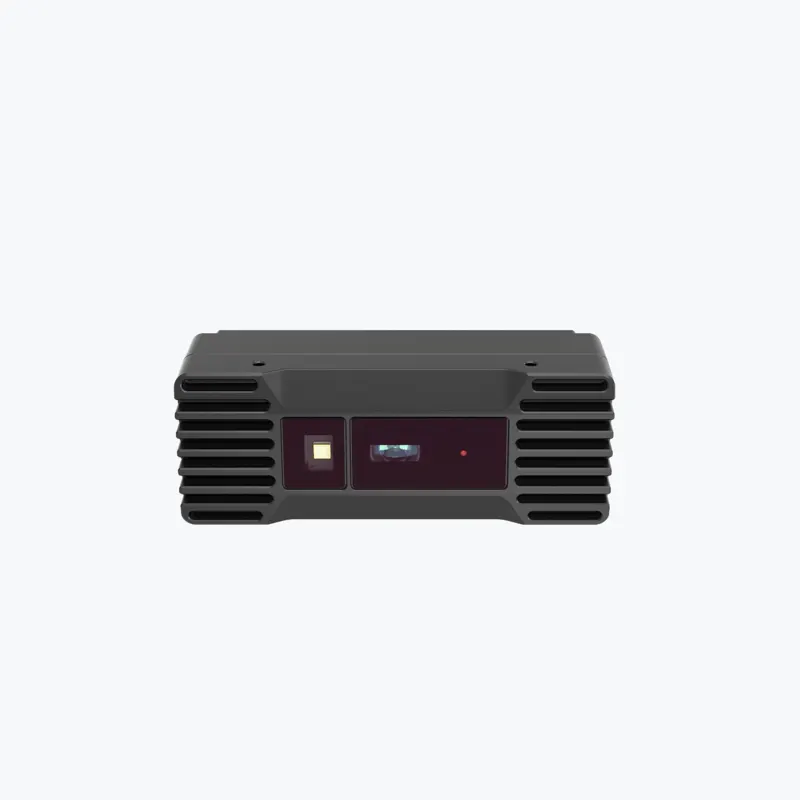
Percipio TM262-E1 industrial dToF ranging depth camera: 940 nm IR laser, 120°/50° ultra-wide FOV, 0.05-8 m working range, up to 240x96 @25 fps depth, Z accuracy 6 mm @1 m / 15 mm @2.5 m, 55 ms latency, 100 Mbps Ethernet over M12 aviation connector, IP65, aluminum passive cooling, 90x34x30 mm / 130 g, <4 W, DC 24V, Linux/Windows/ROS with Vcamera/Camport4 SDK; sunlight-resistant for indoor/outdoor AMR navigation, obstacle avoidance and ranging.
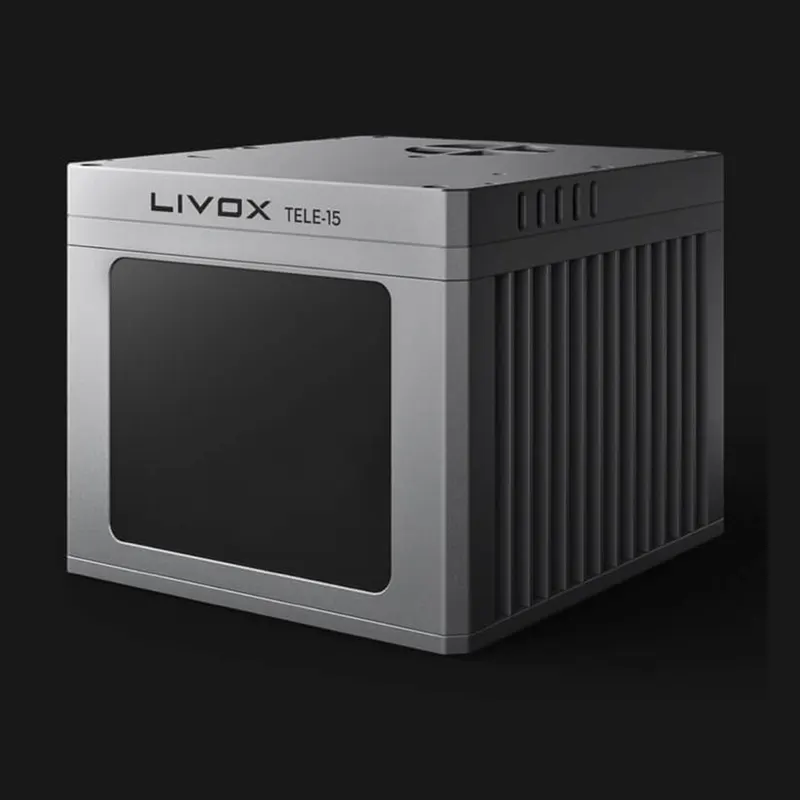
Livox Tele-15 long-range hybrid solid-state LiDAR: 320 m @10% / 500 m @50% reflectivity range, 14.5°×16.2° FOV with 99.8% coverage in 0.1 s, 2 cm @20 m precision, <0.03° angular precision, 240k/480k (dual return) pts/s, ≤2 ms latency, built-in BMI088 IMU, IP67, -40 to 85°C operating range, 12 W typical; for high-speed platforms and long-range inspection perception.