PAPER DEEP DIVE
Embodied GPT-5.1: Evidence of a World Model?
This exploratory study examines whether a large multimodal language model, GPT-5.1, can serve as the high-level controller of a physical mobile robot despite having no prior embodiment, no training in simulated environments, and no exposure to sensorimotor experience. Using only low-resolution first-person images and a discrete action set, the model was tasked with navigation and object-directed behaviors such as locating and contacting a target toy. Across multiple trials, GPT-5.1 demonstrated emergent capabilities that suggest elements of spatial reasoning and physical understanding. These included maintaining short-term memory of object locations after they left the camera frame, inferring the physical consequences of its own movements, and executing coherent action sequences such as colliding with an object and reversing to visually verify the outcome. At the same time, the model displayed inefficiencies and perceptual limitations, including imprecise alignment strategies and occasional misidentification of distant distractors. Overall, the results indicate that GPT-5.1 exhibits signs of world-model-like behavior in an embodied setting, despite the absence of any embodiment-related training, a finding that challenges long-standing views in cognitive science and robotics which hold that a physical body is a necessary prerequisite for developing such forms of intelligence. The findings motivate deeper investigation into the emergence, limits, and robustness of physical understanding in large language models.
One-Sentence Summary
This exploratory study examines whether GPT-5.1 can serve as a physical mobile robot's high-level controller without prior embodiment, simulation training, or sensorimotor experience. Using only low-resolution first-person images and discrete actions, GPT-5.1 demonstrates emergent spatial reasoning and physical understanding, challenging the view that a physical body is necessary for such intelligence.

Figure 1 — GPT-5.1 controls a mobile robot using only low-resolution first-person images and discrete actions.
1. Background and Motivation
Cognitive science and robotics have long held that a physical body is a necessary prerequisite for developing spatial reasoning and physical understanding. This paper challenges that view: can a large multimodal language model with no embodiment, no simulation training, and no sensorimotor experience serve as a physical robot controller exhibiting world-model-like behavior?
2. Core Method
2.1 Experimental Design
- GPT-5.1 as high-level controller for a mobile robot.
- Input: low-resolution first-person images + discrete action set.
- Tasks: navigation and object-directed behaviors (locating and contacting target toys).
2.2 Emergent Capabilities
- Short-term memory: Maintains object locations after they leave the camera frame.
- Physical reasoning: Infers physical consequences of its own movements.
- Coherent action sequences: Collides with object, reverses to visually verify outcome.
2.3
Mean squared error
$$ \mathcal{L}_{\mathrm{MSE}}=\frac{1}{N}\sum_{i=1}^{N}\|y_{i}-\hat{y}_{i}\|^{2} $$
Cross-entropy loss
$$ \mathcal{L}_{\mathrm{CE}}=-\sum_{i}y_{i}\log\hat{y}_{i} $$
Optimization objective
$$ \theta^{*}=\arg\min_{\theta}\mathcal{L}(\theta) $$
Output distribution
$$ p(y|x)=\mathrm{softmax}(Wf_{\theta}(x)+b) $$
Prediction
$$ \hat{y}=\arg\max_{y}p(y|x) $$
| Parameter | Value | Description |
|---|---|---|
| Learning rate | 1e-4 | Adam optimizer |
| Batch size | 256 | Training batch |
| Discount $\gamma$ | 0.99 | Reward discount |
| Epochs | 5000 | Training iterations |
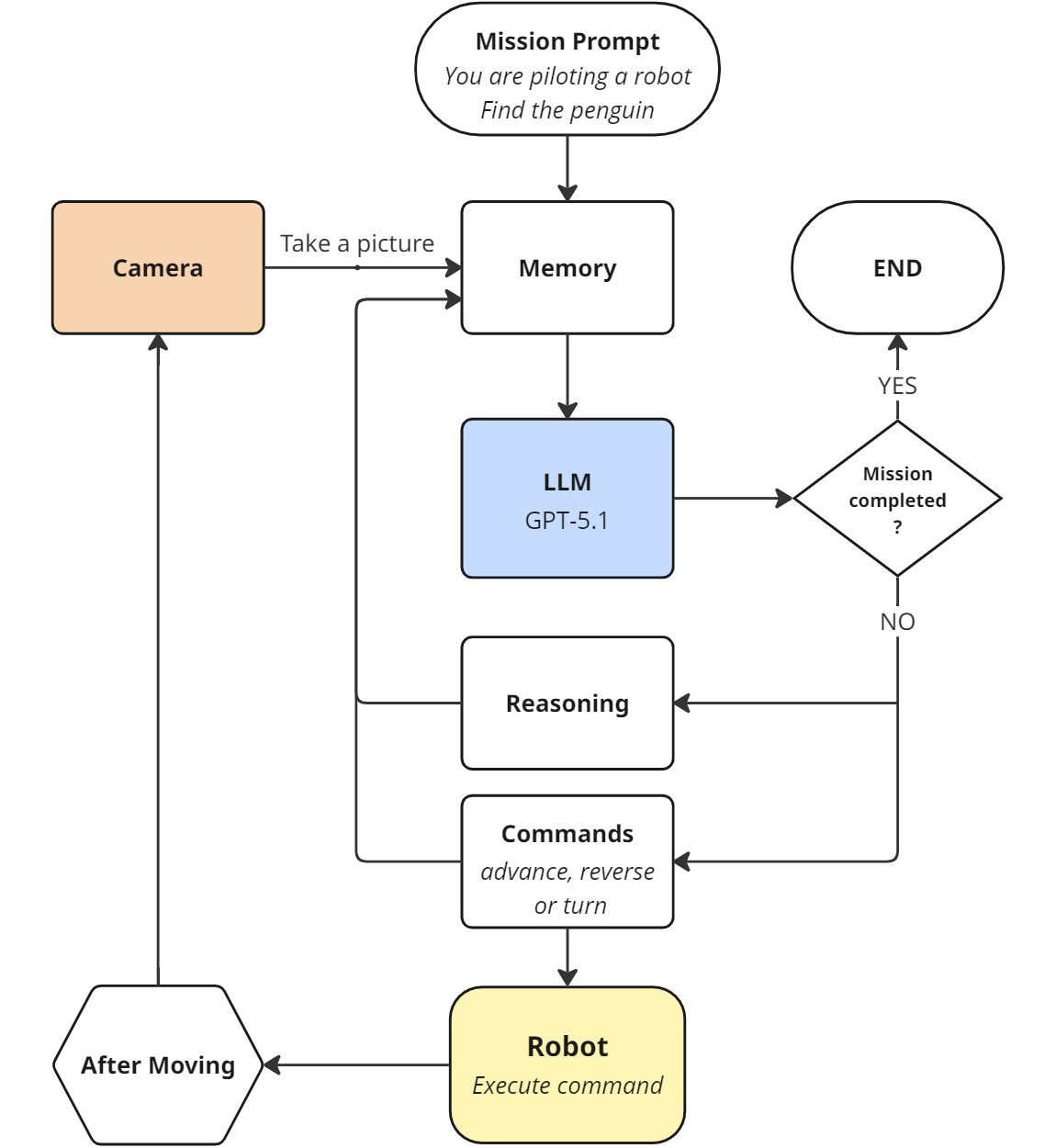
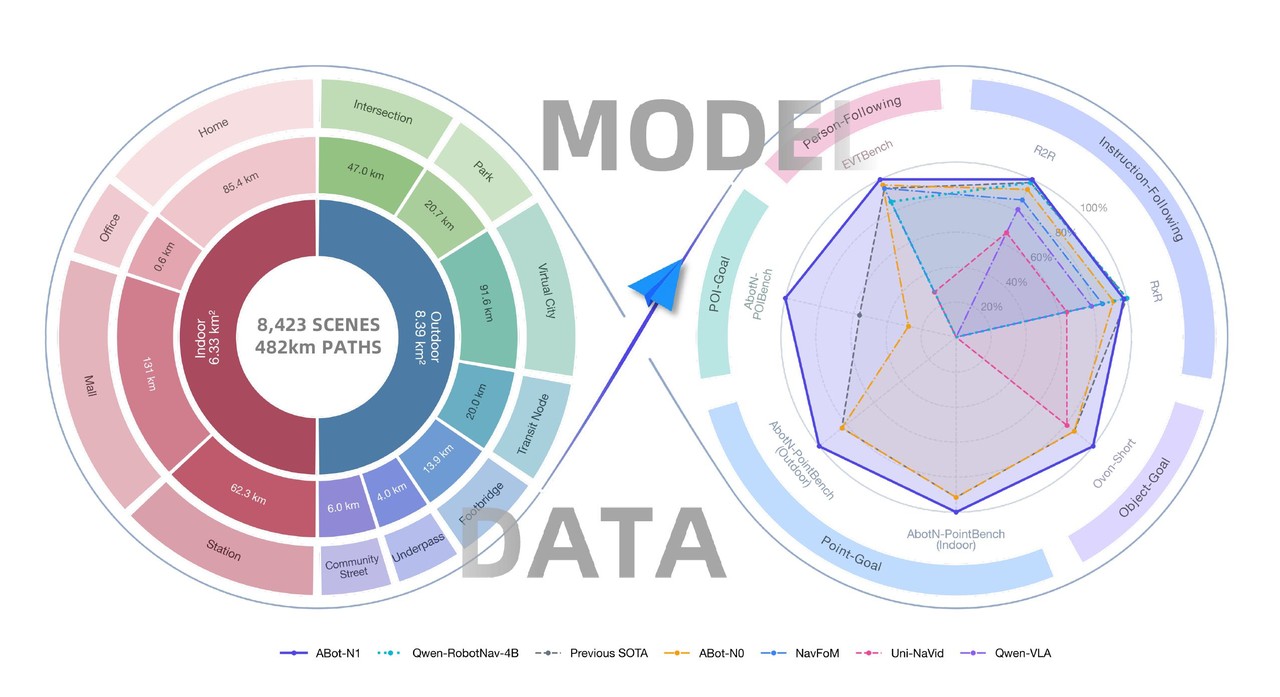
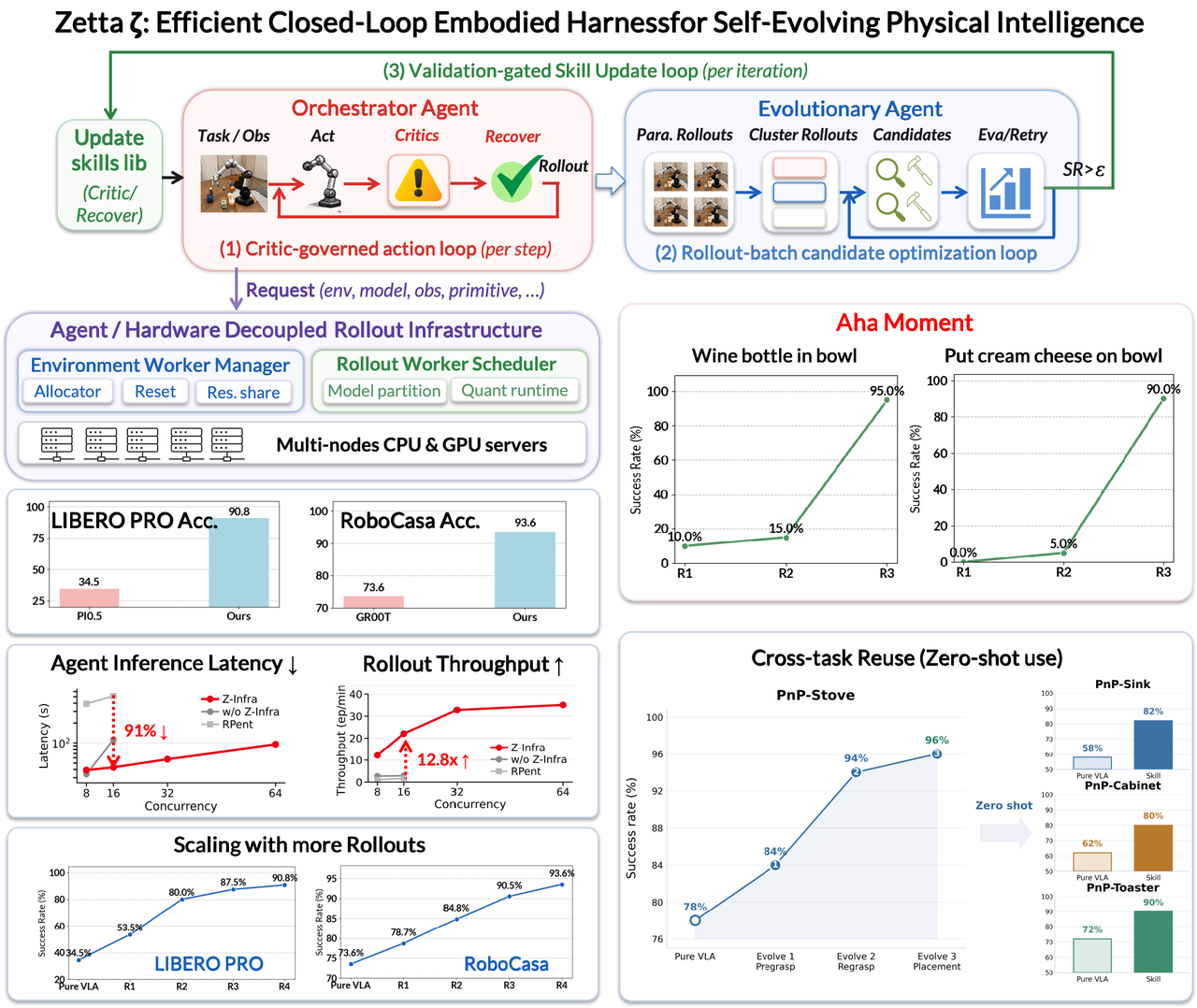
Figure 2: Additional results from the paper.

Figure 3: Additional results from the paper.
Limitations- Imprecise alignment strategies.
- Occasional misidentification of distant distractors.
flowchart LR
    A["Low-res First-person
Image"] --> B["GPT-5.1
(no embodiment training)"]
    B --> C["Discrete Action
(navigate/contact)"]
    C --> D["Robot Executes"]
    D --> E["Emergent: spatial memory
+ physical reasoning
+ coherent sequences"]
    style B fill:#e0e7ff,stroke:#2563eb
    style E fill:#dcfce7,stroke:#16a34a
3. Experimental Results
| Capability | Performance |
|---|---|
| Object location memory | Maintained after leaving view |
| Movement consequence inference | Can infer own motion effects |
| Verification behavior | Reverse after collision to verify |
| Alignment precision | Imprecise |
| Distant distractors | Occasional misidentification |
4. Main Contributions
- Embodiment-free world-model behavior: GPT-5.1 exhibits world-model-like behavior without any embodiment training.
- Challenges traditional view: Challenges the cognitive science/robotics view that a physical body is necessary for spatial reasoning.
- Systematic emergent capability characterization: Systematically records short-term memory, physical reasoning, and coherent sequences.
5. Limitations and Future Work
Limitations:
- Exploratory study with limited sample size and task variety.
- Alignment and perception precision insufficient for practical use.
- GPT-5.1's internal mechanisms opaque, difficult to attribute emergent capabilities.
Future work: Motivates deeper investigation into emergence, limits, and robustness of physical understanding in large language models.
6. Conclusion
This exploratory study uses GPT-5.1 as a physical mobile robot's high-level controller — without prior embodiment, simulation training, or sensorimotor experience. Using only low-resolution first-person images and discrete actions, GPT-5.1 demonstrates emergent spatial reasoning and physical understanding: short-term object location memory, movement consequence inference, and coherent collision-then-reverse verification sequences. This challenges the long-held cognitive science and robotics view that a physical body is a necessary prerequisite for such intelligence, motivating deeper investigation into physical understanding emergence in large language models.
SOURCE LINKS