Text-to-image, image editing, consistency and controllability
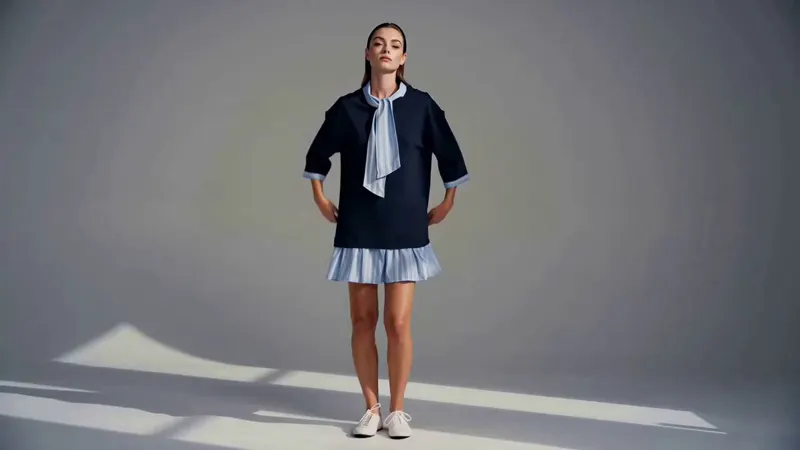
Image generation was the first AIGC capability to clear the "usable in production" bar: prompt to deliverable frame is now routine work for e-commerce hero shots, game concept art, UI assets and social posts. Its relevance to AGI is not that the pictures look good. Two things matter. First, it is the reverse path of multimodal understanding: the same model has to read spatial relations and semantics out of an image and rebuild them on instruction, so comprehension and generation share one representation. Second, it exposes consistency as the hard problem - holding a character, a brand or a material stable across dozens of frames is fundamentally about long-term memory and controllable state, which is exactly what long-horizon agents need too. That is why the ladder here is ranked by controllability, instruction following and consistency, not by aesthetics.
GPT Image 2.5: the image flagship that writes multi-round editing consistency into the API contract
OpenAI's image generation and editing model released 2026-09-08, in two variants: Flare (the default, higher quality than GPT Image 2 at 50% lower latency) and Sunburst (the precision tier, trading longer generation time for fidelity on intricate detail). Four endpoints in total, each variant with text-to-image and edit, identical API surface and identical pricing. Capability surface: 3840px long edge, six quality levels (auto/low/medium/high/xhigh/max, two above the previous ceiling), editing with up to 16 reference images per request, optional mask, and real alpha transparency on PNG/WebP. The launch weight sits on consistent details across multiple edits and comment-based edits that change only what you ask, i.e. multi-round editing that does not drift. Third-party reading: on the Artificial Analysis arena (2026-09-22), sunburst is #1 on both text-to-image (Elo 1423) and image editing (1526), with flare #2 on both (1401/1482), the only family holding two crowns at once; both rows are still preliminary, however, with vote counts (8,791/8,014) far below the gpt-image-2 row they overtake (82,862). Closed, reachable only through ChatGPT and the API, no self-hosting or fine-tuning. Not independently benchmarked; graded C (vendor-stated).
1423/1526Arena text-to-image / image-editing Elo, #1 on both boardsVendor Claim · 2026-09
Qwen-Image-2.1: one set of open weights for generation, local editing and transparency
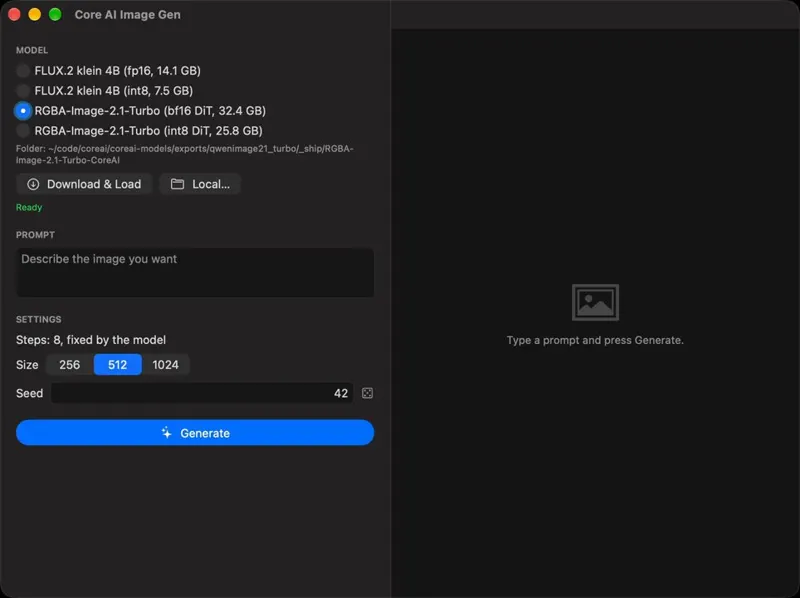
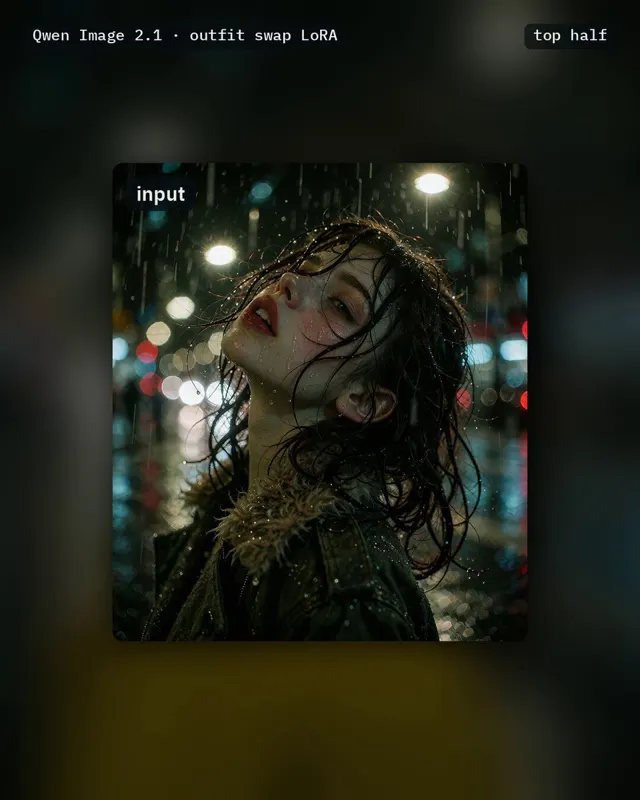
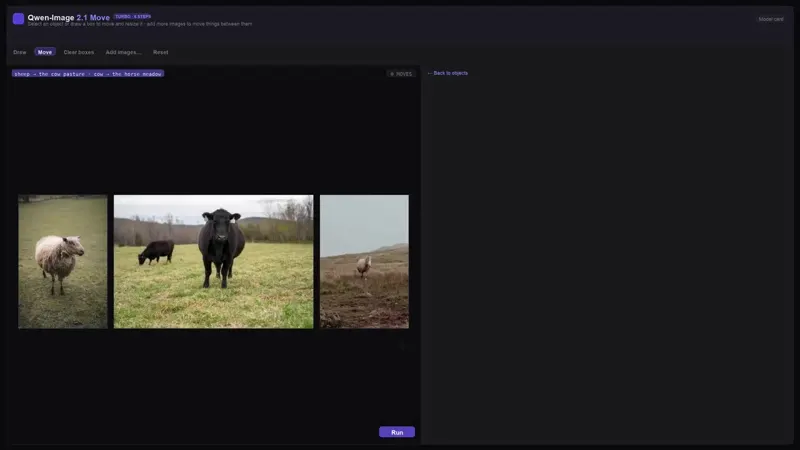
Alibaba Qwen tier for image generation and editing: text-to-image, local edits (circle, brush, standalone mask), fusion of up to 10 reference images and native RGBA transparency all live in one 7B visual component (32 Single-Stream DiT layers), with mixed-granularity attention and prefix KV-cache reuse cutting the marginal cost of batch generation; native 2048px across 7 aspect ratios. Among weights you can actually download it is one of the highest-ranked entries on the image arena (#17 text-to-image, Elo 1228; #16 editing, 1367). The licence is the Qwen Research License rather than Apache-2.0, so commercial use needs the terms read first, and diffusers must be installed from git main. Not independently benchmarked; graded C (vendor-stated).
FLUX: the line that moved image generation from "produce a picture" to controllable editing with open weights
Black Forest Labs' FLUX family generates images with a rectified-flow transformer and ships Apache-2.0 dev weights, making it the most important open baseline on the image side; the Kontext tier turned "edit this part of the image on instruction without disturbing the rest" into a usable capability. The collected record also covers the FLUX 3 launch, which the vendor positions as a world model unifying image, video and audio - a claim log as unverified.
Nano Banana Pro: the image editing model that turned "edit it by talking to it" into a product
Gemini's native image generation and editing tier, known in the community as Nano Banana. Its point is not peak image quality but the interaction shape: keep editing one image across a multi-turn conversation, read the text inside an image and change it, and fuse several references into one output. That made image generation feel like talking to a designer instead of pulling a slot-machine lever. Most of its ranking comes from preference arenas, which are votes rather than measurements, so graded as needing reproduction.
Kling 3.0 series: native audio, 4K frames, and parameterised camera language as the moat
Kuaishou Kling was among the first Chinese video lines to reach a level where it can take commercial work, and its lasting strength is not raw text-to-video but image-to-video plus camera control: lock composition and character in the image stage, then let the video model interpolate from that fixed keyframe, with first/last-frame constraints and push/pull/pan/truck/orbit/follow parameters producing predictable clips. The 3.0 series (official release-note banner: API fully available) brings three substantive jumps - audio generated natively (5s/10s/12s audio tiers), native 2K/4K for both image and video, and storyboarding plus element reference turning multi-shot coherence from an editing problem into something the model controls; the line-up is 3.0 / 3.0 Omni / 3.0 Turbo, Kling Image 3.0 and -omni, Native 4K Video and Motion Control. The arena reading, stated plainly: image-to-video kling-v3-pro is #19 (Elo 1354), behind MiniMax h3, gemini-omni, wan3.0 and seedance-2.5. No authoritative release date for the 3.0 series could be obtained, so the metric date is recorded only at the verifiable month, 2026-09. Closed, vendor API only; not independently benchmarked, graded C.
3.0 / Omni / TurboCurrent flagship seriesVendor Claim · 2026-09
Meshy 7: the 3D asset platform that finishes what comes after generation, from topology and PBR to rigging, printability, and MCP
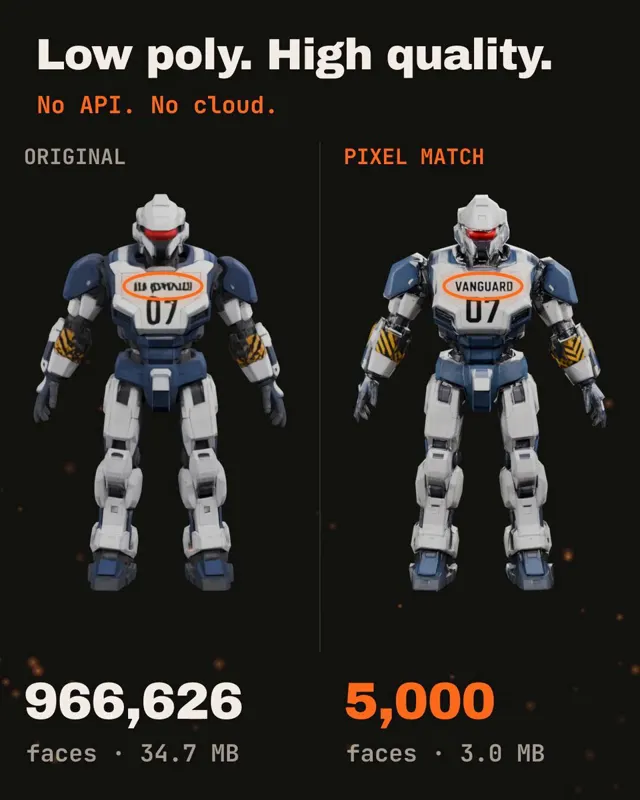
Meshy headlines Meshy 7 (2026) and its "true-to-reference" claim, meaning alignment between the generated model and your input image, with image-to-3D stated at under a minute. The real differentiator is not generation but finishing the engineering constraints that follow it: Smart Topology returns clean topology with a controllable poly count in about ten seconds, one-click PBR delivers the full albedo, normal, metallic, and roughness set at HD 4K with no shader setup, auto-rigging covers humanoid and quadruped with 600+ motion presets, and on the print side meshes come out watertight with auto-repair before export. It exports GLB, FBX, OBJ, STL, USDZ, and 3MF straight into OrcaSlicer and Bambu Studio. The agent surface is complete too: a REST endpoint per generation capability, an MCP server that connects into Claude or Cursor, and a CLI that turns one command into a finished model. Stated scale is 100M+ models and 12M+ users, with 100 free credits a month. Boundaries: no public quantitative benchmark (the quality stars are self-assigned), credit pricing per tier undisclosed, and "under a minute" excludes post-processing.
<1minVendor claim: single image → 3D modelVendor Claim · 2026
Wan: the open-weights baseline on the video side, letting the whole ecosystem iterate on its own hardware
Alibaba Tongyi's Wan releases video generation weights under Apache-2.0, making it the most important public baseline in the video domain. Its value differs from a closed service: not "best-looking output today" but that it is fine-tunable, reproducible and runnable on your own inference stack - the whole ecosystem of LoRAs, ControlNet-style conditioning, quantisation and few-step distillation builds on it. For an intelligence site, an open-weights baseline means the question "what can video generation do today" finally has a reference can be verified directly instead of trusting vendor-selected samples. The licence and the public repository, verified; picture quality and physical plausibility remain C-grade vendor claims.
Tripo: image-to-engine-ready-asset compressed into a ten-second step
VAST's Tripo is the most productionised commercial text/image-to-3D service tracked here: meshes with UVs and PBR materials, quad remeshing, an API plus Blender/Unity plugins that drop straight into game and e-commerce asset pipelines. Its weakness is equally clear - strong on single objects, weak on complex assemblies and exact dimensions - and the sub-10-second figure is the vendor's own claim, which has not been re-measured.
<10sVendor claim: single image → usable meshVendor Claim · 2025-06
Hunyuan3D 2.1: the open-weight 3D generation baseline and default starting point for self-hosting
Tencent released weights for both the shape and texture stages plus PBR material output, which gives 3D generation its first reference implementation you can run on your own machine, fine-tune, and wire into an internal pipeline. Its value is not a leading score but reproducibility: any claim about 3D generation quality can now be measured against it.
Scenario: style-consistent asset volume for game art, not one beautiful picture at a time
Scenario packages image generation as an asset line for game studios: train a stylised generator on your own art, then produce icons, props, characters and set pieces in volume, wiring generation into tools like Blender through MCP and plugins. Its claim is consistency and throughput - precisely the two things general text-to-image models are worst at.
Doubao Work: ByteDance's productivity agent, from decks to computer control
ByteDance's August 2026 productivity agent: PPT, documents and sheets, deep research, scheduled tasks — plus reading and writing local files, filling forms across pages, and phone-based task dispatch.
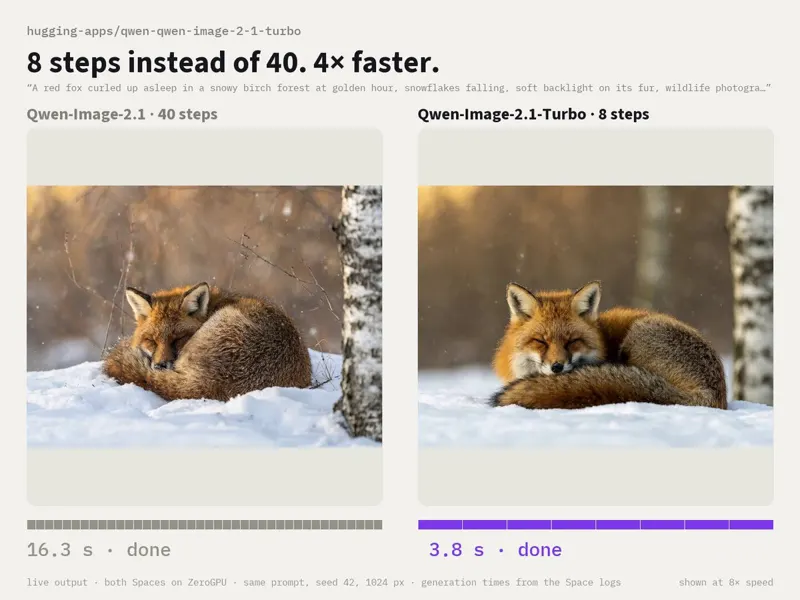
SANA is NVIDIA Labs open-source codebase for high-resolution image and video generation (9k+ stars, Apache-2.0, PyTorch). Its efficiency comes from two structural changes: linear attention replaces vanilla attention in the transformer, and a deep compression autoencoder compresses images 32x instead of the usual 8x. Official figures: the 0.6B model renders a 1024 image in 0.9 s, roughly one fortieth of FLUX-dev 23 s, while FID improves from 10.15 to 5.61. The series now spans one-step generation, video, world models and streaming editing, and runs 4K in 8 GB of VRAM under 4-bit quantization. No benchmarks reproduced; recorded as unverified.
baoyu-design: Run Claude Design Inside Local Coding Agents
An independent Agent Skills bundle that brings Claude Design-style HTML workflows, local editors, design systems, decks, canvases, and traceable dashboards to coding agents.
ppt-image-first: A Conversation-First, Image-First Workflow Skill for Presentation Decks
A conversation-first, image-first PPT workflow skill: build a content basis, confirm style with real 16:9 previews, lock design_spec / slide_blueprint / spec_lock, then retouch through a bundled review shell before exporting PPTX. Page visuals are rendered by an image model, so native per-element editing is not promised.
OpenSlide: A Vendor-Neutral C Library for Reading Whole-Slide Images
OpenSlide is a C library providing a consistent, simple API for reading whole-slide images from over a dozen vendor formats including Aperio, Hamamatsu, Leica, Philips, and DICOM. It is a critical infrastructure layer for digital pathology.
Framelink MCP for Figma: design files compressed into usable context, not screenshots
Also known as Figma-Context-MCP, npm package figma-developer-mcp, TypeScript, MIT, and a third-party implementation rather than the Dev Mode MCP server Figma ships itself. It exposes only two tools: get_figma_data (read-only) and download_figma_images (removable with --skip-image-downloads, and confined to writing inside --image-dir). The narrow surface is deliberate; the engineering sits in the fetch → simplify → serialize pipeline behind it. Simplify uses composable extractors (layout, text, visuals, component, plus the allExtractors, layoutAndText, contentOnly, visualsOnly and layoutOnly bundles) to compress the raw Figma response into semantic layout and styling in a single tree walk, with maxDepth and nodeFilter, and outputs tree (default, cheapest in tokens), yaml or json. The part worth copying is that compression effectiveness is a metric computed on every call: rawSizeKb against simplifiedSizeKb, rawNodeCount against simplifiedNodeCount, component/instance/text/image node counts, namedStyleCount (the source comment states a high count is a design-system maturity signal), hasVariables (whether Figma Variables are used at all), and separate fetch/simplify/serialize timings; the same hooks drive MCP progress notifications and heartbeats so a large file taking tens of seconds does not look hung. Judgement shows in the details: node IDs accept both the plain and the deeply nested instance shape, the depth parameter description says do not use it unless the user explicitly asks, the proxy default deliberately avoids installing EnvHttpProxyAgent when no proxy variables exist so a stale variable cannot route traffic through an intermediary returning 403, and stdio mode warns at startup when --image-dir is unset. Credentials come from FIGMA_API_KEY or FIGMA_OAUTH_TOKEN; telemetry can be disabled with --no-telemetry or DO_NOT_TRACK=1 and secrets are redacted from reports. 15.9k stars. It generates no frontend code - the output is design facts, and translating them into React, Vue or SwiftUI is your coding agent job. Not yet run against a Figma file of our own, and no screenshot-versus-structured-data accuracy comparison, so this is graded as pending reproduction.
img2threejs: Rebuilding Reference Images as Code-Only Procedural Three.js Models
An agent skill for Claude Code, Codex and OpenCode that rebuilds a reference image as a code-only procedural Three.js model: an eight-pass sculpting pipeline with deterministic gates, shipping a diffable TypeScript factory instead of a mesh.
image-to-3d-pipeline: A Fair Benchmark and Browser Explorer for Image-to-3D Models
A fixed-protocol harness for comparing image-to-3D models. One set of AI renders of a fictional submersible goes into TRELLIS V1/V2 and TripoSR; each mesh is inspected through an identical Blender 4.3 EEVEE orbit and scored on a 0-2 five-axis rubric, then the winner ships into a Three.js + three-mesh-bvh explorer with real collision. TRELLIS V2 stochastic ranks first at 1.56 MB / 11,866 faces.
Four things are still broken. Instruction following has a ceiling: complex spatial relations (who is left of whom, exactly seven items, this word must be spelled correctly) still collapse, and in-image text is the most common failure - the smaller the glyphs, the less you can trust them. Consistency is bolted on: character and brand stability is mostly held up by reference images, LoRA fine-tunes or multi-turn editing rather than native memory, so a new pose or new lighting makes details drift (logos, buttons, patterns). Editing damages untouched regions: change one phrase and the whole frame is regenerated, so faces, backgrounds and colour temperature shift slightly - in commercial delivery that is worse than a failed generation. And the benchmarks themselves are weak evidence: GenAI-Bench and arena preference scores measure likeability, not fitness for a production pipeline. That is why conclusions in this domain default to vendor-claim or needs-reproduction unless a reproducible comparison exists. Order of magnitude for cost and latency: a single 1024px image takes seconds to low tens of seconds, and API pricing is typically cents per image. The real cost is human - filtering, re-rolling and retouching still consume the large majority of time per deliverable, and that share has not visibly dropped as models improved.
As an Amazon Associate, we earn from qualifying purchases.