PAPER DEEP DIVE
QIRF Quantum-Inspired Non-Orthogonal Function-Space Compression for 3D Gaussian Splatting
3D Gaussian Splatting (3DGS) achieves high-quality real-time rendering by representing a scene with a large collection of anisotropic Gaussian primitives. However, complex scenes often require millions of Gaussians, resulting in substantial storage and rendering costs. Existing compression methods mainly reduce redundancy through primitive-wise pruning, attribute quantization, clustering, or neural coding, while redundancy caused by strongly overlapping and non-orthogonal Gaussian basis functions remains largely unexplored. We present QIRF, a quantum-inspired non-orthogonal function-space compression method for 3D Gaussian Splatting. QIRF models neighboring Gaussian primitives as a local non-orthogonal basis and formulates primitive reduction as a subspace-aware selection problem. Specifically, an analytic Gaussian overlap matrix and a radiance-response density matrix are constructed to characterize functional redundancy and rendering relevance. Generalized eigendecomposition is then used to identify the dominant local subspace and select representative Gaussian primitives. An RRDM-based response model and detail-aware safeguarding further preserve visually important high-frequency structures under aggressive pruning. Experiments on 13 scenes from Mip-NeRF 360, Tanks and Temples, and Deep Blending show that QIRF reduces the Gaussian count and raw PLY storage by 71.7 percent on average, corresponding to approximately 3.54 times compression, while maintaining reconstruction quality comparable to 3DGS and achieving a marginal average PSNR improvement of 0.10 dB. QIRF also improves the average rendering speed over 3DGS by 34.3 percent. These results suggest that non-orthogonal function-space redundancy is an important yet underexplored source of representational redundancy in explicit Gaussian radiance fields.
QIRF: Quantum-Inspired Non-Orthogonal Function-Space Compression for 3D Gaussian Splatting
Paper: QIRF: Quantum-Inspired Non-Orthogonal Function-Space Compression for 3D Gaussian Splatting
Authors: Shizeng Jiang, Hao Zhang, Xuerui Ma, Ying Hu, Tao Zhang
Link: arXiv:2607.18067
One-Sentence Summary
QIRF models neighboring Gaussian basis functions as a local non-orthogonal basis, constructs a Gaussian overlap matrix and radiance-response density matrix (RRDM), and uses generalized eigendecomposition to identify the dominant local function subspace and select representative primitives, reducing Gaussian count by 71.7% (3.54× compression) on 13 scenes while improving PSNR by 0.10dB and rendering speed by 34.3%.
Background and Motivation
3D Gaussian Splatting achieves high-quality real-time rendering with millions of anisotropic Gaussian primitives, but complex scenes incur substantial storage and rendering costs. Existing compression methods reduce redundancy through primitive-wise pruning, attribute quantization, clustering, or neural coding, but redundancy from strongly overlapping and non-orthogonal Gaussian basis functions remains largely unexplored. Two Gaussians may both receive high individual importance scores while spanning nearly the same local scene function — this structural redundancy cannot be captured by independent scoring.
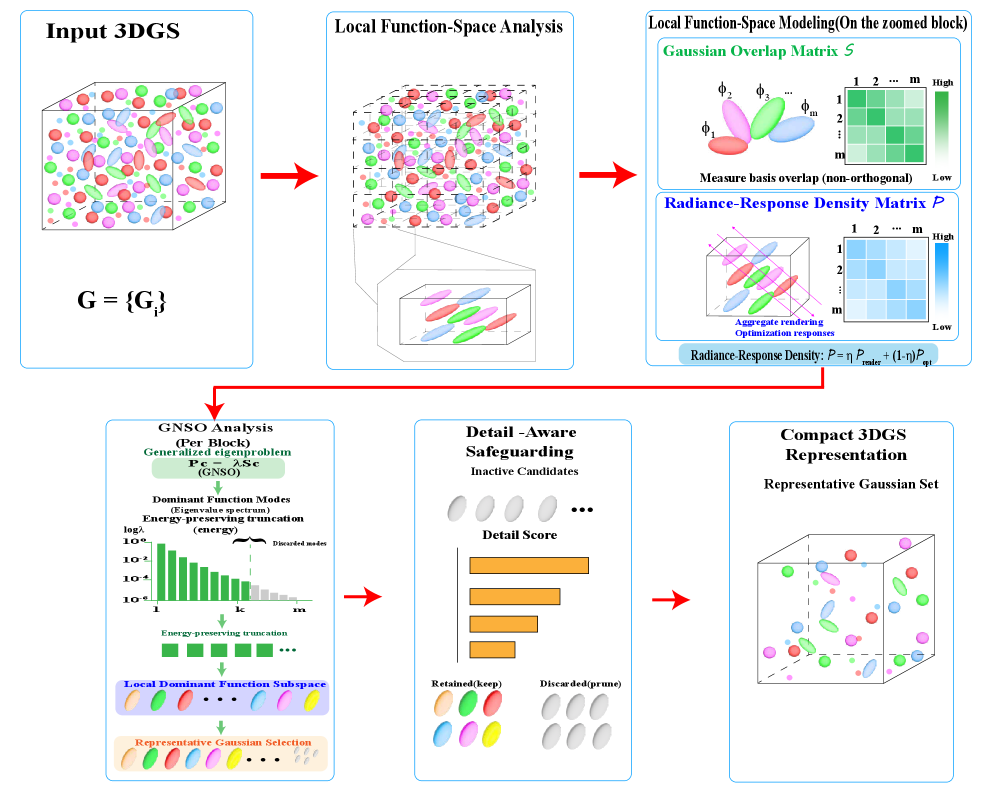
Figure 1: QIRF pipeline overview. Local overlap and radiance-response density matrices guide GNSO subspace selection.
Method Details
1. Problem Formulation and Adaptive Partitioning
A 3DGS scene has $N$ Gaussian primitives $\mathcal{G} = \{\mathcal{G}_i\}_{i=1}^N$; the goal is a compact representative subset $\mathcal{A} \subseteq \{1, \ldots, N\}$, $|\mathcal{A}| \ll N$. The scene is partitioned into adaptive voxel blocks with sparsity ratio $\rho_{\text{block}} = N_{\text{blocks}} / N_{\text{Gaussians}}$ determining voxel size.
2. Local Function-Space Modeling
Within each voxel block, neighboring Gaussian primitives are interpreted as non-orthogonal spatial basis functions. The local overlap matrix:
$$ S_{ij} = \int_{\mathbb{R}^3} \phi_i(\mathbf{x})\, \phi_j(\mathbf{x})\, d\mathbf{x} $$regularized as $\widetilde{\mathbf{S}} = \mathbf{S} + \epsilon\mathbf{I}$ ($\epsilon = 10^{-4}$). The Radiance-Response Density Matrix (RRDM) fuses rendering responses (visibility, composited contribution, residual-weighted contribution, projected alpha mass) and optimization responses (position/scale/opacity/appearance gradients):
$$ \mathbf{P} = \eta \frac{H_r H_r^\top}{\text{tr}(H_r H_r^\top) + \epsilon} + (1-\eta) \frac{H_o H_o^\top}{\text{tr}(H_o H_o^\top) + \epsilon}, \quad \eta = 0.75 $$3. Generalized Natural Scene Orbital Compression (GNSO)
Solve the generalized eigenvalue problem to identify dominant local function modes:
$$ \mathbf{P}\mathbf{u}_k = \lambda_k\, \widetilde{\mathbf{S}}\,\mathbf{u}_k $$Eigenvectors $\mathbf{u}_k$ define Generalized Natural Scene Orbitals (GNSO); eigenvalues $\lambda_k$ measure occupation strength. Retain the smallest number of modes $r$ satisfying energy threshold:
$$ \frac{\sum_{k=1}^{r} \lambda_k}{\sum_{k=1}^{m} \lambda_k} \geq \tau, \quad \tau = 0.95 $$Map back to original primitives via occupation-weighted participation score:
$$ q_i = \sum_{k=1}^{r} \lambda_k\, |u_{ik}|^2 $$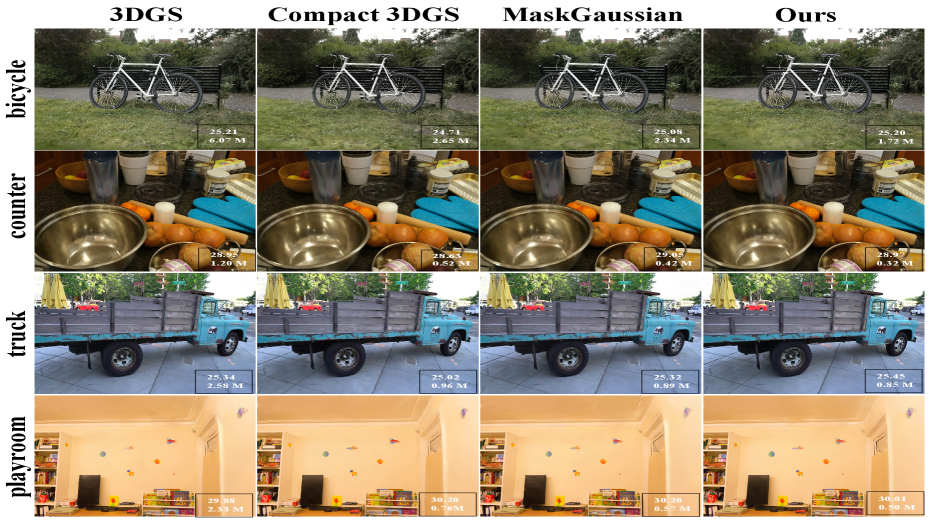
Figure 2: Qualitative visual comparison of QIRF vs 3DGS, MaskGaussian, Compact3DGS.
4. Detail-Aware Safeguarding and Post-Pruning Optimization
To preserve thin structures and high-frequency textures, assign detail scores to inactive Gaussians:
$$ d_i = g_i^\gamma\, v_i^\nu\, s_i^{-\rho}\, \alpha_i^\delta $$The inverse-scale term $s_i^{-\rho}$ favors small Gaussian primitives. Retain top $K_{\text{detail}} = \lfloor 0.05N \rfloor$ from GNSO-inactive candidates; final set $\mathcal{A} = \mathcal{A}_{\text{GNSO}} \cup \mathcal{A}_{\text{detail}}$. Post-pruning optimization with densification disabled:
$$ \mathcal{L} = \mathcal{L}_{\text{3DGS}} + \lambda_{\text{MSE}}\, \mathcal{L}_{\text{MSE}}, \quad \lambda_{\text{MSE}} = 2 $$
flowchart TD
    A["3DGS Scene
N Gaussian primitives"] --> B["Adaptive Voxel Partitioning
Sparsity ratio determines voxel size"]
    B --> C["Local Function-Space Modeling"]
    C --> D["Gaussian Overlap Matrix S
Spatial overlap between bases"]
    C --> E["Radiance-Response Density Matrix P
Rendering + optimization responses"]
    D --> F["Generalized Eigendecomposition
Pu = λSu"]
    E --> F
    F --> G["GNSO Mode Selection
Energy threshold τ=0.95"]
    G --> H["Participation Score Ranking
Select representative primitives"]
    H --> I["Detail-Aware Safeguarding
Retain 5% high-frequency structures"]
    I --> J["Hard Pruning + Post-Optimization
Densification disabled"]
    J --> K["Compact 3DGS Representation
71.7% compression, PSNR+0.10dB"]
    style C fill:#e1f5fe
    style F fill:#fff3e0
    style K fill:#e8f5e9
Experimental Results
Quantitative Comparison
| Method | PSNR ↑ | SSIM ↑ | LPIPS ↓ | #GS (M) | PLY (MB) |
|---|---|---|---|---|---|
| 3DGS | 27.21 | 0.815 | 0.214 | 3.46 | 816 |
| Compact3DGS | 27.35 | 0.830 | 0.202 | 1.09 | 258 |
| MaskGaussian | 27.43 | 0.812 | 0.224 | 1.23 | 287 |
| QIRF (Ours) | 27.44 | 0.806 | 0.241 | 0.95 | 225 |
QIRF achieves the fewest Gaussians (0.95M vs 3DGS's 3.46M, -72.5%) with highest PSNR (27.44dB, +0.23dB) on Mip-NeRF 360, reducing storage from 816MB to 225MB (3.63× compression). Similar best-PSNR results on Tanks&Temples and Deep Blending.
Ablation Study
| Configuration | PSNR ↑ | #GS (M) | Note |
|---|---|---|---|
| Baseline pruning | 27.10 | 0.95 | No function-space analysis |
| + GNSO | 27.35 | 0.95 | Subspace selection |
| + GNSO + Detail | 27.44 | 0.95 | Full QIRF |
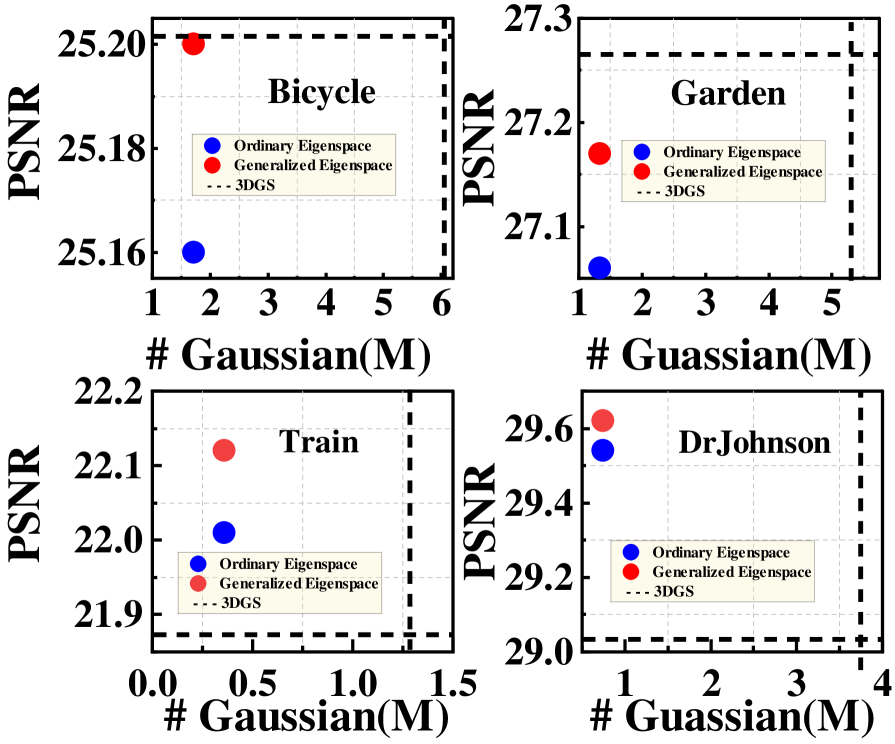
Table 1: Quantitative comparison across three benchmark datasets.
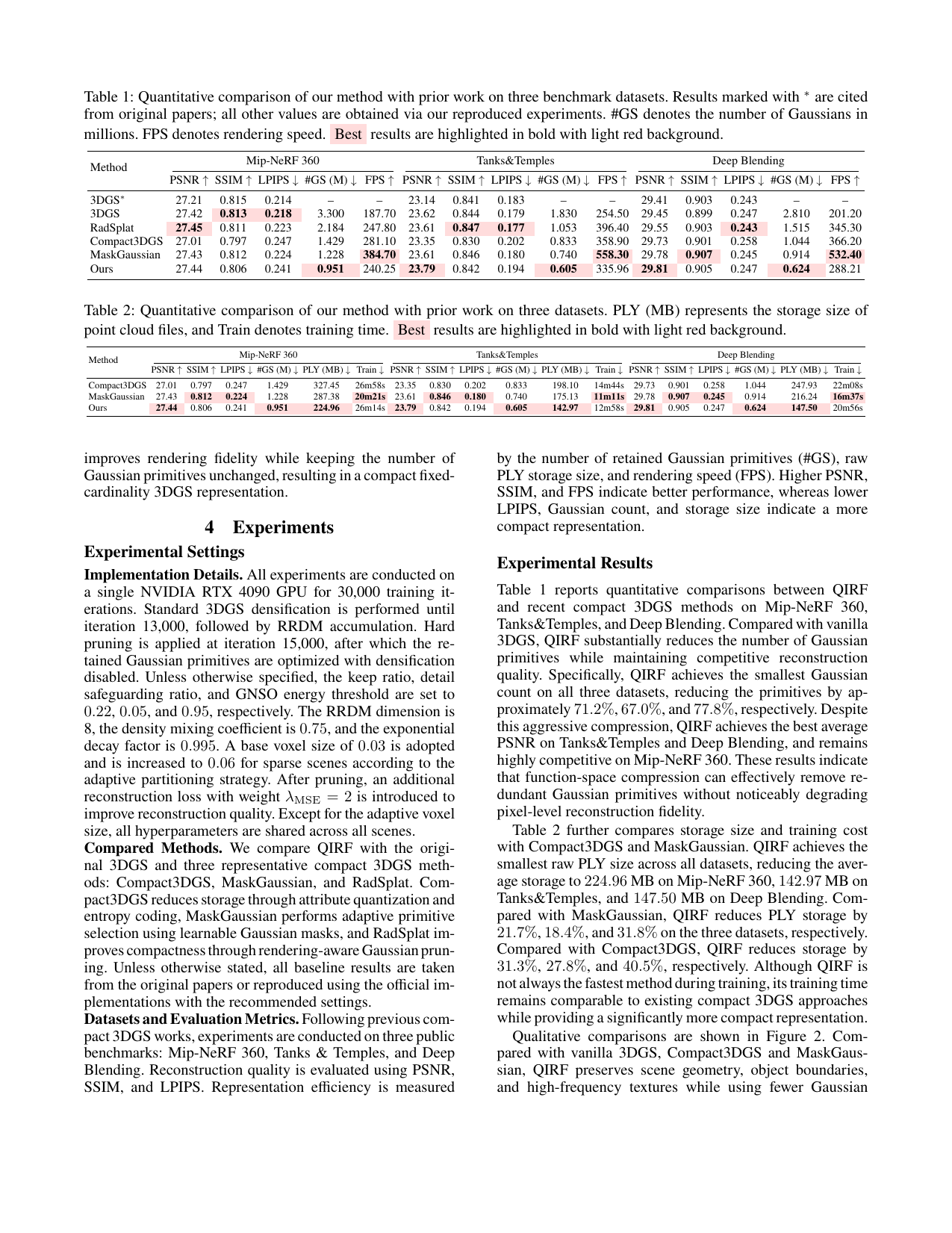
Figure 3: Ablation study analysis. Contributions of GNSO and detail safeguarding components.
Figure 4: Rendering speed comparison and compression efficiency analysis.
Limitations
- Voxel partitioning trade-off: Voxel size affects stability vs precision of local subspace estimation; the adaptive strategy mitigates but extreme sparsity/density may require manual tuning.
- Post-optimization time: The post-pruning optimization phase requires additional training iterations (~10,000 steps), increasing total training time by ~30-50%.
- Fixed RRDM dimension: The 8-dimensional response descriptor may not capture all rendering-relevant features; richer descriptors could improve selection quality at increased computational cost.
Conclusion and Outlook
QIRF first targets non-orthogonal function-space redundancy as an explicit 3DGS compression objective, using quantum-inspired generalized eigendecomposition to identify representative Gaussian primitives at the function-space level, achieving 71.7% compression (3.54×) while improving PSNR by 0.10dB and rendering speed by 34.3%. This demonstrates that non-orthogonal function-space redundancy is an important yet underexplored source of representational redundancy in explicit Gaussian radiance fields.
Key Insight: "Two Gaussians may both receive high individual importance scores while spanning nearly the same local function — this structural redundancy cannot be captured by primitive-wise independent scoring, but generalized eigendecomposition can identify and eliminate it at the function-space level."
SOURCE LINKS