PAPER DEEP DIVE
Self-Supervised Consistency Enhanced Disentangled Learning for Neural Decoding Generalization in Brain-Machine Interface
Brain-Machine Interfaces (BMIs) provide a direct communication pathway between the brain and external devices, enabling humans to control assistive and robotic technologies, with potential applications in rehabilitation, human motor augmentation, and human-centered robotics. However, due to neural drift, the performance of BMIs decreases over time, posing challenges for long-term viability, particularly for invasive BMIs (iBMIs). Existing solutions suffer from two main drawbacks: (i) difficulty in learning robust neural representations, and (ii) neglecting that neural drift varies across motor parameters (e.g., velocity, direction, and speed). To overcome these limitations, we propose Self-Supervised Consistency enhanced Disentangled Learning (SSCDL), a neural decoding generalization framework built on two key innovations. We first design a backbone model named Consistency enhanced Neural Decoder (CND), using a novel teacher-student consistency constraint with simulated neural signal perturbations to learn robust representations invariant to neural drift. Then, we employ three dedicated CNDs under the Complementary-Disentangled Generalization (CDG) mechanism, which disentangles motor signals into velocity, direction, and speed with inspiration from neural preference theory. This disentangled learning enables SSCDL to capture invariant neural representations from diverse neural preference perspectives, significantly enhancing cross-day generalization. Extensive experimental results show that SSCDL delivers state-of-the-art decoding performance, exhibiting high robustness and cross-day stability. These capabilities underscore its strong potential for long-term interaction in human-centric robotic and fine-grained assistive applications.
Self-Supervised Consistency Enhanced Disentangled Learning for Neural Decoding Generalization in Brain-Machine Interfaces
Paper: Self-Supervised Consistency Enhanced Disentangled Learning for Neural Decoding Generalization in Brain-Machine Interface
Authors: Jiyu Wei, Di Hong, Zhanjie Zhang, Dazhong Rong, Qinming He, Yueming Wang
Affiliation: Zhejiang University, Nanhu Brain-Computer Interface Institute
Link: arXiv:2607.24023
One-Sentence Summary
SSCDL is a cross-day generalization framework for BMI neural decoding that uses a Consistency enhanced Neural Decoder (CND) with teacher-student consistency constraints and simulated neural signal perturbations to learn drift-invariant representations, combined with Complementary-Disentangled Generalization (CDG) that disentangles motor signals into velocity, direction, and speed to capture invariant neural representations from diverse neural preference perspectives.
Background and Motivation
Brain-Machine Interfaces (BMIs) provide a direct communication pathway between the brain and external devices, enabling control of assistive and robotic technologies with applications in rehabilitation, human motor augmentation, and human-centered robotics. Invasive BMIs (iBMIs) leverage high-quality neural recordings from motor cortical areas, but decoding accuracy degrades over days due to neural drift — stemming from electrode drift, neuronal turnover, and synaptic plasticity — severely hindering widespread adoption.
Existing solutions suffer from two main drawbacks: (i) difficulty learning robust neural representations, and (ii) neglecting that neural drift varies across motor parameters (velocity, direction, speed). Neuroscience studies indicate different neural populations encode distinct motor parameters (preferred direction and preferred speed), suggesting neural drift may affect these parameters differently.
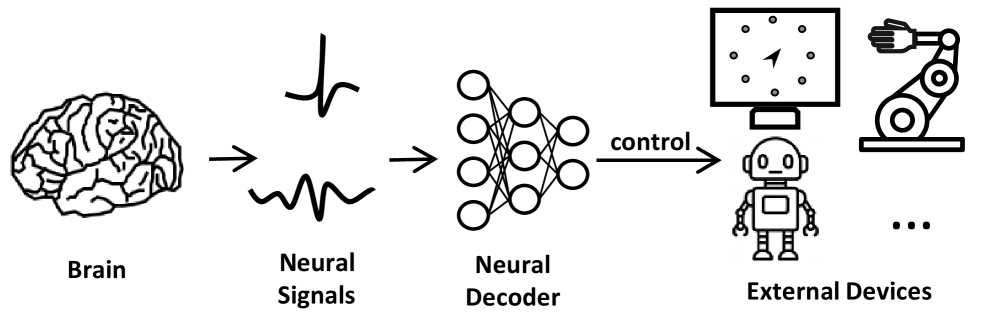
Figure 1: BMI schematic. Neural activity is recorded and decoded into control commands; neural drift causes cross-day performance degradation.
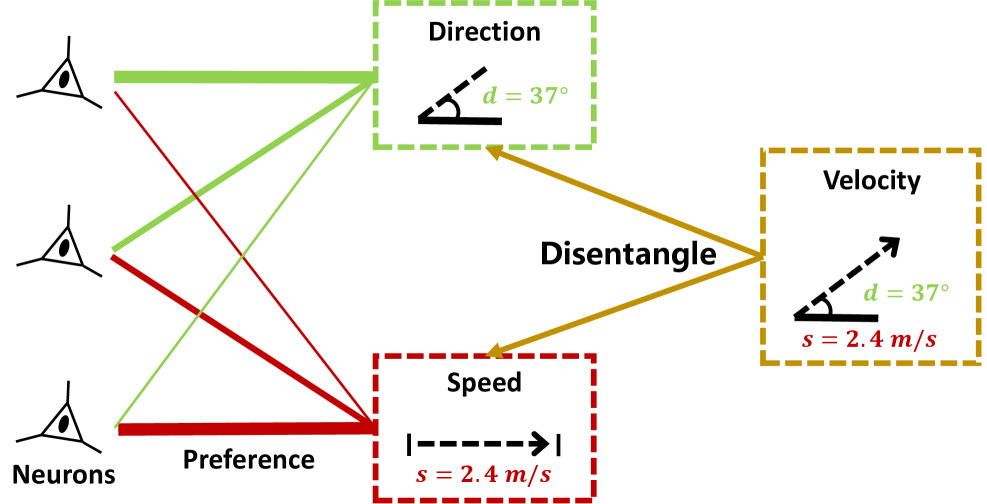
Figure 2: Neural tuning preference. Different neurons exhibit distinct selectivity for different motor parameters.
Method Details
1. Problem Definition
The cross-day BMI decoding stability problem is formulated as a single-domain generalization task. Data from $\texttt{day\_0}$ serves as the source domain $\mathcal{D}_s = \{(x_i, y_i)\}_{i=1}^{N_s}$, while data from $\texttt{day\_k}$ ($k > 0$) constitutes the unseen target domain $\mathcal{D}_t$. The goal is to train decoder $F$ using only $\mathcal{D}_s$ such that it generalizes to $\mathcal{D}_t$.
2. Consistency enhanced Neural Decoder (CND)
CND adopts a teacher-student architecture where the student network is optimized with both supervised decoding loss and self-supervised consistency loss, while the teacher provides a stable reference. Student $f_\theta$ and teacher $f_{\hat\theta}$ start with identical randomly initialized parameters.
Masked Neural Decoding Loss: Neural Signal Masking (NSM) augmentation simulates electrode instability and channel dropout by randomly masking $c$ channels to produce augmented input $\hat{x}_i$:
$$ \mathcal{L}_{\text{MND}}(Z) = \frac{1}{N_s} \sum_{(x_i, y_i) \in \mathcal{D}_s} Z\big(f_\theta(\hat{x}_i), y_i\big) $$Teacher-Student Consistency Loss: Enforces the student to produce predictions consistent with the teacher on clean inputs:
$$ \mathcal{L}_{\text{TSC}}(Z) = \frac{1}{N_s} \sum_{(x_i, y_i) \in \mathcal{D}_s} Z\big(f_\theta(\hat{x}_i), f_{\hat\theta}(x_i)\big) $$Combined Loss: The student is optimized with:
$$ \mathcal{L}_{\text{CND}}(Z) = \mathcal{L}_{\text{MND}}(Z) + \lambda \cdot \mathcal{L}_{\text{TSC}}(Z) $$EMA Teacher Update: Teacher parameters are updated as an Exponential Moving Average of student parameters, with warm-up threshold $\tilde{k}$:
$$ \hat{\theta}^k = \begin{cases} \theta^k & \text{if } k \leq \tilde{k} \\ \frac{k - \tilde{k}}{k - \tilde{k} + 1} \cdot \hat{\theta}^{k-1} + \frac{1}{k - \tilde{k} + 1} \cdot \theta^k & \text{otherwise} \end{cases} $$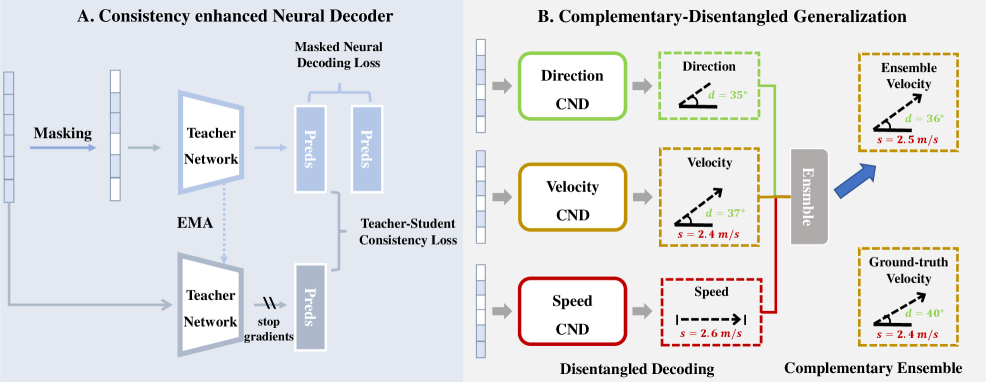
Figure 3: SSCDL overall framework. CND as backbone, CDG disentangles motor signals into three complementary components.
3. Complementary-Disentangled Generalization (CDG)
Inspired by neural preference theory, velocity decoding is decomposed into three complementary components: overall velocity, direction, and speed. Parameter-specific difference functions:
$$ Z_{\text{direction}}(\hat{y}_i, y_i) = \|y_i\| \cdot \left(1 - \frac{\hat{y}_i \cdot y_i}{\|\hat{y}_i\| \cdot \|y_i\|}\right) $$ $$ Z_{\text{speed}}(\hat{y}_i, y_i) = \left(\|\hat{y}_i\| - \|y_i\|\right)^2 $$ $$ Z_{\text{velocity}}(\hat{y}_i, y_i) = \|\hat{y}_i - y_i\|^2 $$Three independent CND models are trained for direction, speed, and velocity. At inference, predictions are combined via complementary ensemble:
$$ \tilde{y}_i = \frac{1}{2}\left(\|\hat{y}_i^{\text{speed}}\| \cdot \frac{\hat{y}_i^{\text{direction}}}{\|\hat{y}_i^{\text{direction}}\|} + \hat{y}_i^{\text{velocity}}\right) $$The first term reconstructs velocity from disentangled direction and speed; the second is the holistic velocity prediction. Averaging leverages both parameter-specific specialization and holistic decoding.
flowchart TD
    A["Source Domain Ds
day_0 neural signals"] --> B["CND Backbone Model"]
    B --> B1["NSM Mask Augmentation
Simulate channel dropout"]
    B1 --> B2["Student Network f_θ
Masked input decoding"]
    B2 --> B3["Teacher Network f_θ̂
Clean input reference"]
    B3 --> B4["EMA Parameter Update
Exponential moving average"]
    B2 --> B5["L_MND + λ·L_TSC
Joint optimization"]
    B5 --> C["CDG Disentangled Generalization"]
    C --> C1["Direction Branch
Z_direction"]
    C --> C2["Speed Branch
Z_speed"]
    C --> C3["Velocity Branch
Z_velocity"]
    C1 --> D["Complementary Ensemble
ỹ = ½(‖speed‖·dir/‖dir‖ + velocity)"]
    C2 --> D
    C3 --> D
    D --> E["Cross-day generalization output"]
    style B fill:#e1f5fe
    style C fill:#fff3e0
    style D fill:#e8f5e9
Experimental Results
Cross-day Generalization Comparison
| Method | CC ↑ | R² ↑ | SE ↓ | AE ↓ |
|---|---|---|---|---|
| Vanilla | 79.39 | 59.29 | 0.0572 | 49.32 |
| MRNN | 85.83 | 71.21 | 0.0422 | 47.15 |
| LFDA | 87.91 | 72.35 | 0.0354 | 49.54 |
| CDNG | 88.02 | 75.59 | 0.0300 | 42.15 |
| WDGRL | 87.35 | 69.79 | 0.0397 | 45.89 |
| CND | 87.07 | 75.58 | 0.0348 | 47.94 |
| SSCDL | 88.21 | 77.56 | 0.0297 | 39.50 |
SSCDL achieves best across all metrics: CC 88.21 (vs Vanilla 79.39, +11.1%), R² 77.56 (+30.8%), SE 0.0297 (-48.1%), AE 39.50 (-19.9%).
Ablation Study
| Configuration | CC ↑ | R² ↑ | AE ↓ | SE ↓ |
|---|---|---|---|---|
| Baseline | 79.39 | 59.29 | 49.32 | 0.0572 |
| + EMA | 80.01 | 60.53 | 48.37 | 0.0555 |
| + NSM | 84.35 | 71.79 | 48.24 | 0.0457 |
| + NSM + EMA (CND) | 87.07 | 75.58 | 47.94 | 0.0348 |
| CoDG (Baseline+CDG) | 84.20 | 68.52 | 43.95 | 0.0374 |
| SSCDL (CND+CDG) | 88.21 | 77.56 | 39.50 | 0.0297 |
NSM improves CC from 79.39 to 84.35 (+6.3%); CND (NSM+EMA) further to 87.07. CDG on Baseline reduces AE from 49.32 to 43.95. Combining CND with CDG achieves best 88.21 CC and 39.50 AE, demonstrating both modules are complementary and essential.
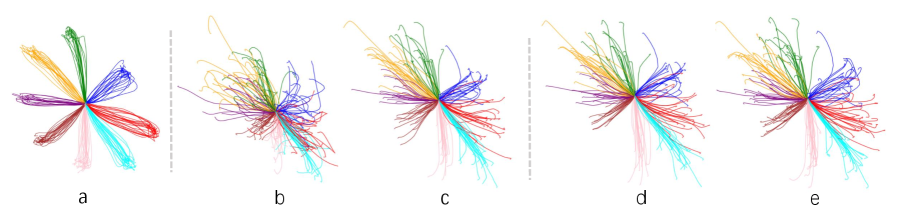
Table 1: Descriptions of used recording sessions.
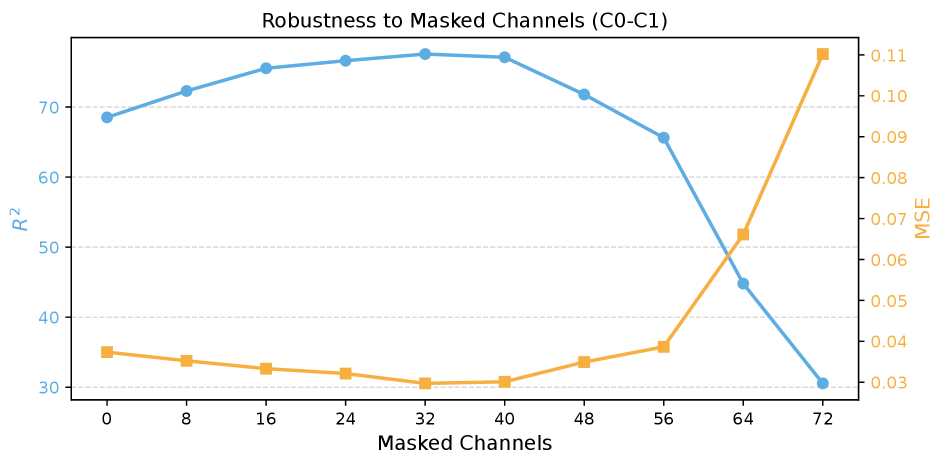
Table 2: Cross-day generalization performance comparison.
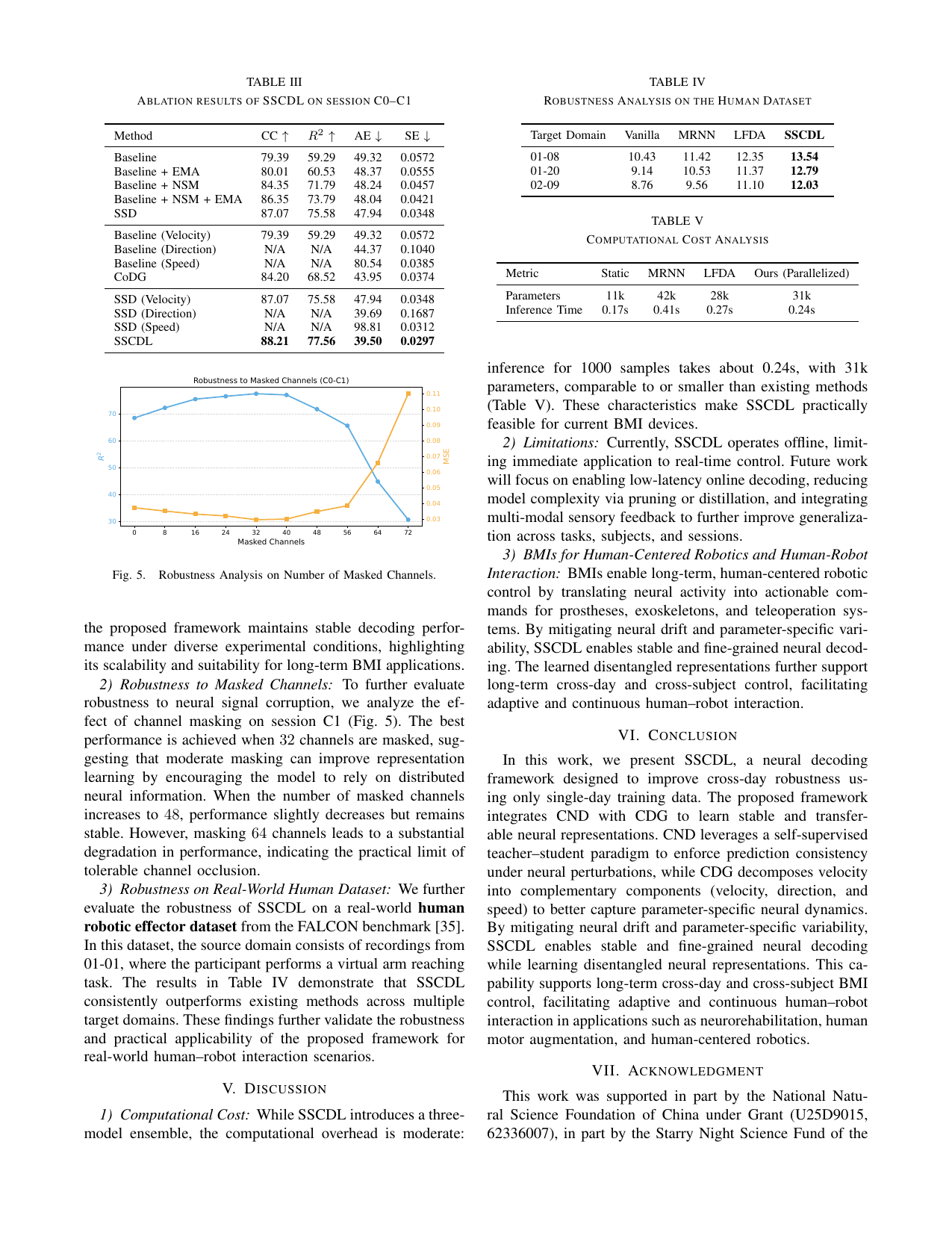
Figure 4: Motor trajectory comparison across models. SSCDL produces the smoothest, most compact trajectories.
Limitations
- Validated on non-human primate data: Mainly validated on three NHP datasets (Chewie, Mihili, Jango); real human iBMI data applicability is tested but at limited scale.
- Three-way parallel overhead: CDG requires training three independent CND models; although parallelizable, total parameters and memory are tripled.
- Fixed disentanglement assumption: Velocity is fixed-decomposed into direction and speed without considering more complex motor parameter combinations (acceleration, curvature), potentially limiting decoding precision for complex movements.
Conclusion and Outlook
SSCDL learns drift-robust representations through CND's teacher-student consistency constraint and captures invariant representations from diverse neural preference perspectives through CDG's disentangled learning, achieving SOTA cross-day generalization across three datasets with up to three-month time spans without recalibration. This demonstrates strong potential for long-term interaction in human-centric robotic and fine-grained assistive applications.
Key Insight: "Neural drift affects different motor parameters differently — disentangling velocity into direction and speed for separate modeling, then combining via complementary ensemble, lets the decoder capture invariant representations from multiple neural preference perspectives, which is the key to cross-day generalization."
SOURCE LINKS