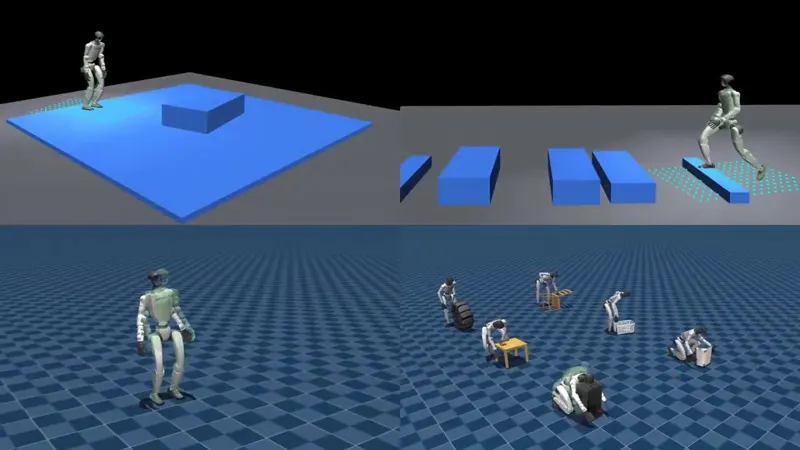
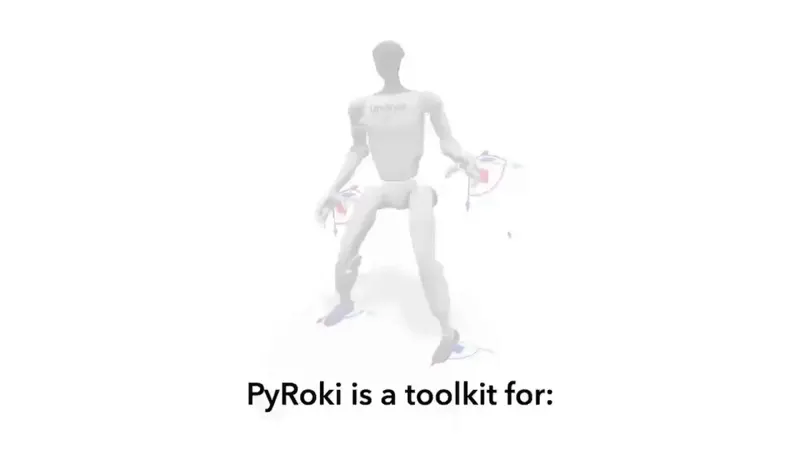
0:49PyRoki: Modular GPU-Accelerated Robot Kinematic Optimization in Pure Python@IlirAliu_ · 137 views · 2026-09-07PyRokiInverse KinematicsTrajectory Optimization
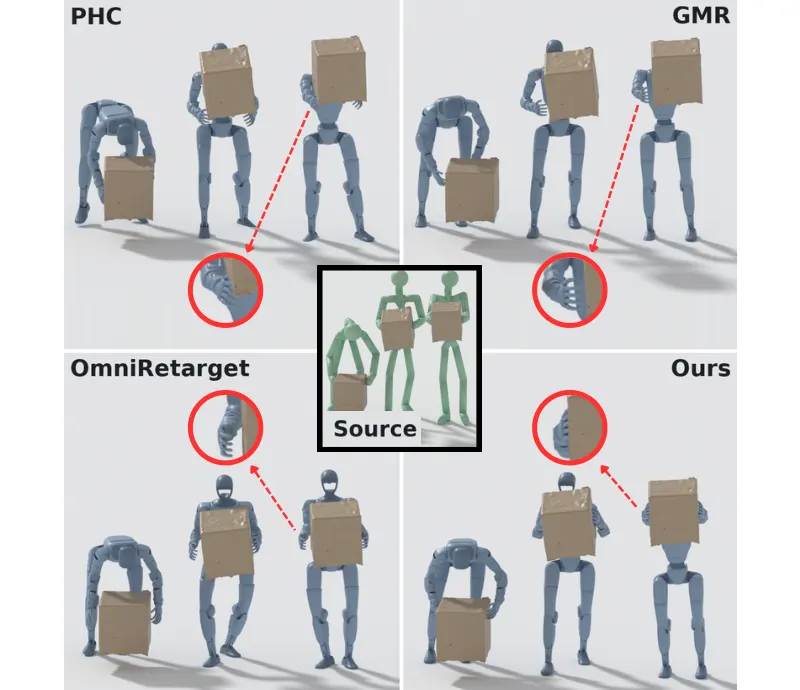
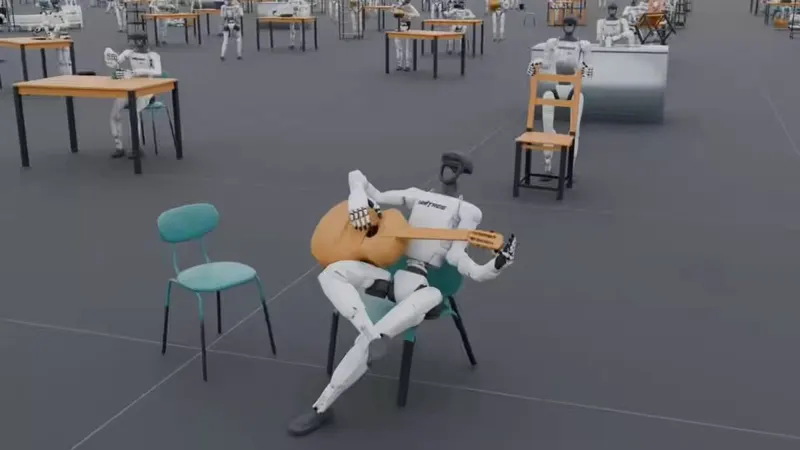
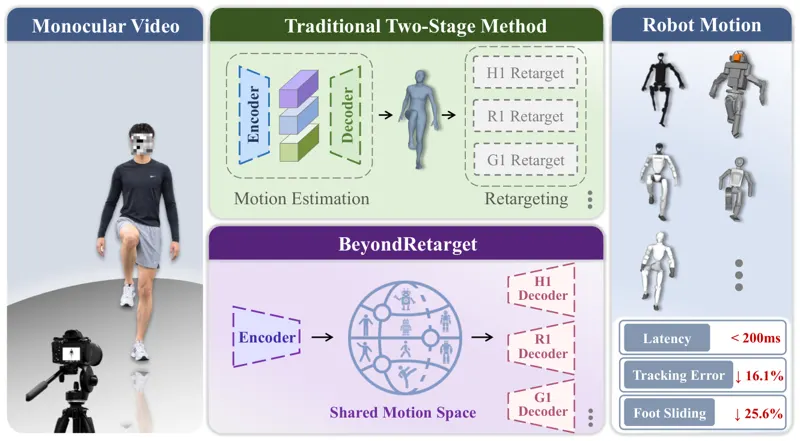
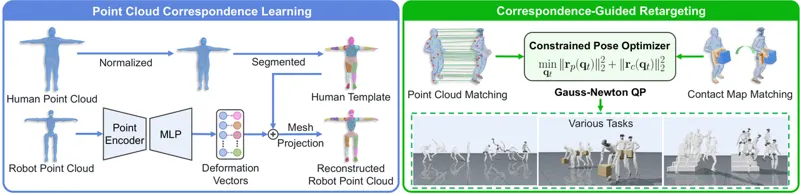
Unified Motion Retargeting for Humanoids via Dense Point CloudsUMR learns dense point cloud correspondence for humanoid motion retargeting, removing manual mappings and enabling scalable, detailed pose reproduction.Hanyang Cao, Yuetong Fang, Taesoo Kwon·Sep 2, 2026HumanoidMotion retargetingPoint cloudsSep 2, 2026
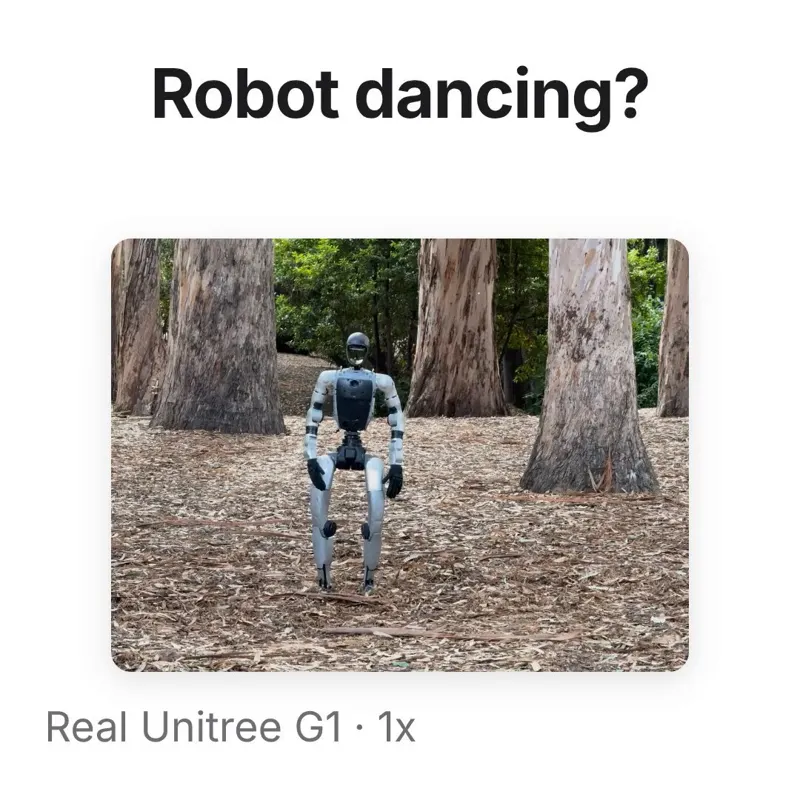
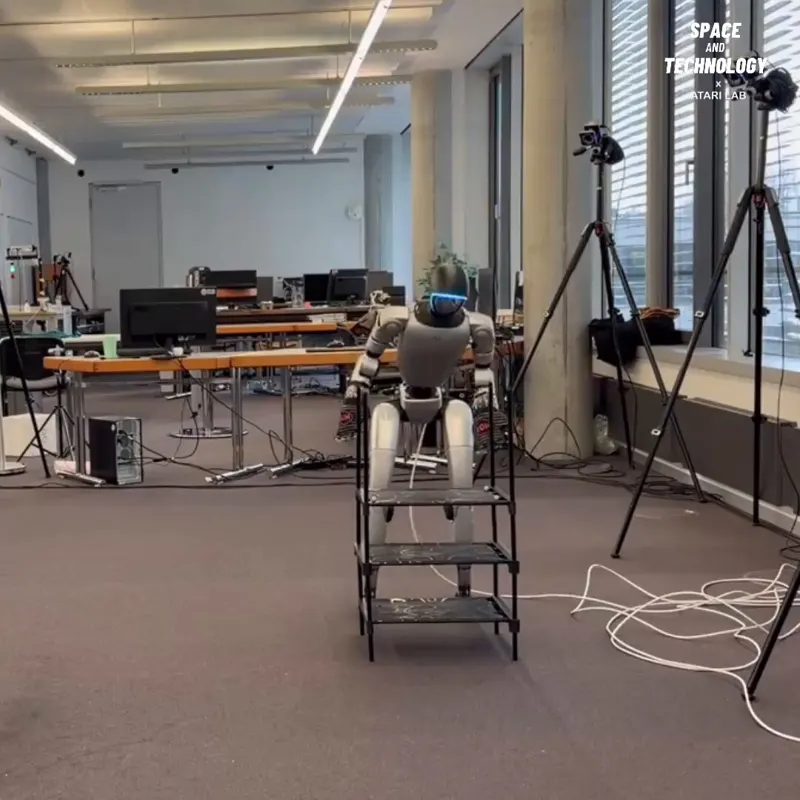
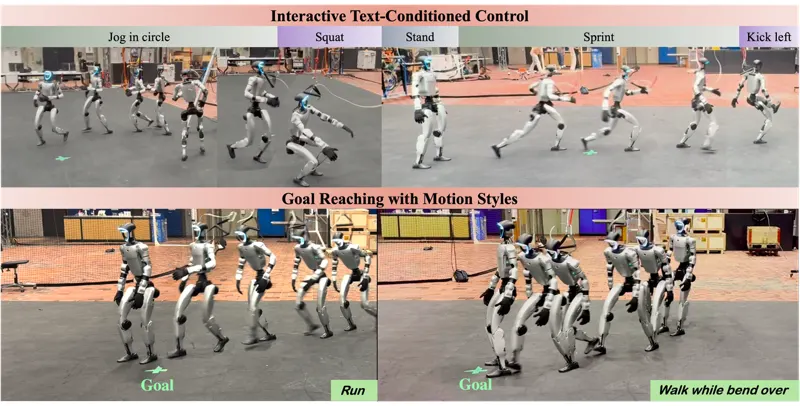
ADAPT: Agile Diffusion Action Priors for Robust and Steerable Online Text-Driven Humanoid ControlWe present ADAPT, an end-to-end framework for interactive, text-conditioned humanoid whole-body control. Unlike dominant text-to-motion pipelines that generate kinematic motions for a separate tracker, ADAPT solves language control with an end-to-end closed-loop control framework, where the robot must continuously respond to changing commands while maintaining balance, natural motion, and smooth transitions. ADAPT learns a diffusion-based action prior from text-labeled humanoid state-action trajectories, enabling diverse motion skills to be directly executed from language commands. To improve long-horizon robustness and smooth prompt switching, we train a lightweight residual reinforcement learning policy on top of the frozen diffusion controller. We further show that the same diffusion policy can be reused as a steerable text-conditioned motion prior for downstream task adaptation. Experiments demonstrate robust language-grounded skill execution, smooth interactive transitions, and style-preserving downstream control.Yan Wu, Chenhao Li, Kaifeng Zhao·Sep 1, 2026Diffusion policiesresidual RLUnitree G1Sep 1, 2026
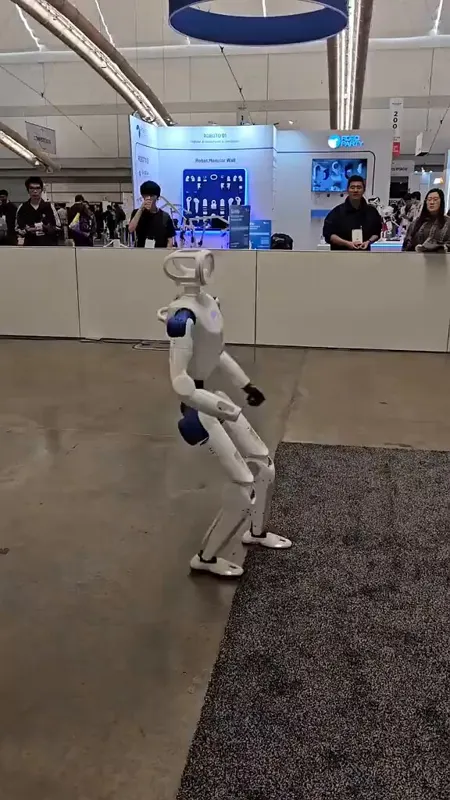
Learning Athletic Humanoid Tennis Skills from Imperfect Human Motion DataHuman athletes demonstrate versatile and highly-dynamic tennis skills to successfully conduct competitive rallies with a high-speed tennis ball. However, reproducing such behaviors on humanoid robots is difficult, partially due to the lack of perfect humanoid action data or human kinematic motion data in tennis scenarios as reference. In this work, we propose LATENT, a system that Learns Athletic humanoid TEnnis skills from imperfect human motioN daTa. The imperfect human motion data consist only of motion fragments that capture the primitive skills used when playing tennis rather than precise and complete human-tennis motion sequences from real-world tennis matches, thereby significantly reducing the difficulty of data collection. Our key insight is that, despite being imperfect, such quasi-realistic data still provide priors about human primitive skills in tennis scenarios. With further correction and composition, we learn a humanoid policy that can consistently strike incoming balls under a wide range of conditions and return them to target locations, while preserving natural motion styles. We also propose a series of designs for robust sim-to-real transfer and deploy our policy on the Unitree G1 humanoid robot. Our method achieves surprising results in the real world and can stably sustain multi-shot rallies with human players. Project page: https://zzk273.github.io/LATENT/Zhikai Zhang, Haofei Lu, Yunrui Lian·Mar 13, 2026LATENTSim-to-RealUnitreeMar 13, 2026
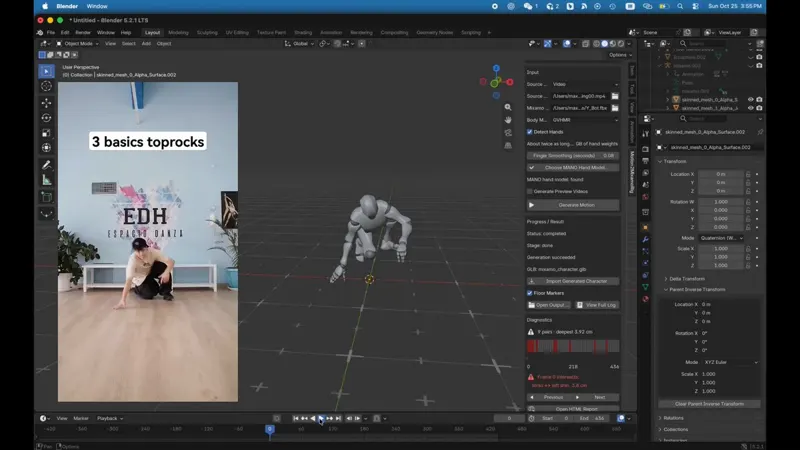
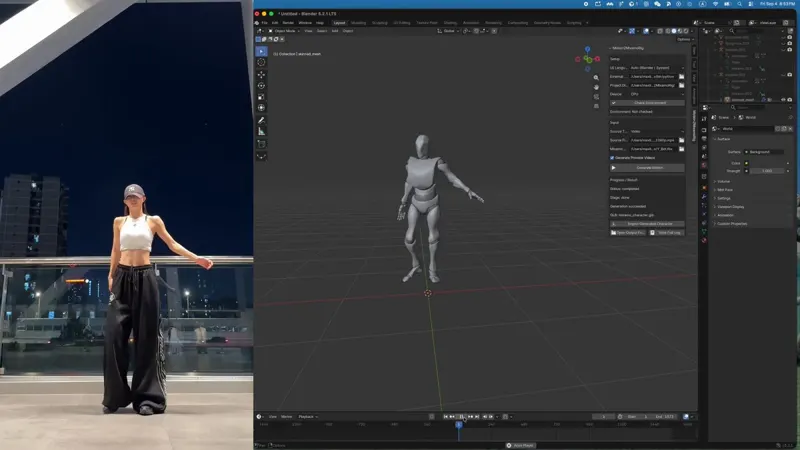
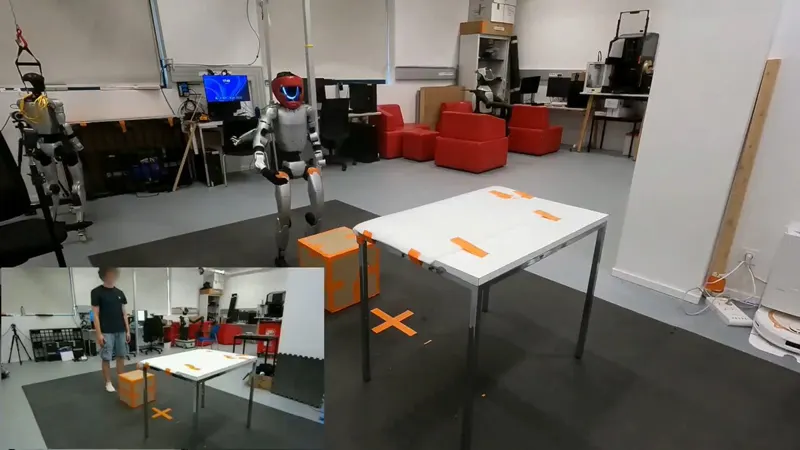
0:12WARP Retargets Offline Human Motion into Robot Actions@DanielZhenyang · 87 views · 2026-08-19RetargetingWARPHuman Motion
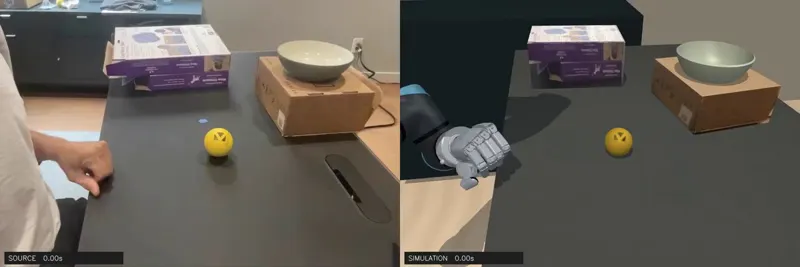
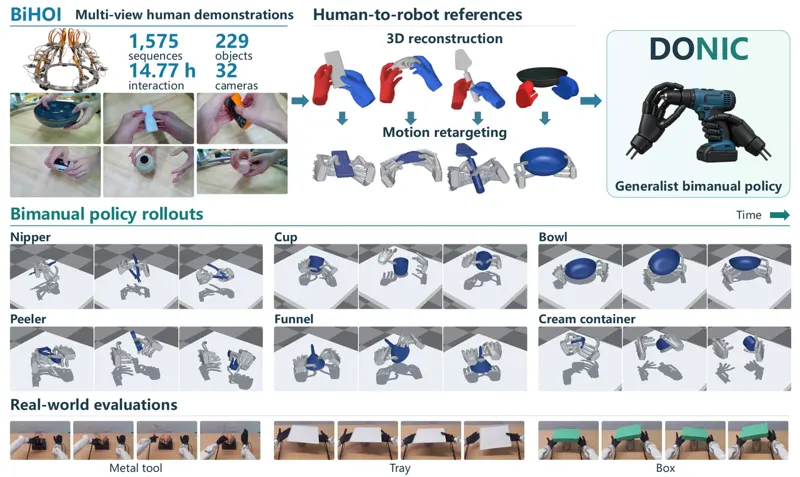
Ego2Robot: Scalable Robot Data Synthesis from Egocentric Human DataLearning generalizable robot manipulation policies requires large-scale and diverse demonstration data. Egocentric human manipulation videos offer rich scene and task diversity, and prior work has shown that retargeting and rendering such videos into robot-format data can yield effective per-task policies at small scale. However, whether this approach can provide pretraining benefits for vision-language-action models at scale remains unexplored. We present Ego2Robot, a scalable pipeline that converts egocentric human manipulation videos into robot training data through action retargeting, robot-arm visual synthesis, and multi-level quality curation. Ego2Robot supports both curated datasets and in-the-wild videos, producing 18,561 hours of robot training data spanning 15 robot morphologies, making it the largest ego-to-robot dataset to date. To evaluate generalization, we extend RoboTwin2.0 with disentangled perturbation axes covering visual appearance, scene layout, embodiment morphology, and task semantics. Experiments show that joint pretraining on Ego2Robot-synthesized and robot data consistently improves out-of-distribution generalization across multiple perturbation types, with benefits validated on real-robot deployment. Project page: https://www-ye.github.io/ego2robot_blog/Ye Wang, Pei Lin, Xiong-Hui Chen·Aug 3, 2026VLARoboTwinEgo2RobotAug 3, 2026