PAPER DEEP DIVE
Odin: Primitive-Level Synchronization for Distributed Point-Based Neural Rendering
Point-based neural rendering (PBNR) represents 3D scenes as explicit, trainable primitives and underpins high-quality reconstruction and emerging embodied AI and world-model pipelines. Unlike layer-structured neural networks, PBNR has primitive-indexed dependencies: each view reads and updates only a sparse, view-dependent subset of mutable scene state. As large scenes require distributed training and optimized renderers reduce per-view computation, global task- or iteration-level barriers increasingly place synchronization, rather than rendering, on the critical path. We present Odin, a distributed PBNR training system that replaces global barriers with primitive-level synchronization. Its ahead-of-time scheduler uses stable locality and phase order to identify low-conflict overlap windows, while the runtime validates primitive publication before later work observes mutable state. Odin provides a quality-first path that preserves synchronized-training visibility and a throughput-first path that uses overlap and gradient evidence to admit only small, low-impact delayed reads; structural changes and high-impact cases remain synchronized. Across four existing PBNR pipelines and 13 non-city scenes on 8 GPUs, Odin improves throughput by 1.22 times on average and hides 82% of critical-path wait while preserving reconstruction quality. In a MatrixCity mixed-parallel case study scaling to 64 GPUs, Odin improves throughput over Grendel by up to 1.89 times without changing renderer kernels, optimizers, training budgets, or model capacity.
Odin: Primitive-Level Synchronization for Distributed Point-Based Neural Rendering
Paper: Odin: Primitive-Level Synchronization for Distributed Point-Based Neural Rendering
Link: arXiv:2607.19893 | Benchmarks: MipNeRF360 / Tanks&Temples / DeepBlending / MatrixCity | Pipelines: 3DGS / TamingGS / DashGS / 2DGS
One-line summary: Replaces global barriers with primitive-level synchronization. An ahead-of-time scheduler uses stable locality and phase order to identify low-conflict overlap windows, while the runtime validates primitive publication before later work observes mutable state. Achieves 1.22× average speedup across 4 PBNR pipelines and 13 scenes, up to 1.89× on 64 GPUs.
Background and Motivation
Point-based neural rendering (PBNR), represented by 3D Gaussian Splatting and follow-ups, is becoming foundational for embodied intelligence and world models. It reconstructs explicit, trainable 3D scene state from multi-view observations, training each camera view by rendering, backpropagating, and updating only visible primitives. Semantically, each view reads and updates a sparse, view-dependent subset of primitive indices. This creates a systems mismatch absent from regular layer-by-layer neural networks: the dependency unit is a primitive index, but current distributed PBNR commonly publishes updates through global task- or iteration-level barriers.
A later view can be forced to wait for primitive updates outside its observable scope. As large scenes require distributed training and optimized renderers reduce per-view computation, global barriers increasingly place synchronization rather than rendering on the critical path. Existing systems optimize where PBNR state and views run but not when a primitive update becomes visible to later views.
Odin's core idea: replace global barriers with primitive-level synchronization. The ahead-of-time scheduler uses stable locality and phase order to identify low-conflict overlap windows, while the runtime validates primitive publication before later work observes mutable state. It provides a quality-first path (preserving synchronized-training visibility) and a throughput-first path (admitting only small, low-impact delayed reads using overlap and gradient evidence).
Method Details
1. Relative Locality Graph (RLG)
The core abstraction is a weighted undirected graph $\mathcal{R}=(\mathcal{V},\mathcal{E},w)$, where vertices $v_i\in\mathcal{V}$ represent training data items (input views in PBNR), $\mathcal{E}$ stores retained locality edges, and $w_{ij}$ is the relative coupling score between views $i$ and $j$. Larger weights mean stronger expected contention. The RLG ranks overlap opportunities with stable, updateable locality evidence while runtime validates visibility.
Odin builds the ahead-of-time RLG from a physical importance prior — stable co-visibility. Using SfM tracks: observations that repeatedly share tracks are likely to access related scene content. Let $\mathcal{P}_i$ be the SfM track set for data item $i$; if $\mathcal{P}_i\cup\mathcal{P}_j$ is nonempty, the edge weight uses Jaccard similarity:
$$w_{ij}=\frac{|\mathcal{P}_{i}\cap\mathcal{P}_{j}|}{|\mathcal{P}_{i}\cup\mathcal{P}_{j}|}$$
If the union is empty, $w_{ij}=0$ and the pair relies on runtime validation rather than being treated as proven independent.

Figure 1: Odin replaces global barriers with primitive-level synchronization. The ahead-of-time scheduler identifies low-conflict overlap windows; runtime validates publication safety.
2. Phase Task Graph and Logical Partitioning
Besides the RLG, Odin uses the existing phase task graph of the PBNR pipeline — recording legal phase order (scope extraction, preprocessing, rendering, backward, communication, optimizer update, required barriers). This is a coarse execution scaffold, not the tensor-level autograd graph. Logical Partitioning (LP) partitions the RLG into $K$ logical groups (scheduling bins, not state shards), balancing groups, keeping strong coupling within groups, and leaving weak edges across groups.
3. Static Data and Asynchronous Scheduling
Static Data Scheduling (SDS) arranges task-unit order so weakly coupled region transitions appear near overlap opportunities. Static Asynchronous Scheduling (SAS) places candidate overlap windows on the phase task graph, marking where communication can be launched ahead of a later validation point. The output records region assignment, task-unit order, candidate overlap windows, and validation points — not a final visibility decision but a plan that graph execution later validates, refines, or delays.
4. Graph Execution: Shadow Graph and Dynamic Validation
Graph execution is the dynamic counterpart for shared tensor state: executing overlapped units through Shadow Graph, refining ready-unit dispatch via Dynamic Data Scheduling (DDS), and revalidating planned windows via Dynamic Asynchronous Scheduling (DAS) before state observation. If current scopes don't support a planned overlap, DAS inserts the missing primitive-level synchronization as a stream dependency and delays the consumer until the producer publication completes. Since the check runs before the consumer observes conflicting state, correction requires neither rollback nor kernel re-execution — it only reduces planned overlap.
5. RLG Construction Strategy Comparison
Geometry-based RLG from projection overlap is cheap and early but too coarse for general PBNR — overlapping projected regions may correspond to different surfaces, occlusions, or weakly shared primitives. Computation-based RLG follows an inspector-executor pattern with faithful but impractically expensive tracing that arrives after useful overlap windows. Odin's SfM-track-based RLG is more selective than coarse geometry and more stable than a traced primitive-access graph. Outdated edges reduce scheduling quality rather than quality-first safety, because Graph Execution validates planned overlap before state observation.
graph TD
  A[SfM tracks → RLG construction] --> B[Logical Partitioning LP: K logical groups]
  B --> C[Static Data Scheduling SDS: arrange task-unit order]
  C --> D[Static Async Scheduling SAS: place overlap windows]
  D --> E[Shadow Graph: execute overlapped units]
  E --> F[Dynamic Data Scheduling DDS: refine dispatch]
  F --> G[Dynamic Async Scheduling DAS: validate publication]
  G -->|validated| H[later work observes state]
  G -->|validation failed| I[insert primitive-level sync, delay consumer]
  style D fill:#f5a623,stroke:#b97316,color:#fff
  style G fill:#4a90d9,stroke:#2c5f8a,color:#fff
  style H fill:#7ed321,stroke:#4a8a14,color:#fff
Experimental Results
Overall Speedup and Quality Preservation
On 8 GPUs across 4 PBNR pipelines and 13 non-city scenes, Odin improves throughput 1.22× on average, hiding 82% of critical-path wait. All PSNR, SSIM, and LPIPS aggregate deltas stay within the ±1% reporting band. In the MatrixCity mixed-parallel case study scaling to 64 GPUs, Odin improves throughput over Grendel by up to 1.89× (1.27× at 32 GPUs), without changing renderer kernels, optimizers, training budgets, or model capacity.
| Configuration | Baseline | + Odin | Speedup |
|---|---|---|---|
| 8 GPU DDP (truck) | PyTorch DDP | PyTorch+Odin | 7.6× (near ideal 8×) |
| 8 GPU MP average | Grendel | Grendel+Odin | 1.22× average |
| 32 GPU MP (MatrixCity) | Grendel | Grendel+Odin | 1.27× |
| 64 GPU MP (MatrixCity) | Grendel | Grendel+Odin | 1.89× |
Quality Preservation and Throughput-First Analysis
At the default throughput-first setting ($K=4,\tau=0.2$), all PSNR, SSIM, and LPIPS aggregate deltas stay within the ±1% reporting band. This matches the admission rule: delayed reads are limited to small nonzero overlap scopes and weak producer-gradient updates. The quality-first path remains the conservative choice when delayed reads are unacceptable. Quality-first fallback tests show sparse playroom/drjohnson reject only 1.3% and 0.8% of planned overlaps, while dense kitchen rejects 98.6% and returns to 1.00× — failed predictions become primitive-scoped synchronization rather than rollback or re-execution.
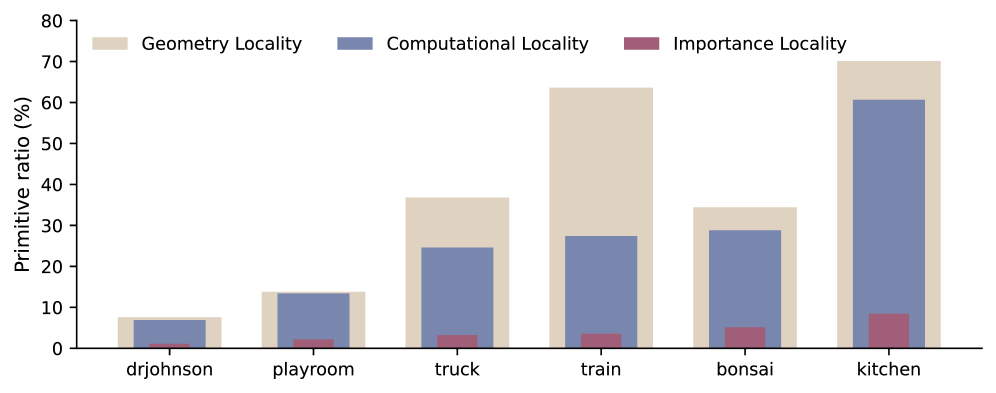
Figure 2: Reconstruction quality. All metric deltas within ±1% reporting band, proving primitive-level synchronization doesn't harm quality.
Overhead and Shadow Graph
The ahead-of-time scheduler is lightweight: 50,000 images take 9.45 seconds for graph construction and schedule compilation. Shadow Graph avoids full logical-state replication — extra memory stays nearly flat with $K$, and per-operation overhead is up to 257× lower than the replication-based alternative.
| Ablation Component | Impact | Conclusion |
|---|---|---|
| Remove SAS | Gain largely disappears | Barrier removal + comm-compute overlap is main acceleration source |
| Remove SDS | Performance drops | Useful overlap depends on weakly coupled transition arrangement |
| Remove DDS | Short-term imbalance increases | Dynamic dispatch is complementary |
| Remove DAS | Stale locality prediction risk | Runtime validation protects the plan |
| No-partition HOGWILD | Both throughput and quality loss | Argues against simple async interpretation |
Throughput is defined as $\text{throughput}=\frac{N_{\text{iter}}\cdot B}{T_{\text{wall}}}$. The ablation confirms removing SAS largely removes the gain, confirming barrier removal and communication-computation overlap are the main acceleration source. The partitionless asynchronous control loses both throughput and quality, arguing against a simple HOGWILD-style interpretation. Full Odin is a coordinated design rather than a single rule.
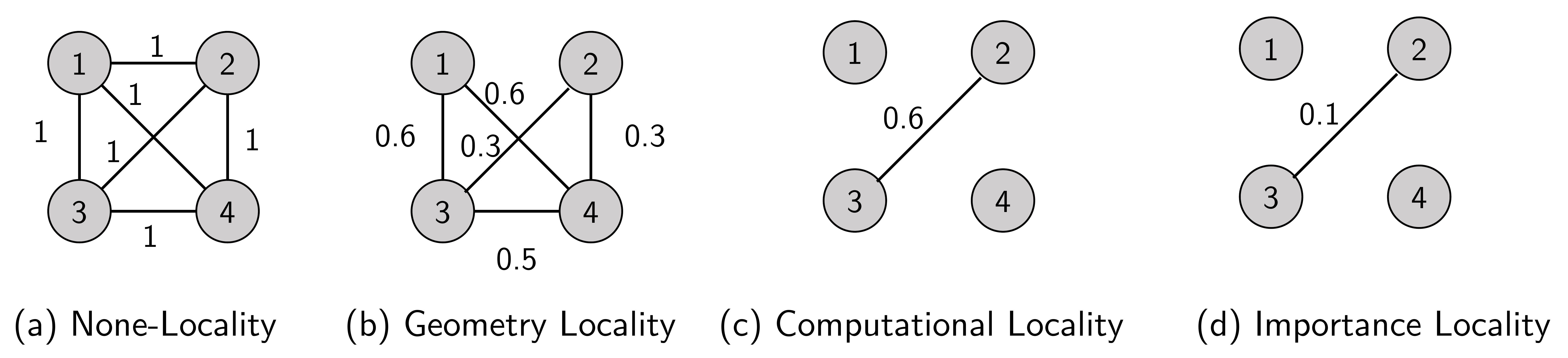
Figure 3: Runtime breakdown. Odin hides 82% of critical-path wait, not by reducing raw bytes.
The relative locality graph is defined as $\mathcal{R}=(\mathcal{V},\mathcal{E},w)$ where $\mathcal{V}$ is the vertex set, $\mathcal{E}$ is the edge set, and $w$ is the weight function.
$$ \mathcal{R}=(\mathcal{V},\mathcal{E},w) $$
The importance-based edge weight is the Jaccard similarity of point sets:
$$ w_{ij}=\frac{|\mathcal{P}_{i}\cap\mathcal{P}_{j}|}{|\mathcal{P}_{i}\cup\mathcal{P}_{j}|} $$
The scheduling priority score for vertex $v$ given previous set $U_{\mathrm{prev}}$:
$$ s(v\mid U_{\mathrm{prev}})=\sum_{u\in U_{\mathrm{prev}}}w_{uv} $$
Throughput is measured as iterations times batch size over wall-clock time:
$$ \text{throughput}=\frac{N_{\mathrm{iter}}\cdot B}{T_{\mathrm{wall}}} $$
LimitationsScope and fallback: Odin requires conservative primitive scopes before state observation, publication points after communication/update, and late active-id and gradient evidence. If unavailable, or if structural mutations, dense fields, global regularizers, or unversioned mutable candidate selection dominate, Odin widens the scope or synchronizes the affected phase.
Analysis: Odin doesn't replace partitioning, sparse exchange, or renderer optimization — Gaian and Grendel decide where primitives and views run; Odin decides when pending primitive updates become visible. The SfM-track-based RLG limits applicability to scenes with SfM input. The quality-first path may fall back to near-full synchronization in dense scenes (e.g., kitchen rejects 98.6%), limiting gains. Throughput-first admission parameters $\tau$ and $K$ require tuning, though defaults work in most scenes. Shadow Graph, while avoiding full replication, still introduces extra memory and operation overhead. Applicability is limited to workloads with explicit mutable state, read/write scopes, publication points, and late refinement evidence — dense all-to-all state, hidden mutable kernel state, or unavoidable global regularization remain conservative.
Conclusion and Outlook
Odin demonstrates that global barriers are not inherent to distributed PBNR. Primitive-level publication, static locality planning, runtime validation, and Shadow Graph staging improve throughput 1.22× on average and 1.89× over Grendel without changing kernels, optimizers, budgets, or model capacity. The core insight is decoupling "when to publish" from "where to run" — existing systems optimize placement and exchange volume, Odin optimizes timing. More broadly, Odin targets a workload class rather than a single application: explicit mutable state with read/write scopes, publication points, and late refinement evidence. This explains why the same mechanism applies across 3DGS, 2DGS, TamingGS, DashGS, DP, and MP without changing renderer kernels, and points toward online reconstruction, neural mapping, and object/voxel/map-level world models as broader directions for sparse explicit-state AI systems.
Global barriers are not the destiny of distributed rendering — when the dependency unit is a primitive index rather than a layer, synchronization should also happen at the primitive level. Liberating "when to be visible" from "where to run" is Odin's core contribution to distributed PBNR.
SOURCE LINKS