BLOG
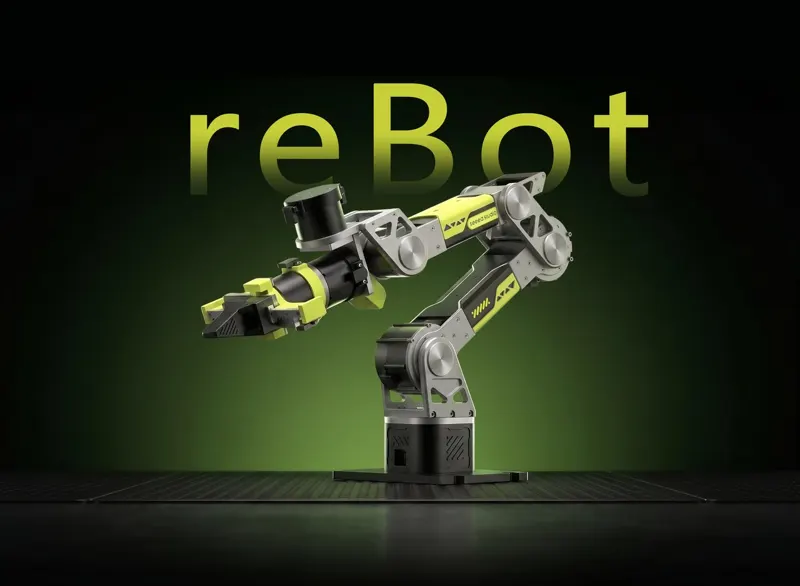
Seeed's open-source six-axis arm in full: 96 STEP files, a screw-level BOM recomputed line by line (motors = 89.9%), the published thermal-test limits, the CERN-OHL-W-2.0 licence switch, and the LeRobot + GR00T N1.7 overnight autonomy loop.
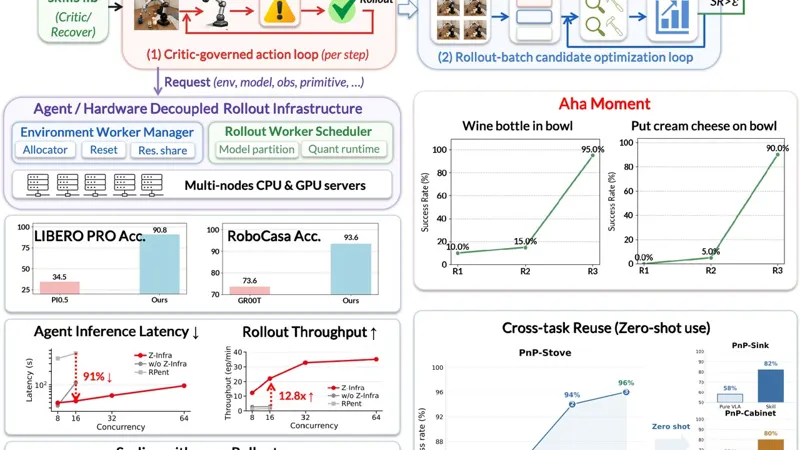
Tsinghua AIR and Z-Trans AI present Zetta ζ, a closed-loop embodied harness that improves a frozen VLA policy without a single gradient update. Instead of fine-tuning, it evolves the execution harness around the policy: code-based runtime critics watch every action, recovery skills take over on deviation, and a validation gate admits only skills that generalize. The frozen baseline scores 31.0% on LIBERO-Pro; the same policy under Zetta ζ reaches 92.5% (+56.3 absolute points), with a +20-point gain to 93.6% across 18 RoboCasa tasks. Z-Infra scales valid rollout throughput 20.6× and speeds inference 11.1×. Skills transfer zero-shot, and clear robotic "aha moments" emerge.
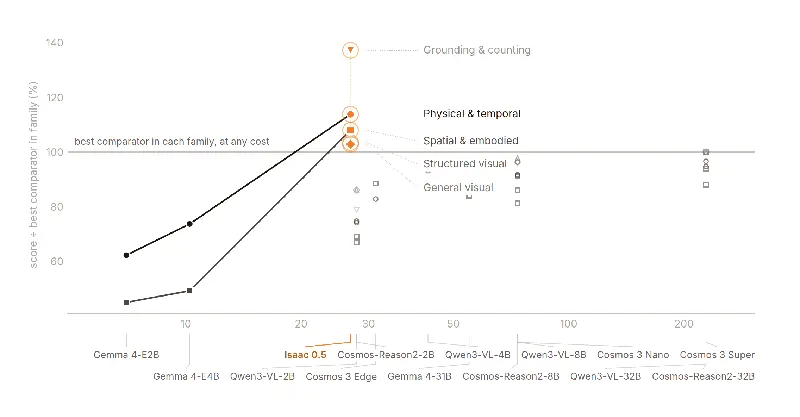
Isaac 0.5 is Perceptron's open-source embodied foundation model with 36B sparse parameters: it reads images, video, language, robot state and previous actions to answer video questions, point and track objects, report task progress, and generate robot actions. The team establishes a scaling law trading video for teleop: scaling general video from 1,000 to 1M hours cuts the teleoperation needed for action loss 2.50 from ~5,900 hours to 28 (210x). Trained on 35+ robot systems, 100K hours of robot experience, 1M hours of video and 3T multimodal tokens, it introduces semantic world modeling (predicting future percepts), the mHarmony typed multimodal interface, and Null Experts for dynamic compute — leading all five perception task families at 8.5x lower inference cost. Weights, training code and LeRobot inference code are fully released.
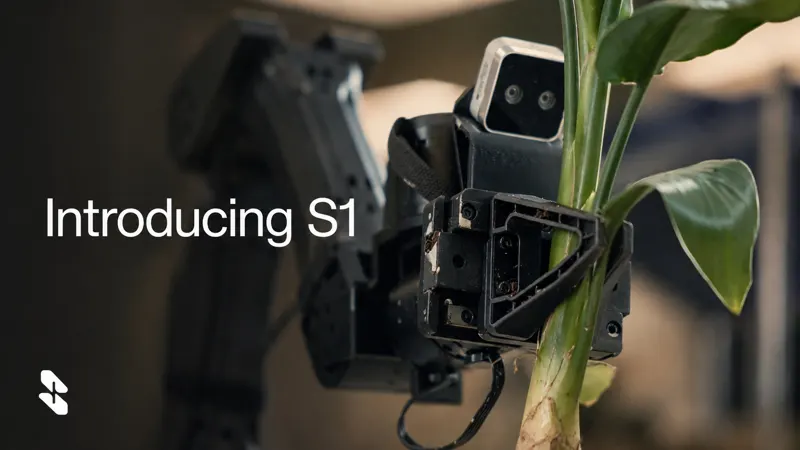
Skild AI's flagship robotic foundation model S1 is built from the ground up as an in-context learner: show it a video demonstration of a task — even an unseen 10-minute long-horizon one — and it executes with no fine-tuning. On unseen tasks, one demonstration ≈ 380 post-training examples; at 100k pre-training hours S1 reaches 66% success vs 9% for language-prompted VLAs.
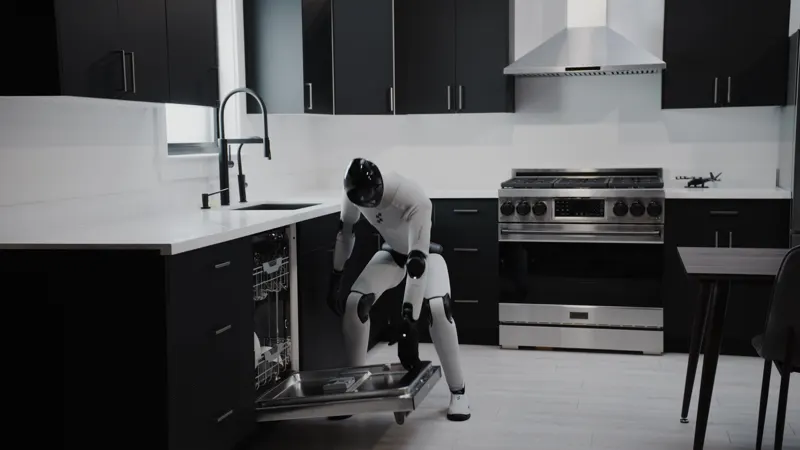
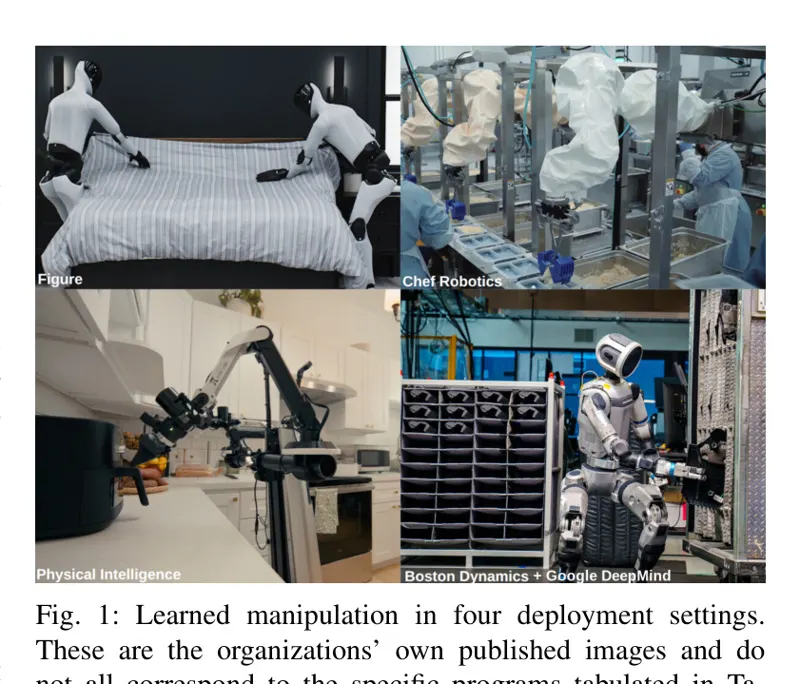
Figure AI's Helix VLA model achieves first humanoid multi-fingered autonomous laundry folding. Same architecture seamlessly transitions from logistics to household chores with data-only change.
Figure AI releases Helix 02, extending single-network control from upper body to whole robot. System 0 trained on 1000+ hours of human motion data replaces 100K lines of hand-engineered C++, enabling 4-minute continuous autonomous loco-manipulation.
Across ICRA REAL-I and CRAIC 2026, 200+ student teams used Leju's open-source LeTools chain to go from algorithm to real-robot deployment in as little as one day. Hardware-free dry-run of a 37-node behavior tree, a 1,000-hour production-grade LET-Base dataset, a one-line simulation-to-real switch in deploy.yaml, and 10+ architectures behind a unified Adapter layer show embodied-AI competition shifting toward low-barrier dev environments covering data, models, and deployment.
Official 6B base weights, RoboTwin post-training weights, training code, open-loop eval, simulation eval, and deployment entry are all public. Labs can run inference, RoboTwin closed-loop evaluation, or custom-data post-training, but the full 60K-hour raw corpus and training budget are missing, making equivalent base pre-training reproduction infeasible.
A 35-page survey by Chef Robotics' Inkyu Sa covering 200+ sources and 31 methods from a production-floor perspective. It organizes bimanual VLA research by 'coupling tightness × action-head emission,' argues flow-matching heads with action chunking are the strongest dual-arm recipe (winning on ~10 integration steps), and dissects the two-orders-of-magnitude gap between benchmarks and real deployment plus three durable gaps (force, evaluation, data).