BLOG
IEEE Spectrum's Video Friday collected fourteen robotics clips this week. Nearly all of them show robots working in the real world rather than in a render. Agility's Digit drags a couch across a living room; SteadyTray's ReST-RL hierarchical reinforcement learning keeps unsecured payloads level on a Unitree G1, generalizing zero-shot sim-to-real across objects and external force disturbances; Figure argues that a robot in every home is a safety-and-cost problem rather than a data-and-compute one; CMU's APEX replaces choreographed motion with adaptive full-body maneuvers. NC State builds teardrop-shaped liquid-crystal elastomer soft robots that leap for as long as infrared light is on, with no battery, controller, or onboard sensing, and the University of Tokyo fits the musculoskeletal humanoid Musashi-W with a three-layer joint-covering skin carrying 44 pressure- and stretch-sensitive elements. DEEP Robotics' Lynx M20S hauls grape baskets in Turpan, where summer ground temperatures exceed 50 degrees Celsius, while ROBOTIS' first OH! GYM! student cohort goes from simulated motions to a physical AI Sapiens K1 in one month. The edition also carries the September-to-November event calendar: Humanoids Summit Seoul, IROS 2026, and CoRL 2026.
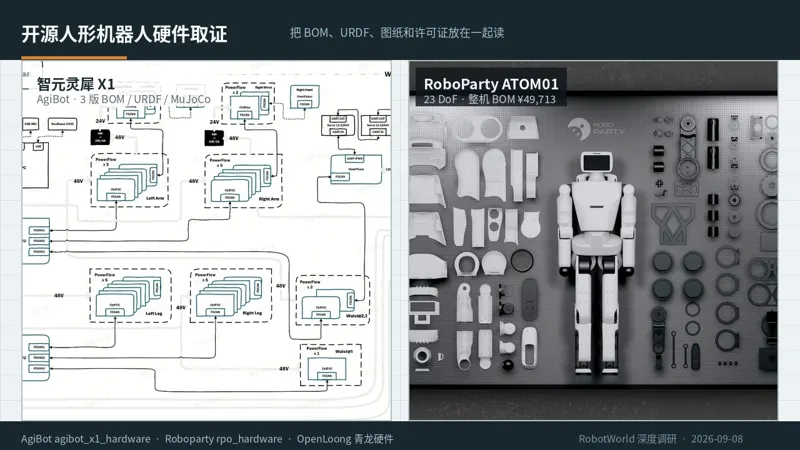
A humanoid robot is not an assembly of seven modules but a stack of physics equations that set each other's boundary conditions. This article computes the whole-machine stack layer by layer: joint motor modules (declared torque versus real quasi-static CoP demand — knee margins across three vendors converge to 2.23-2.42x while BHL's knee has only 1.51x) -> IMU (lever-arm pseudo-acceleration is 21,752x the sensor noise floor, so mounting position matters four orders of magnitude more than the datasheet) -> materials and structure (three BOM revisions of AgiBot's X1 as a load-path history: every part entering the closed-chain drivetrain upgraded to 7075-T6 / TC4 / 17-4PH) -> sensors (fix the observation space before the shopping list) -> battery and BMS ('all joints at peak simultaneously' is physically impossible: G1's 46,062 W against a 421 Wh pack is 109 C) -> software control and the CAN-level low-side boards (22 nodes at 500 Hz on one bus is 130.9% load, so it must be split into four) -> simulation training and sim-to-real: domain randomization, sim2sim, zero calibration (ATOM01's 2.093 rad waist-yaw assembly offset, the |q| < 1e-2 rad acceptance gate, and write_motor_flash() being a no-op in three of the four motor drivers), plus 10 of 13 real failure modes being hardware calibration rather than simulation fidelity. Every figure comes from programmatic parsing of the five machines' public model files, deployment and calibration source, plus official vendor specifications, and is recomputable.
Wheeled-base (half-body) humanoids are the fastest-moving form factor of the humanoid race: over 40% of humanoid products launched globally in 2025 use wheeled chassis, with travel speed 3-5x that of bipeds, 60%+ energy savings, and system cost one order of magnitude lower. Based on public sources and vendor research, this article dissects the chassis and lift designs of leading players (Galbot, AgiBot, UBTECH, Pudu, Astribot, Yifei, Zhipingfang, Topstar) across mecanum, omni-wheel, four-steer-four-drive and dual-differential chassis and screw / rigid-chain / belt lifting mechanisms; maps the supplier landscape (SEER, WIMAI, SLAMTEC, JIECANG and more); and answers the core question — in-house or outsourced? The answer: chassis and lift mechanisms are overwhelmingly developed in-house; outsourcing concentrates on commodity parts like wheels, motors and screws.
How should robot joint modules actually be selected? Drawing on 200+ joint-module/reducer entries in the RobotWorld knowledge base, product research on leading vendors (Harmonic Drive, Nabtesco, Leaderdrive, Laifual, Leadshine, EYOBOT, ZeroErr, JIECANG, CubeMars, ENCOS), and item-by-item verification of the supply chains behind Tesla, Unitree, UBTECH, AgiBot and Fourier, this guide systematically compares harmonic, planetary, RV, cycloidal and quasi-direct-drive (QDD) transmission routes on performance and cost, provides a torque-tier product cheat-sheet (0.5-200 N·m) and full configuration recipes by robot weight class (small <=25kg / mid 30-55kg / large 60-100kg), plus a practical pitfall-avoidance playbook.
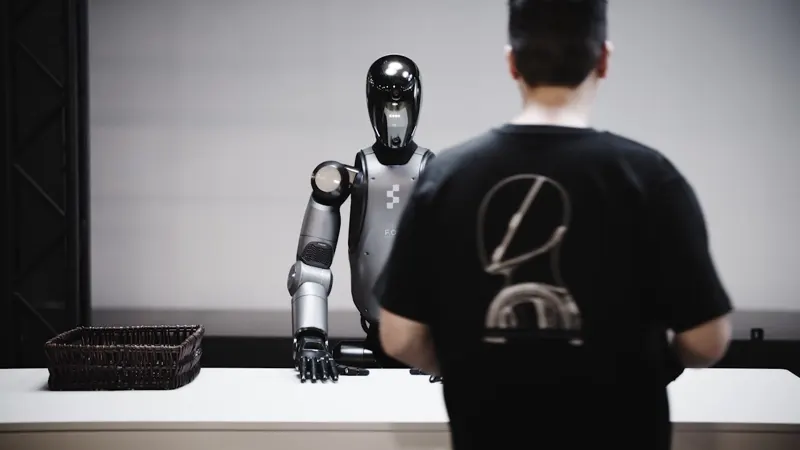
Figure AI's Helix VLA model achieves first humanoid multi-fingered autonomous laundry folding. Same architecture seamlessly transitions from logistics to household chores with data-only change.
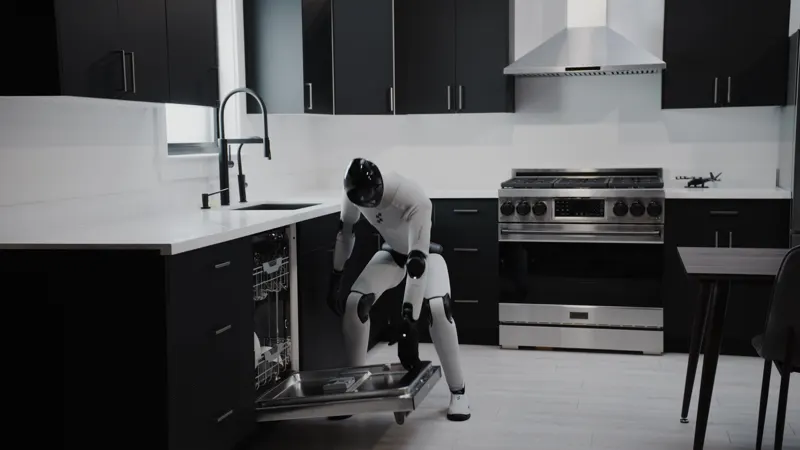
Figure AI releases Helix 02, extending single-network control from upper body to whole robot. System 0 trained on 1000+ hours of human motion data replaces 100K lines of hand-engineered C++, enabling 4-minute continuous autonomous loco-manipulation.
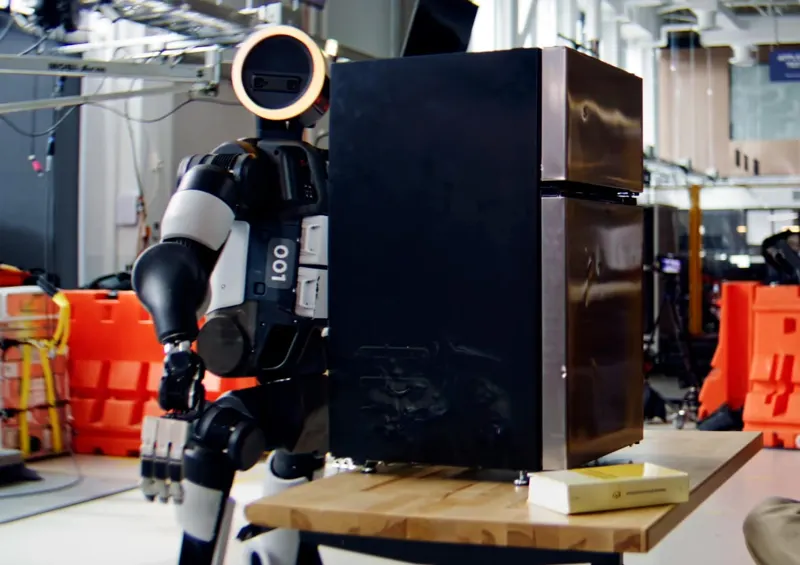
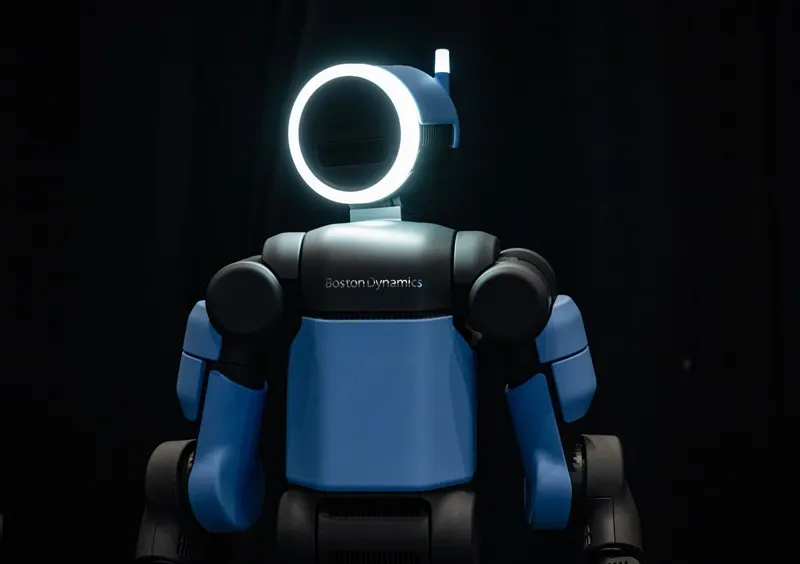
Boston Dynamics shares how Atlas learns whole-body lifting via RL: from reference trajectories and reward design to GPU-scale simulation and real-hardware iteration, demonstrating fundamental building blocks of physical intelligence.
Boston Dynamics traces Atlas' decade-long evolution from hydraulic parkour research platform to electric industrial humanoid. 2026 production-ready Atlas unveiled with Hyundai, already deployed for part sequencing at the Hyundai metaplant.
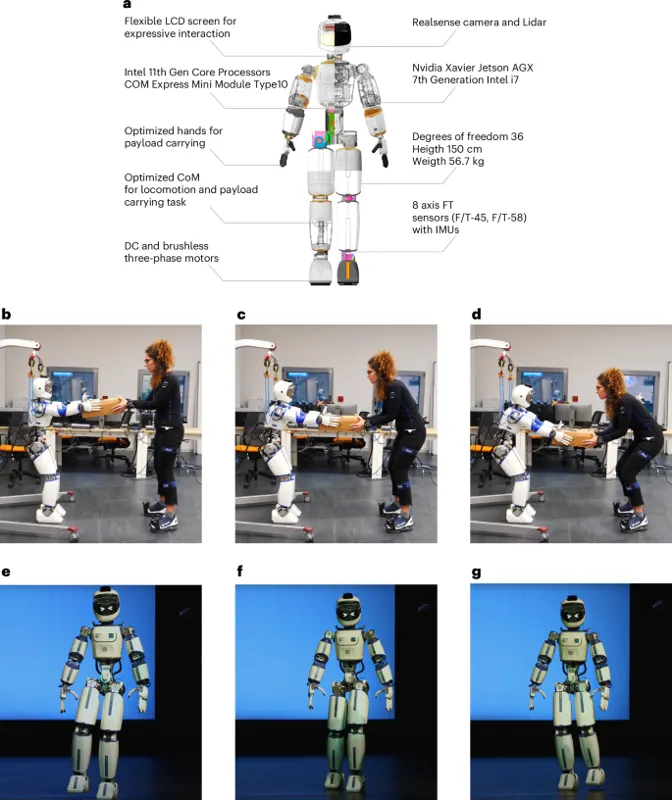
Published in Nature Machine Intelligence, ergoCub is a humanoid robot designed via a shared embodied intelligence architecture that jointly optimizes hardware and control for human ergonomic metrics. L5-S1 torque drops ~50% during collaborative lifting, and walking step length increases 25% over its predecessor iCub3.