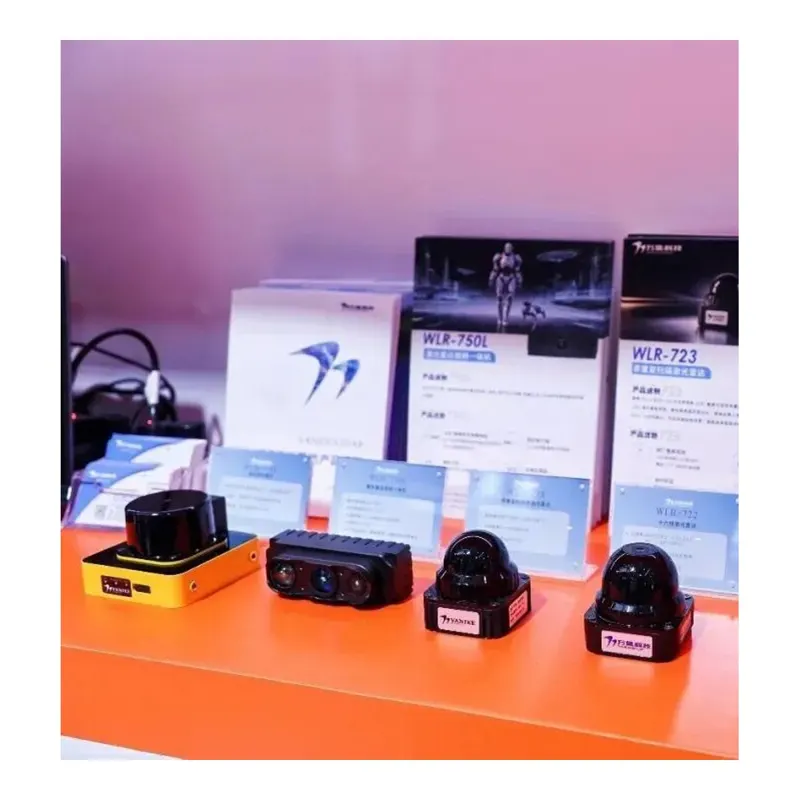
The world's first non-repetitive-scanning LiDAR with a 100° full FOV: vertical FOV from -10° to +90°, up to 70 m range, 319k points/s and ±2 cm precision, accumulating point clouds evenly across the FOV for embodied robots, AMRs and other large-FOV close-range perception scenarios.
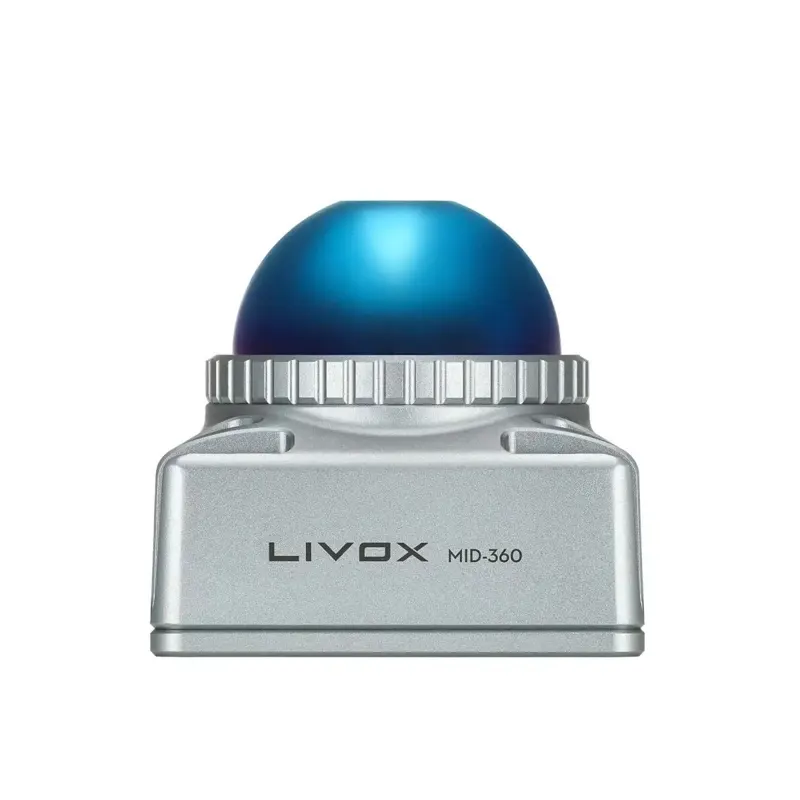
The latest refresh of the Livox Mid-360 family — the most widely deployed 360° hybrid solid-state LiDAR in robotics — now lighter, lower-power and more cost-optimized, with ~100k points/s point density, targeting cost- and weight-sensitive mobile robots such as service robots, AGVs/AMRs and inspection platforms.
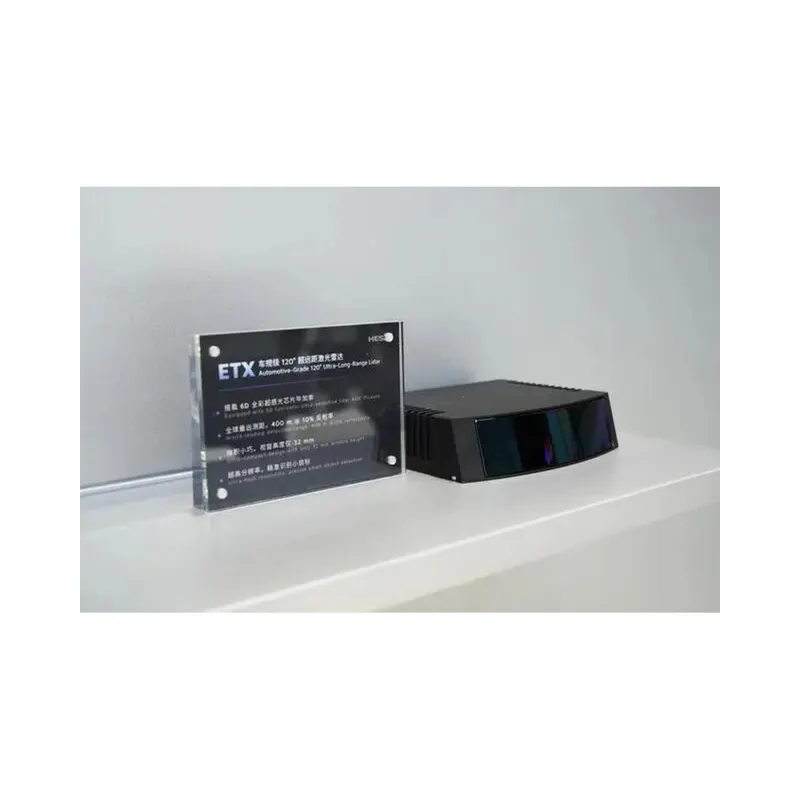
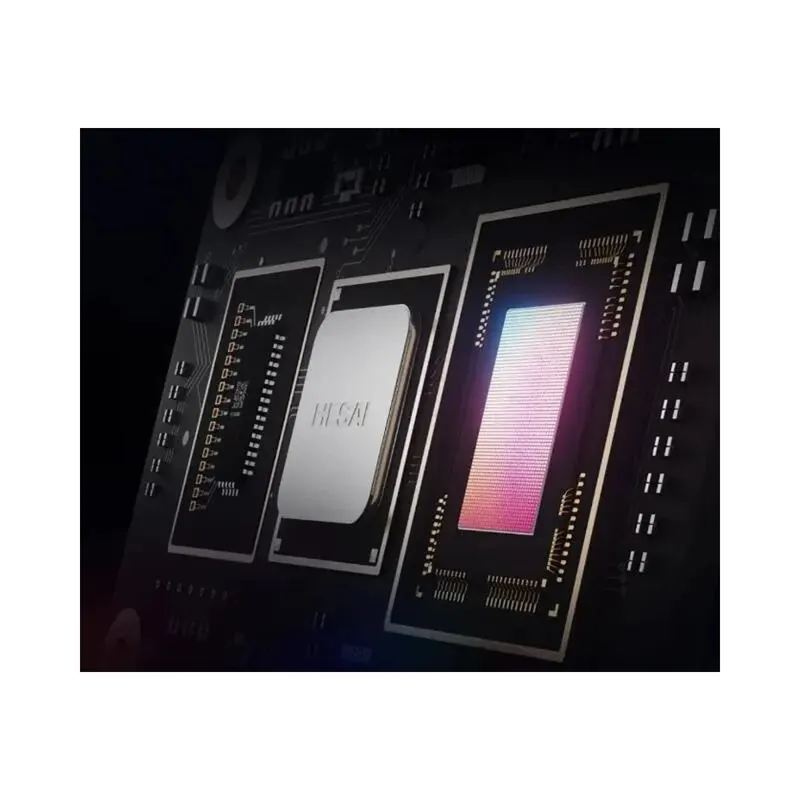
A 6D full-color LiDAR built on Hesai's Picasso SPAD-SoC: every pixel carries depth and RGB color simultaneously in real-time imaging, supporting up to 4320-line full-color 4K perception with native RGBD output from a single chip — pointing LiDAR from geometry sensing toward spatial vision, with mass production planned for H2 2026.
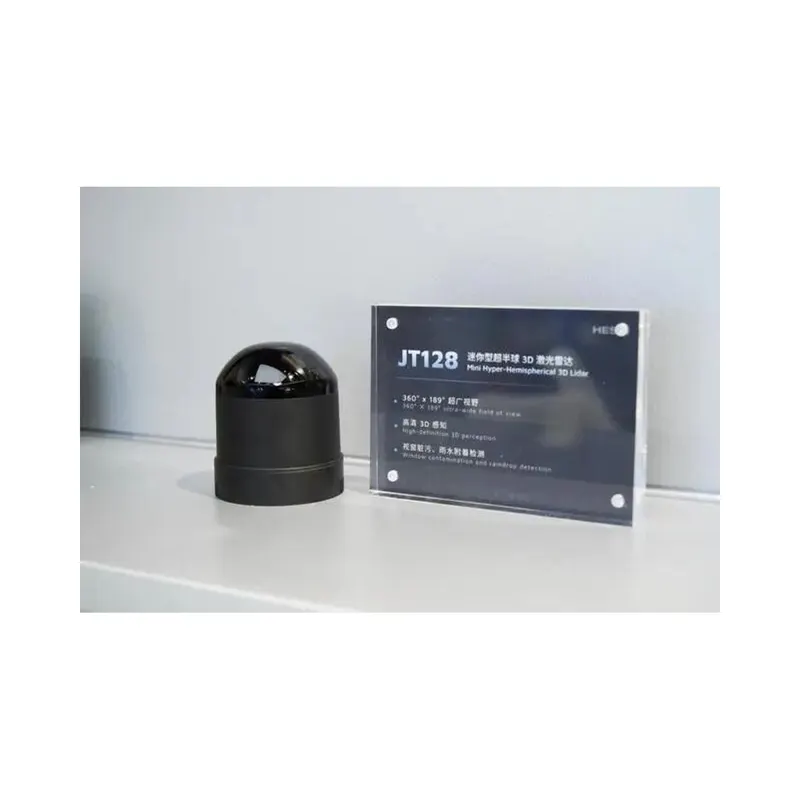
The flagship of Hesai's JT-series robot LiDARs, featuring 128 independent transceiver channels, up to 1.15M points/s single-return point rate and a 360°x89° hyper-hemispherical FOV; already chosen by 50+ robotics companies including Unitree and Ant Lingbo, making it one of the mainstream 360° LiDARs for robotics at WRC 2026.
Hesai's Picasso SPAD-SoC fuses color imaging and ToF ranging at pixel level on a single chip, sensing 3D space (XYZ) and object color (RGB) simultaneously and outputting color point clouds directly; photon detection efficiency (PDE) exceeds 40%, debuting in the ETX LiDAR series with up to 4320-line full-color 4K perception, mass production targeted for H2 2026.
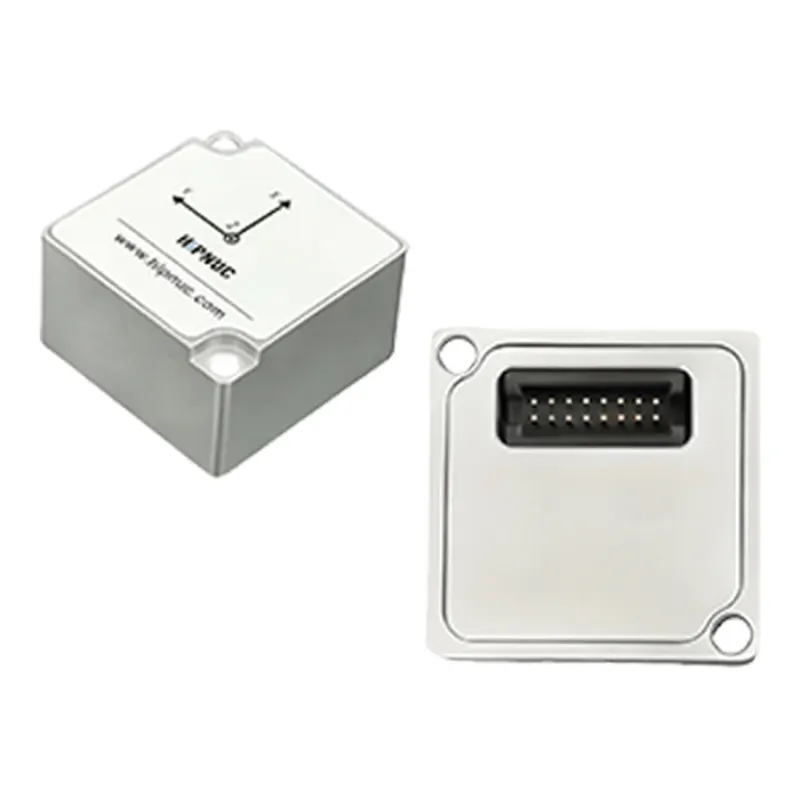
HiPNUC (Beijing) HI71 is a tactical-grade compact inertial module in a 24×24×14 mm aluminum case with board-to-board connectors for easy integration. Four variants: T2 (VRU), T4 (AHRS + barometer), M4 (MRU heave) and N4 (INS): gyro ±300 °/s with 0.3 °/h bias instability and 0.0004 °/s√Hz XY noise density; accelerometer ±16 g with 10 μg bias instability; T4/M4/N4 add a ±20 Gauss magnetometer and 300~1200 hPa barometer. Pitch/roll 0.05~0.1°, UART up to 1000 Hz and CAN at 200 Hz, binary/CANopen/Modbus/NMEA protocols with PPS/UTC sync, 3.6~5 V supply at 370 mW.
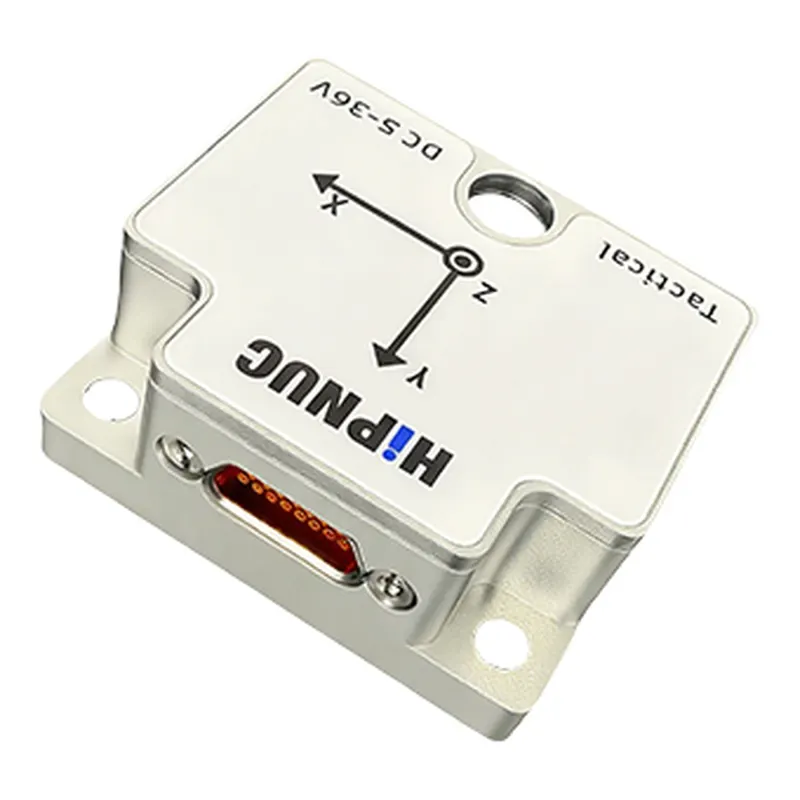
HiPNUC (Beijing) HI70 is a tactical-grade high-precision inertial sensor in a 44.8×38.6×18.5 mm aluminum enclosure weighing 55 g, with full-temperature factory calibration of scale factor, cross-axis and bias plus excellent vibration tolerance. Gyro ±300 °/s with 0.3 °/h bias instability and 0.0004 °/s√Hz XY noise density, up to 250 Hz 3dB bandwidth; accelerometer ±16 g with 10 μg bias instability; T3 variant adds a ±20 Gauss magnetometer. Static/dynamic pitch-roll 0.05~0.07° with 0.1° heading drift over 2 h stationary. RS-232/RS-422 up to 1000 Hz and CAN at 200 Hz, binary and CANopen protocols, wide 4.8~36 V input at 400 mW.
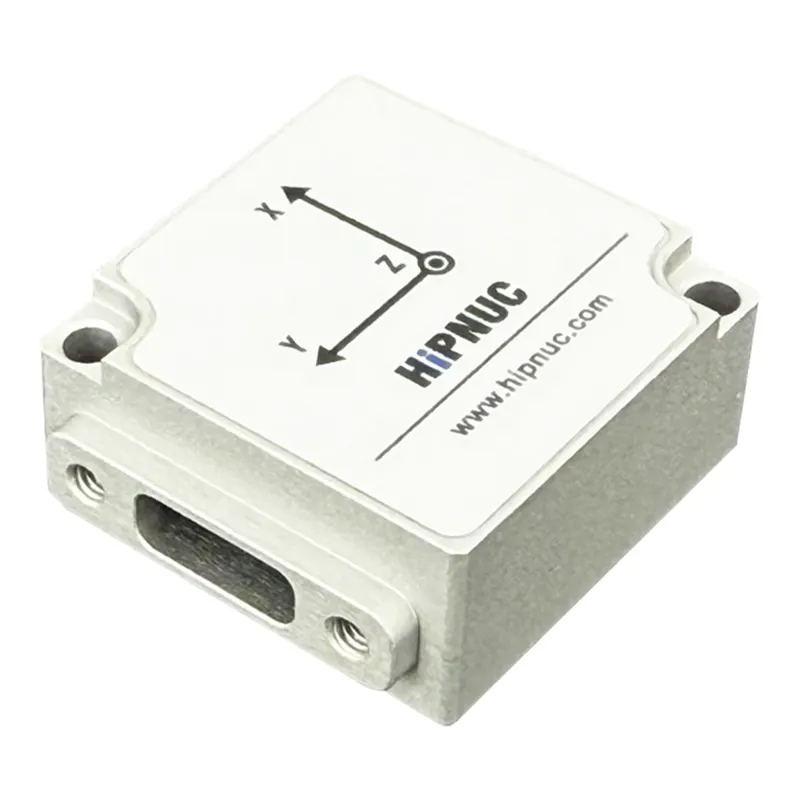
HiPNUC (Beijing) HI13 is a stand-alone aluminum-enclosure attitude sensor of 26×24×12 mm with plug-and-play USB Type-C and a fully symmetric design for easy integration. Seven variants M0/M3/R2/R3/S2/S3/S4: M/R series offer ±2000 °/s gyro and ±24 g accelerometer, while S series reach ±4000 °/s and ±32 g, with bias instability up to 1.6 °/h; three variants include a ±2000 μT wide-range magnetometer. USB output up to 1000 Hz, 4.5~5.5 V supply, 215~300 mW, −40 to +85 °C — ideal for robots needing ready-to-read attitude data.
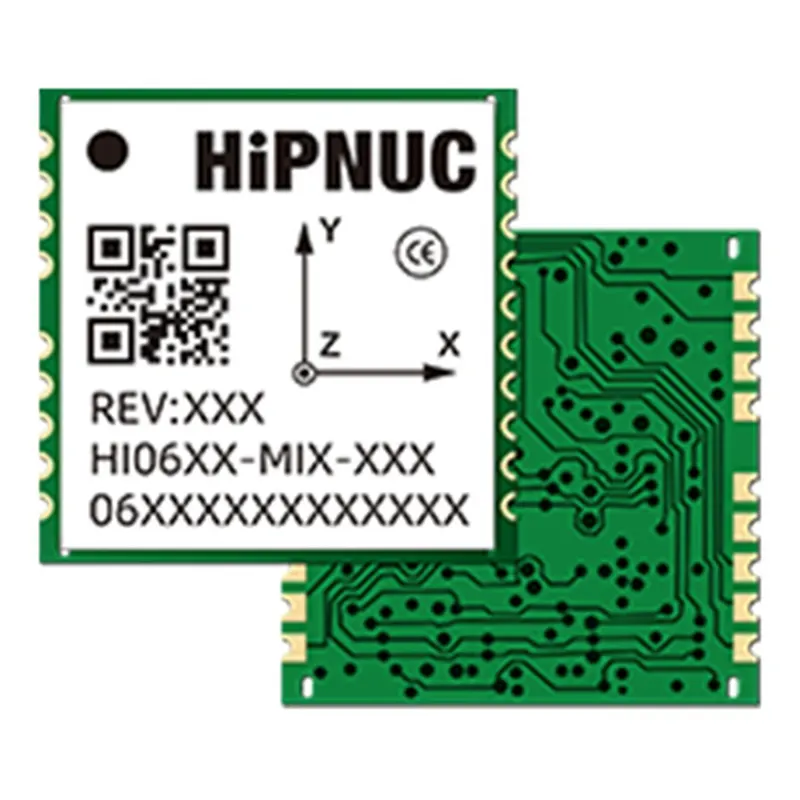
HiPNUC (Beijing) HI06 is a tactical-grade compact SMD attitude module of 15×15.2×2.6 mm with full-temperature calibration of scale factor, cross-axis alignment and bias. Gyro ±4000 °/s with 0.0025 °/s√Hz noise density and bias instability as low as 0.9/1.0/1.1 °/h, up to 400 Hz 3dB bandwidth; accelerometer ±32 g with 0.011~0.05 mg bias instability; T3/N3 variants add a ±2000 μT magnetometer. Static pitch/roll 0.08~0.12°, UART at 1000 Hz and CAN at 200 Hz, PPS/UTC sync, 3.2~5.5 V supply at 220 mW, with official ROS, C and QT example code.
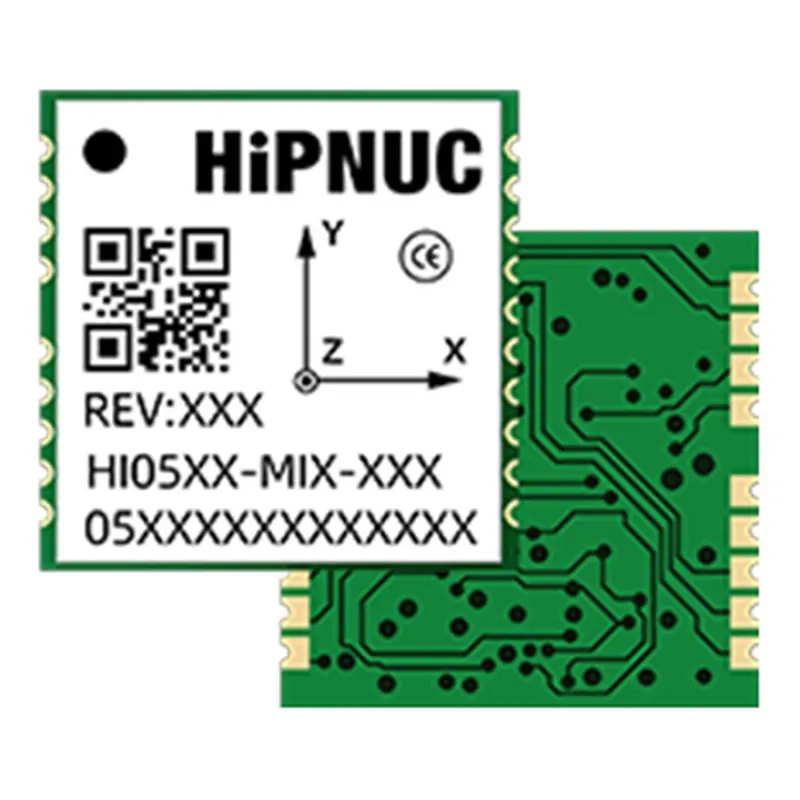
HiPNUC (Beijing) HI05 is a full-featured, low-noise SMD attitude module of 15×15×2.6 mm and under 1.5 g, offering IMU/VRU/AHRS/INS variants with optional barometer. Gyro ±4000 °/s with 0.0025 °/s√Hz noise density, 4/1.5/1.7 °/h bias instability and up to 400 Hz 3dB bandwidth; accelerometer ±32 g with 0.012~0.016 mg bias instability. R3/N3/R4/N4 variants add a ±2000 μT magnetometer, and R4/N4 a 300~1200 hPa barometer. UART at 1000 Hz and CAN at 200 Hz, 3.2~5.5 V supply, 195~205 mW, with PPS/UTC time synchronization.
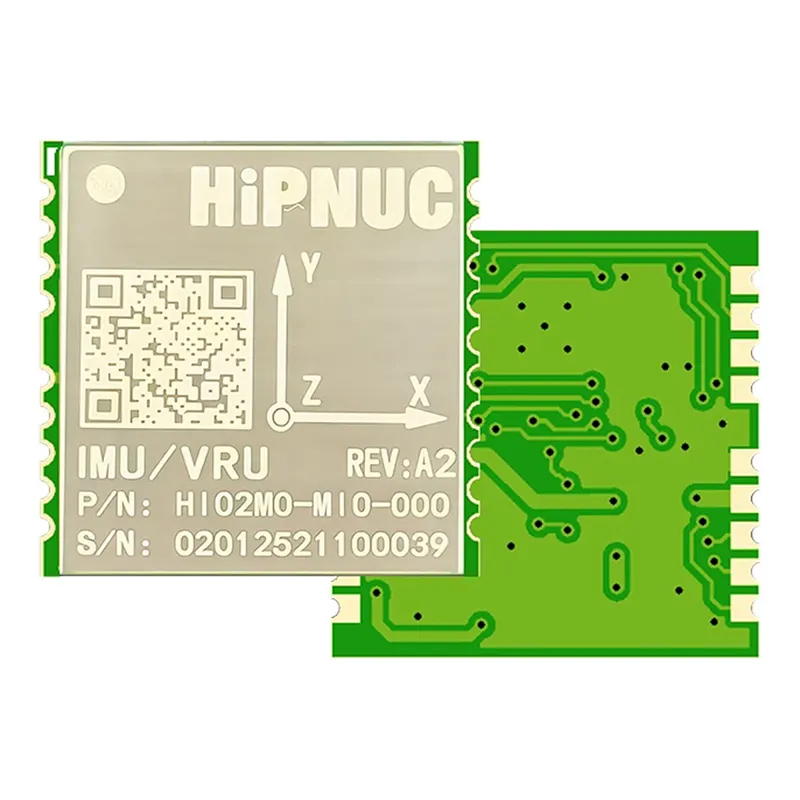
HiPNUC (Beijing) HI02 is a compact SMD 6-axis attitude module built for cost-sensitive mobile platforms, measuring just 15×15×2.6 mm with full-temperature factory calibration. Gyro ±2000 °/s with 2.5/3.2/3 °/h three-axis bias instability; accelerometer ±24 g; static pitch/roll accuracy 0.1~0.2°. UART(TTL) output at 200 Hz, 3.2~5.5 V supply, −40 to +85 °C operation, and onboard EKF fusion delivering both calibrated raw data and fused attitude — aimed at robot vacuums, lawn mowers and pool cleaners.
IMU-G-1020-S is an industrial 6-axis IMU module from Shenzhen SZLIGHT (SZLCTEK), built on a purple PCB (V1.0, 2025-08-29) around a HiPNUC HI14-series MEMS inertial chip (silkscreen HIPNUCHI14). The HI14 family offers gyro ranges of ±2000 to ±4000 °/s and accelerometer ranges of ±24 to ±32 g, outputs fused Euler angles and quaternions at up to 1000 Hz over UART/USB, and applies full-temperature compensation from -40 to +85 °C for harsh outdoor environments. This board breaks out 5V/GND, TXD/RXD, an RSYNC sync pin and RS-485 (485A/485B) through an 8-pin connector, targeting robot attitude sensing and stabilization. No public page exists for the module vendor, so core specs follow the official HiPNUC HI14 datasheet.
As an Amazon Associate, we earn from qualifying purchases.