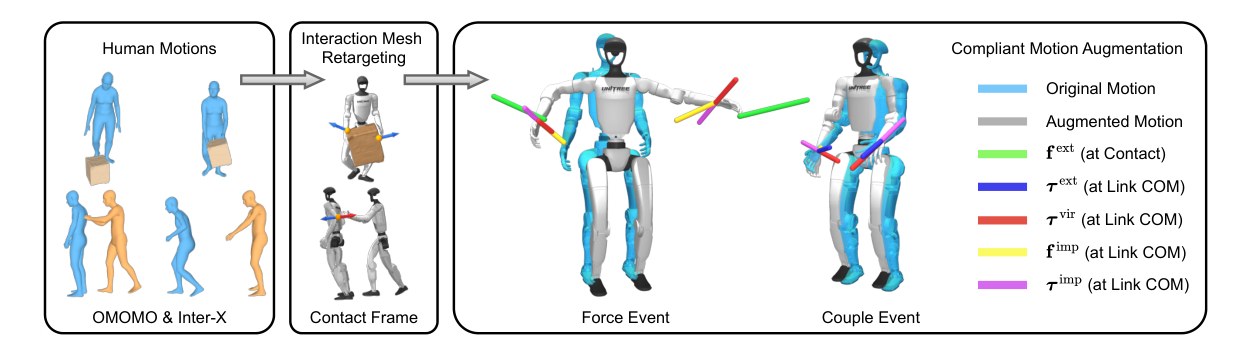
LAC is a general humanoid whole-body controller that simultaneously realizes commanded linear and angular compliance for wrenches applied to the upper body. Sampled force and couple events imposed on contact frames from human interaction data synthesize a large-scale compliant-response dataset; teacher-student RL then trains a single policy to track compliant motions under external wrenches, with sim and real experiments showing monotonic stiffness modulation and teleoperated loco-manipulation.
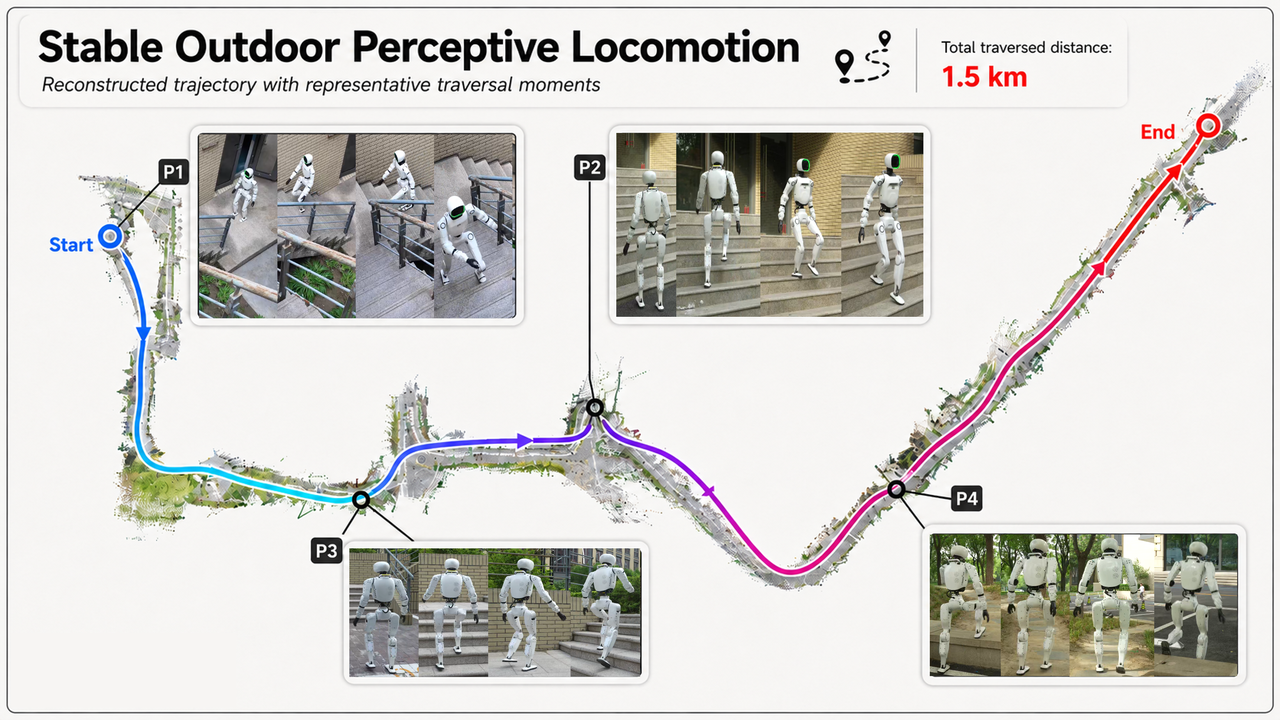
Humans traverse complex terrain over long distances without losing balance, whereas perceptive humanoid policies become fragile as perception and control errors accumulate. We present SOLO, a unified framework addressing two compounding causes of this long-horizon fragility: dense terrain reconstruction smooths action-critical details, and pointwise imitation lacks temporal credit assignment. Its Query Reconstructor (QR) uses Fourier-encoded cell queries to retrieve spatially specific evidence from depth-proprioception tokens, preserving sharp terrain boundaries. Trajectory-Aware MSE (TA-MSE) Distillation adds next-state teacher-student disagreement to the PPO reward, enabling Generalized Advantage Estimation to propagate future disagreement penalties to preceding actions. In simulation, QR reduces height-map L1 error by factors of 3.3-4.0, while TA-MSE surpasses PPO and MSE+PPO in curriculum progression. On stress-test terrains, SOLO achieves 97.5% mean traversal success and 96% stepping-stone success, versus 75.0-75.6% and 0-3% for dense-reconstructor variants. Deployed zero-shot with only a chest-mounted depth camera and proprioception, SOLO completes a continuous 1.5-km outdoor route and an indoor mixed-terrain course. Project page: https://sunpihai-up.github.io/solo/
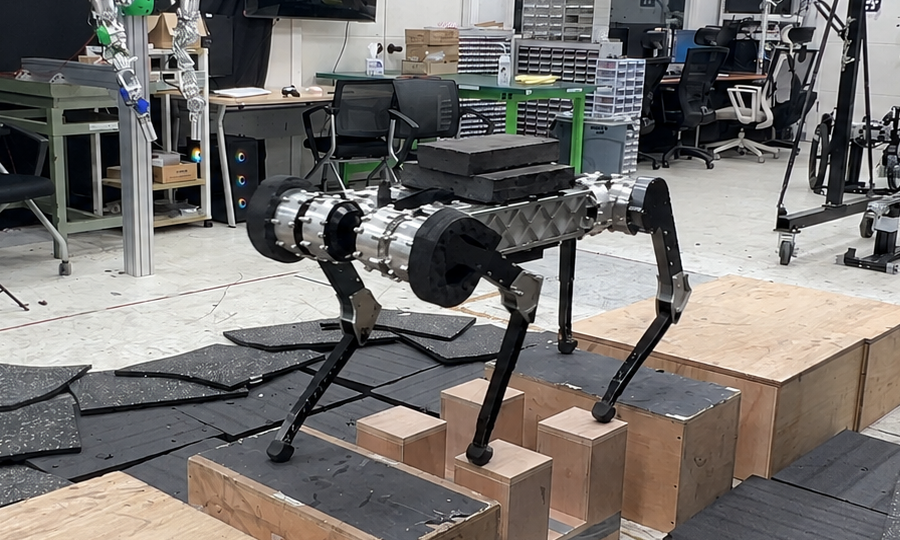
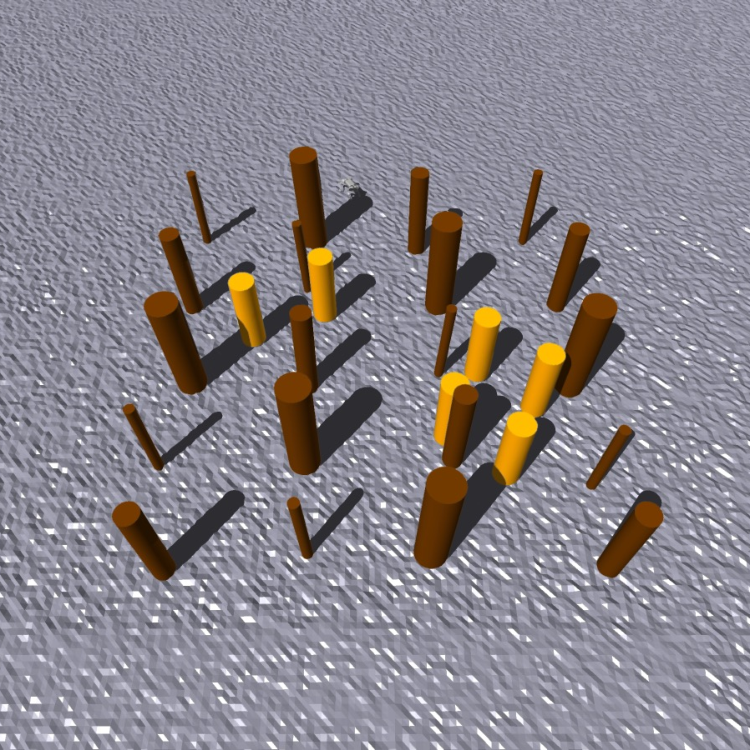
Stable quadrupedal locomotion on sparse terrain requires selecting state-relevant terrain evidence for precise foot placement. Model-based foothold planners provide precise foothold selection but rely heavily on explicit model assumptions. Recent attention-based map encoding (AME) studies show that end-to-end reinforcement learning (RL) can learn implicit foothold guidance. However, the computational cost of dense AME encoding grows with map resolution, limiting its scalability to fine-grained sparse terrain. We propose DELTA, a Deformable Elevation-Based Local Terrain Attention encoder. DELTA predicts state-conditioned sampling locations, forms terrain evidence tokens from adaptive local elevation patches, and attends only to a fixed-size token set. With fixed sampling and patch settings, DELTA's encoder cost is independent of map resolution. Experiments show that DELTA achieves final traversal performance comparable to AME at the standard resolution while improving learning efficiency. This fixed encoder cost enables the use of higher-resolution terrain maps, improving traversal on fine-grained sparse terrain. DELTA also demonstrates strong generalization to unseen mixed evaluation courses composed of continuous and discrete terrain elements. Beyond simulation, DELTA demonstrates successful sim-to-real transfer on RAIBO2. Analysis of the learned sampling offsets and attention weights shows that DELTA samples steppable regions and attends to terrain evidence relevant to future touchdowns without foothold labels or attention supervision.
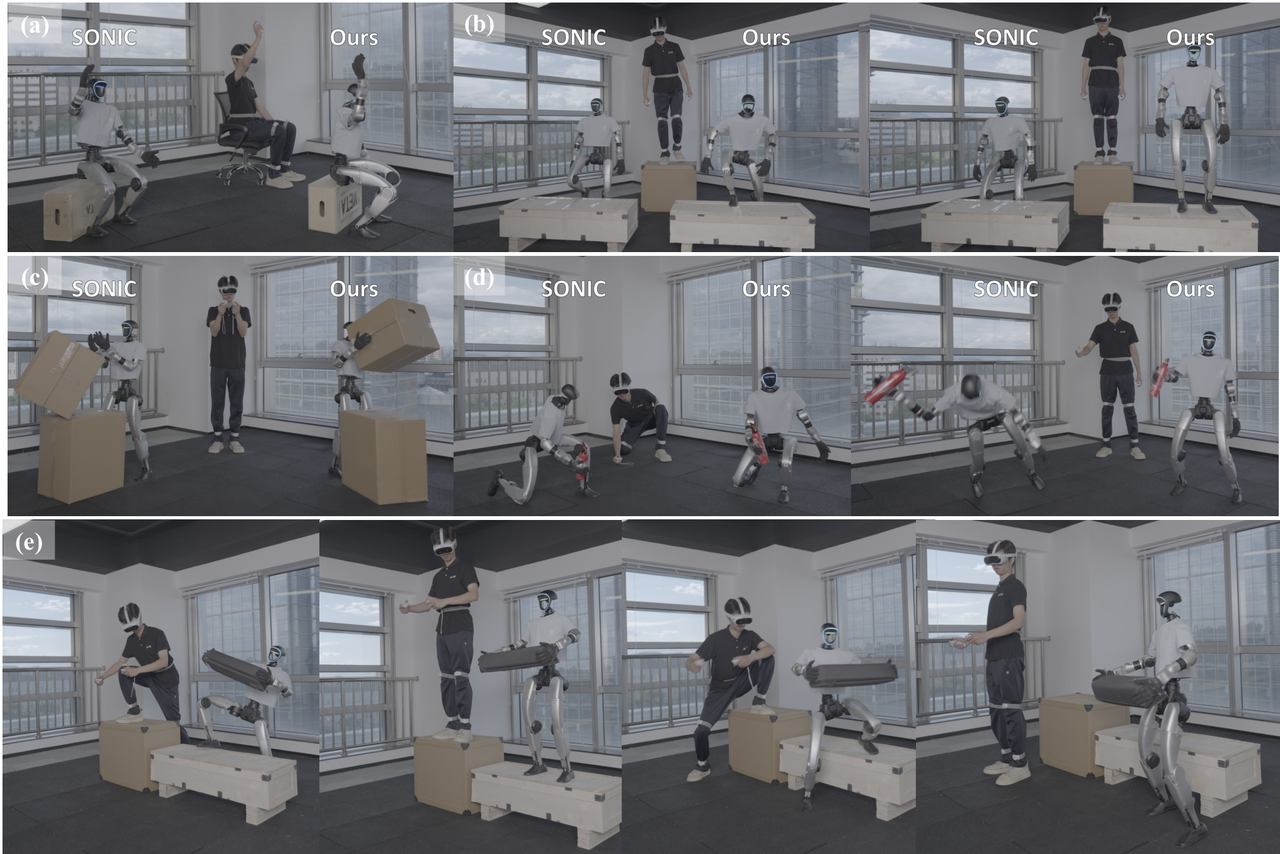
The first Behavior World Model (BWM) for humanoid whole-body control. A causal Transformer jointly predicts next action, state, and latent behavior command distribution, enabling the policy network to model how the environment shapes actions. Automatic terrain-annotation pipeline recovers 3D contact geometry from retargeted motion. At deployment, implausible commands are detected and retracted onto learned behaviors. Achieves highest success rate across all four regimes: 81.3% terrain interaction, 83.1% under implausible commands, 99.3% fall recovery. Unitree G1 checkpoint transfers to Maker L01 robot.
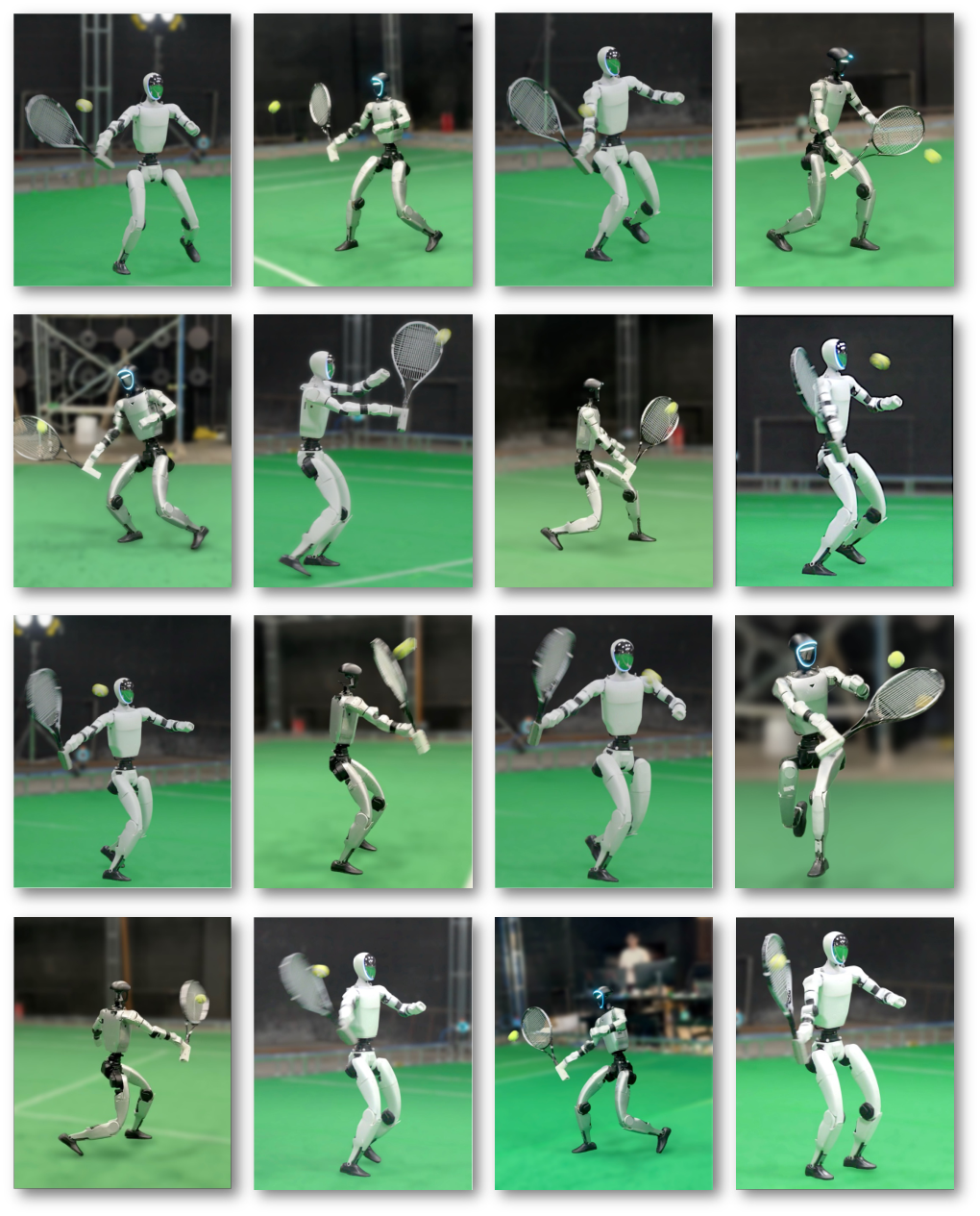
Human athletes demonstrate versatile and highly-dynamic tennis skills to successfully conduct competitive rallies with a high-speed tennis ball. However, reproducing such behaviors on humanoid robots is difficult, partially due to the lack of perfect humanoid action data or human kinematic motion data in tennis scenarios as reference. In this work, we propose LATENT, a system that Learns Athletic humanoid TEnnis skills from imperfect human motioN daTa. The imperfect human motion data consist only of motion fragments that capture the primitive skills used when playing tennis rather than precise and complete human-tennis motion sequences from real-world tennis matches, thereby significantly reducing the difficulty of data collection. Our key insight is that, despite being imperfect, such quasi-realistic data still provide priors about human primitive skills in tennis scenarios. With further correction and composition, we learn a humanoid policy that can consistently strike incoming balls under a wide range of conditions and return them to target locations, while preserving natural motion styles. We also propose a series of designs for robust sim-to-real transfer and deploy our policy on the Unitree G1 humanoid robot. Our method achieves surprising results in the real world and can stably sustain multi-shot rallies with human players. Project page: https://zzk273.github.io/LATENT/
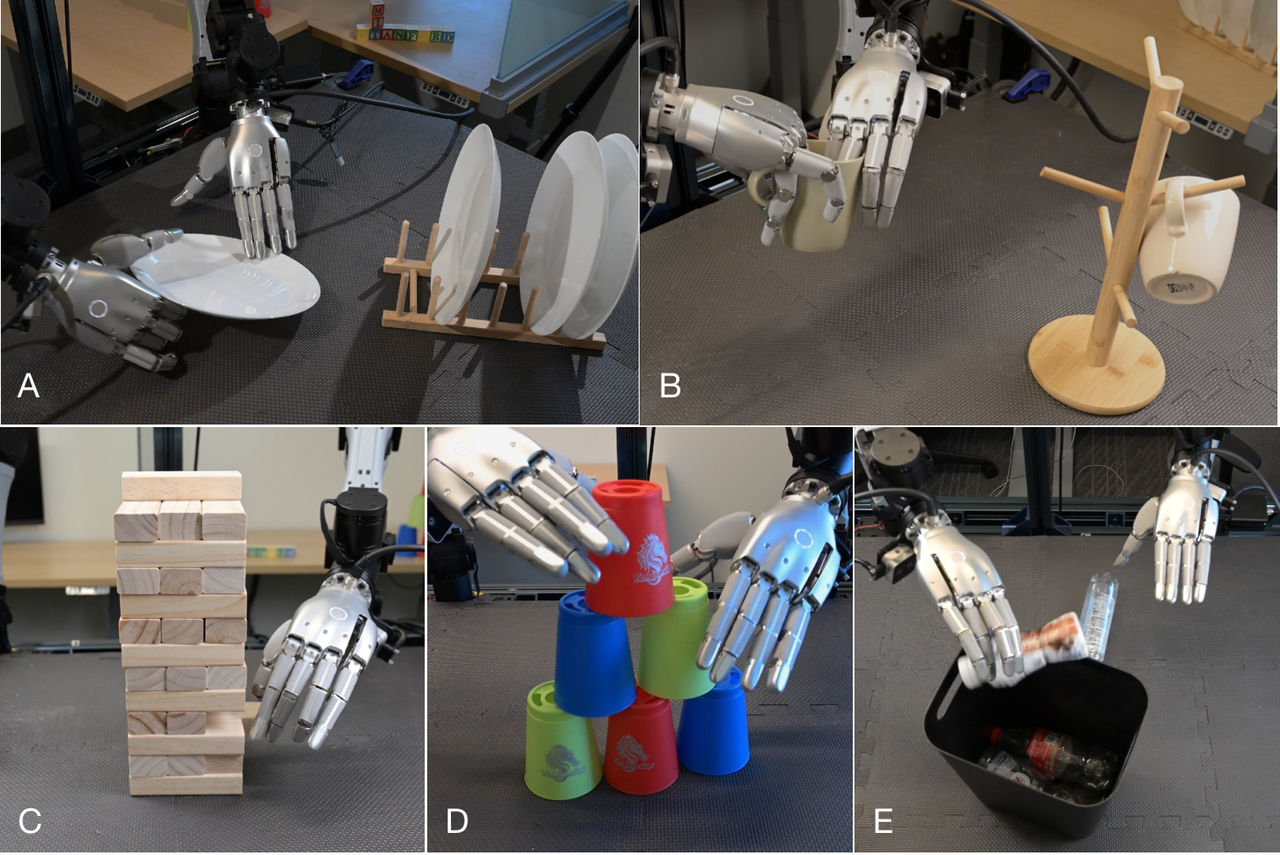
Large-scale pre-training has made robot policy fine-tuning increasingly data-efficient, but this progress has largely been driven by datasets and embodiments built around simple parallel-jaw grippers. Dexterous, multi-fingered hands remain comparatively data-starved because real teleoperation is costly to scale, while human hand video is off-embodiment and requires lossy pose estimation and retargeting. We introduce Simulation Pre-training for Dexterity (SPD), a pre-training framework for dexterous manipulation that uses data entirely collected in simulation. In SPD, humans manipulate virtual objects inside a VR headset, enabling on-embodiment trajectories and robot-free collection. With the help of five operators, we collect 75 hours of multi-task dexterous manipulation over one week, and use it to pre-train a causal transformer on a sequence modeling objective. We study the benefits of simulation pre-training on real-world tasks by fine-tuning on 1-2 hours of physical demonstrations on a 56-DoF bimanual dexterous setup. We find that our approach outperforms training behavior cloning policies from scratch, showing that simulation teleoperation is a viable pre-training source for real-world dexterous manipulation. We perform ablation studies, measuring the benefits of history conditioning and short action chunks for reactive control.
Navigating dynamic and crowded environments presents significant challenges for quadruped robots due to severe sensor occlusion and unpredictable human motion. Existing approaches face a trade-off: model-based methods, such as Velocity Obstacles (VO), theoretically guarantee safety but rely on accurate obstacle motion estimates that often fail in dense crowds, while end-to-end learning methods offer robustness but lack motion prediction capability of obstacles, leading to collisions or conservative behaviors. To solve this, we propose VOP-Nav, a novel navigation system that combines the geometric safety of VO with the agile adaptability of end-to-end learning. Using only local onboard observations, our system avoids explicit obstacle detection and tracking pipelines. The VOP-Net processes multi-frame LiDAR data to implicitly encode dynamic constraints and predict a safe velocity region derived from Velocity Obstacle theory. Importantly, the VO predictions serve a dual role: they are used as input to the navigation policy during inference and as a reward signal during training to encourage safe motion. Evaluations in Isaac Gym demonstrate that VOP-Nav achieves higher success rates than all baselines while balancing locomotion speed and collision avoidance. Real-world deployment on a Unitree Go2 quadruped robot further validates the system's robustness and efficiency in complex indoor and outdoor dynamic environments.
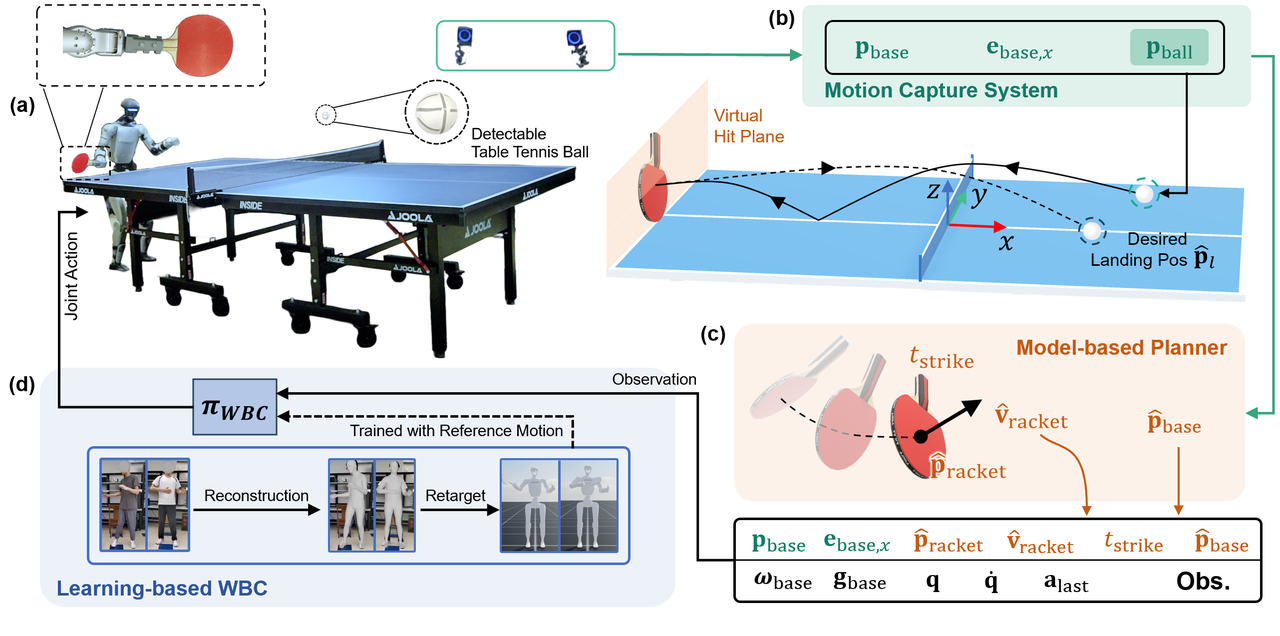
HITTER couples a model-based planner (ball trajectory prediction, strike position/velocity/timing) with an RL whole-body controller trained on human forehand/backhand motion references, enabling a Unitree G1 to sustain rallies of up to 106 consecutive shots against a human opponent.
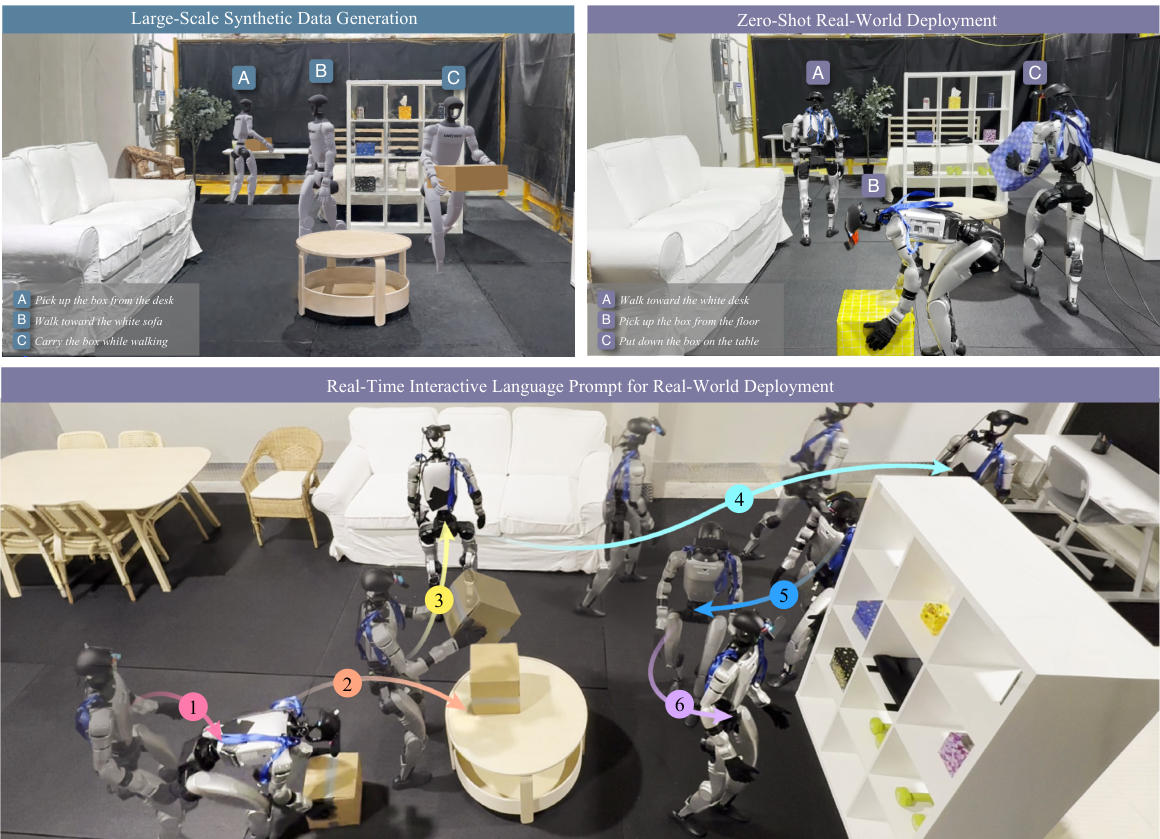
VLK synthesizes paired vision-language-kinematics supervision inside 3DGS-reconstructed real scenes: it generates navigation and object-interaction trajectories with privileged scene info, renders egocentric views after the fact, and produces 48,000 paired trajectories to train a policy predicting Unitree G1 whole-body motion, enabling sim-to-real perception-based humanoid loco-manipulation.
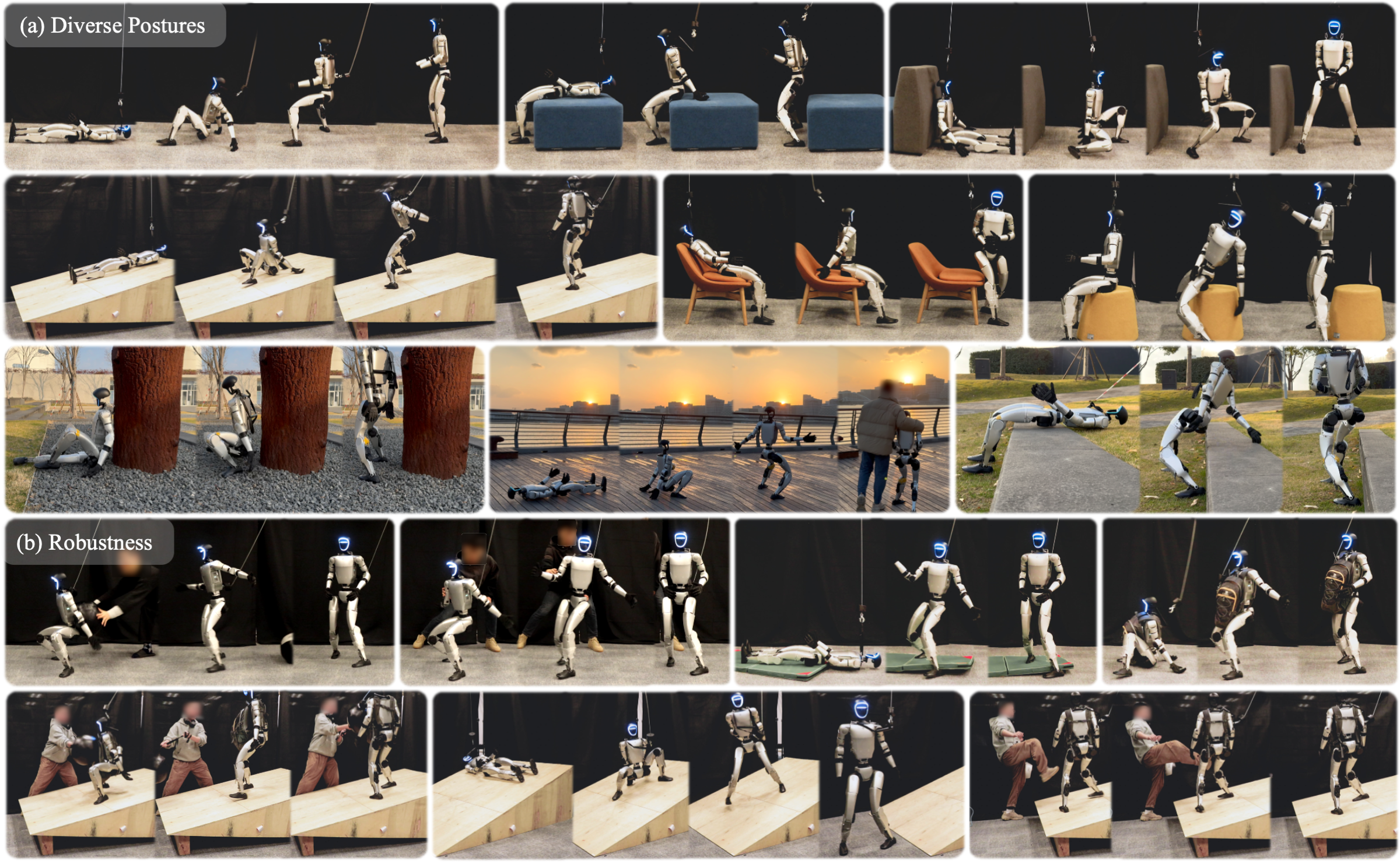
Standing-up control is crucial for humanoid robots, with the potential for integration into current locomotion and loco-manipulation systems, such as fall recovery. Existing approaches are either limited to simulations that overlook hardware constraints or rely on predefined ground-specific motion trajectories, failing to enable standing up across postures in real-world scenes. To bridge this gap, we present HoST (Humanoid Standing-up Control), a reinforcement learning framework that learns standing-up control from scratch, enabling robust sim-to-real transfer across diverse postures. HoST effectively learns posture-adaptive motions by leveraging a multi-critic architecture and curriculum-based training on diverse simulated terrains. To ensure successful real-world deployment, we constrain the motion with smoothness regularization and implicit motion speed bound to alleviate oscillatory and violent motions on physical hardware, respectively. After simulation-based training, the learned control policies are directly deployed on the Unitree G1 humanoid robot. Our experimental results demonstrate that the controllers achieve smooth, stable, and robust standing-up motions across a wide range of laboratory and outdoor environments. Videos and code are available at https://taohuang13.github.io/humanoid-standingup.github.io/.
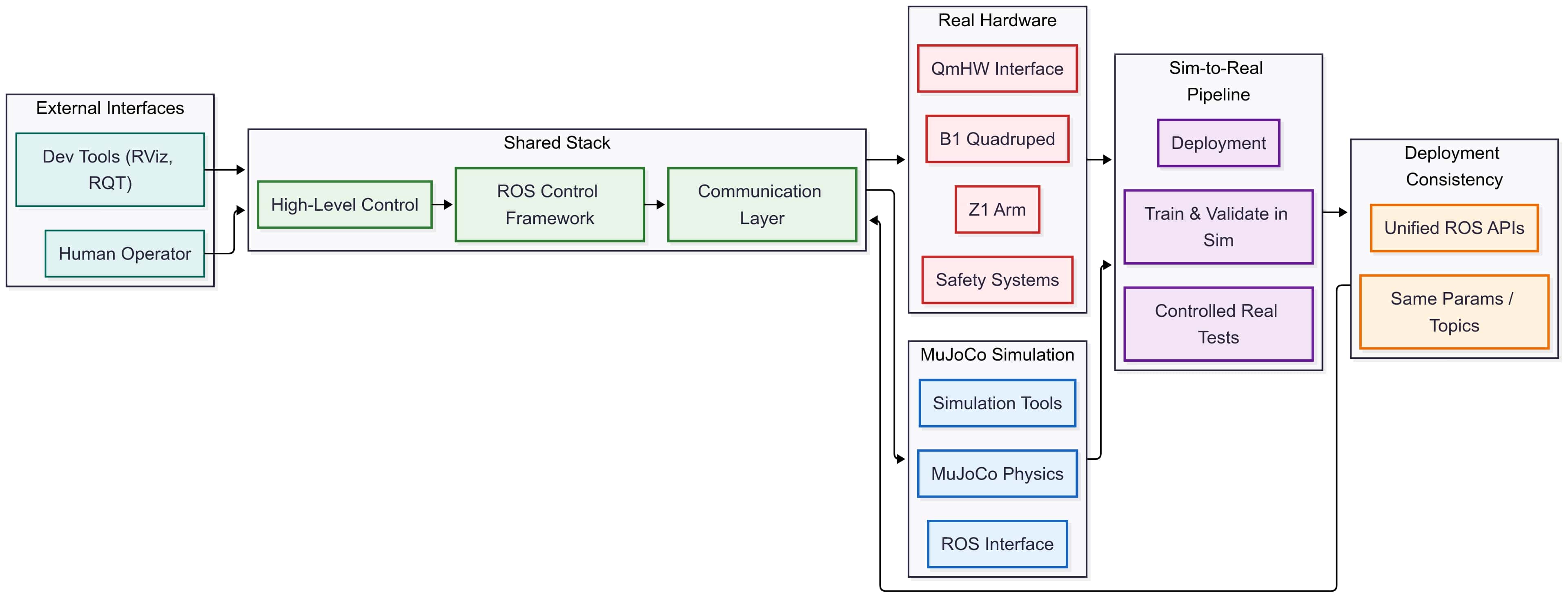
Quadruped mobile manipulators offer strong potential for agile loco-manipulation but remain difficult to control and transfer reliably from simulation to reality. Reinforcement learning (RL) shows promise for whole-body control, yet most frameworks are proprietary and hard to reproduce on real hardware. We present an open pipeline for training, benchmarking, and deploying RL-based controllers on the Unitree B1 quadruped with a Z1 arm. The framework unifies sim-to-sim and sim-to-real transfer through ROS, re-implementing a policy trained in Isaac Gym, extending it to MuJoCo via a hardware abstraction layer, and deploying the same controller on physical hardware. Sim-to-sim experiments expose discrepancies between Isaac Gym and MuJoCo contact models that influence policy behavior, while real-world teleoperated object-picking trials show that coordinated whole-body control extends reach and improves manipulation over floating-base baselines. The pipeline provides a transparent, reproducible foundation for developing and analyzing RL-based loco-manipulation controllers and will be released open source to support future research.
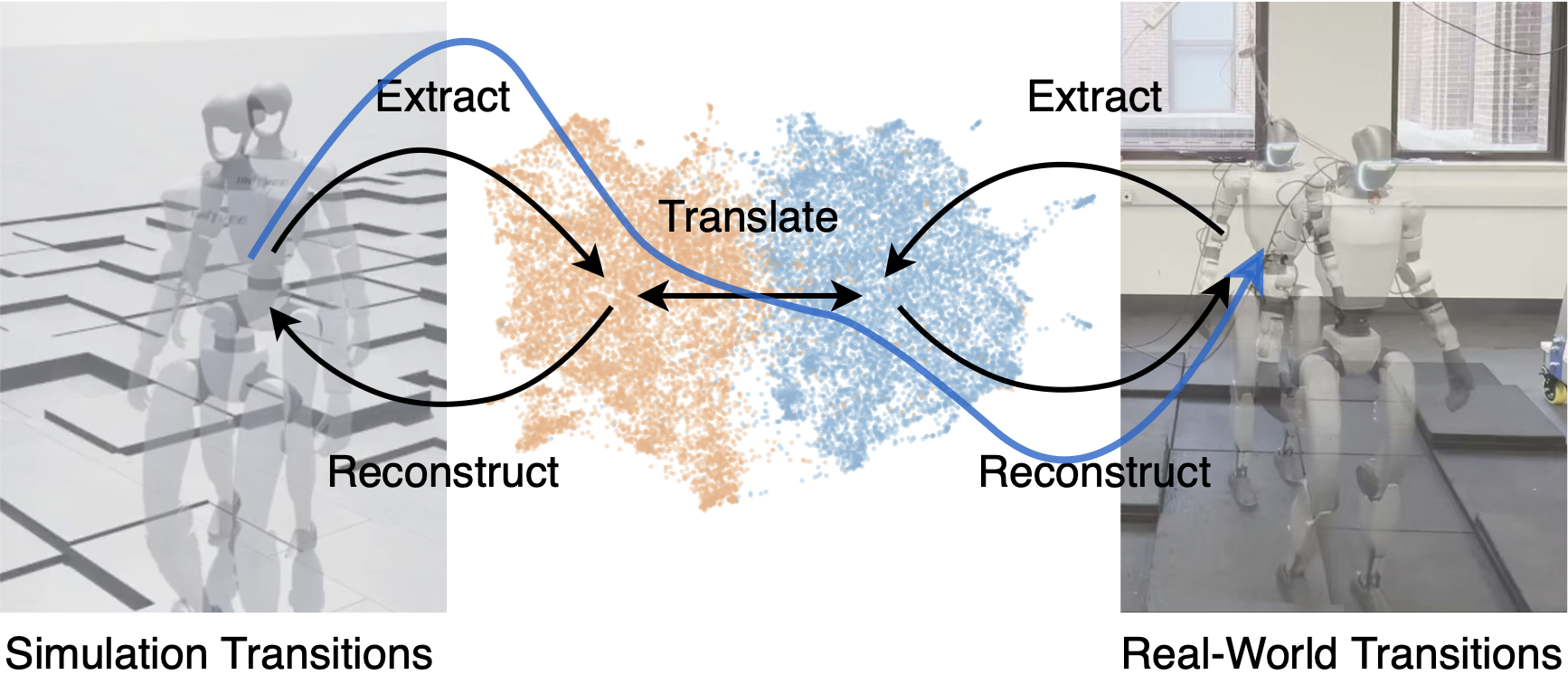
The gap between simulation and reality remains a fundamental challenge in deploying simulation-trained robotic policies in the real world. Real-to-sim methods narrow this gap from the real side, learning transition dynamics from real data to build a more realistic digital world. Learned dynamics models are their dominant instance. Such methods, however, face a partial observability problem: the same observation may branch to different transitions due to unobservable factors. Existing methods assume these factors can be recovered from observation history. However, this may fail whenever observation history is uninformative, such as a sudden contact event with no prior warning. To address this limitation, we propose \textit{World Translation}, which exploits a complementary strength of simulators and learned dynamics. Simulators are deterministic but physically imperfect, while learned models are accurate but underdetermined under partial observability. Rather than predicting transitions forward from history, we extract the unobservable dynamics information backward from an observed transition, then translate this feature across simulation and reality as an unpaired domain-translation problem that preserves dynamics content while transferring domain style. Experiments across humanoid, quadruped, and manipulator platforms show that our method achieves more accurate dynamics modeling than baselines, with the largest gains when unobservable factors cannot be recovered from observation history. Real-robot deployment on Go2 quadruped confirms improved policy transfer.